
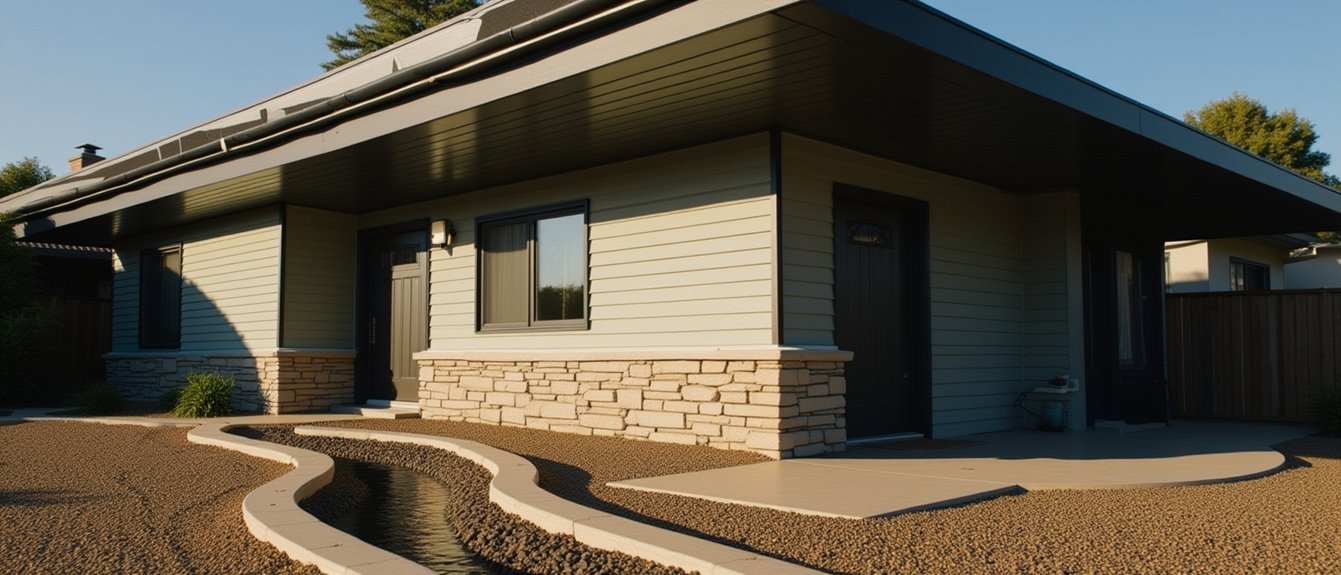
Summary: A house can skip gutters if grading, drip edges, rain chains, rock beds, or French drains are used to control roof runoff and protect the foundation. Choosing the right combination depends on climate, roof pitch, budget, and how much maintenance you want.
You can protect your foundation without gutters by sloping soil six inches away over 10 feet, adding concrete or gravel drip paths at roof edges, and fitting metal drip edges to throw water outward. Use rain chains, rock beds, or barrels to slow and reuse runoff, and install French drains or underground gutters where water concentrates. Choose materials and slopes to match your roof pitch and climate, and keep maintenance simple so you’ll learn practical installation and upkeep tips next.
Highlights
- Grade soil away from the foundation at 6 inches per 10 feet to prevent pooling and direct runoff downhill.
- Install drip edges or concrete/gravel drip paths to channel roof water away from walls and foundations.
- Use decorative rain chains and rock beds to slow, control, and disperse roof runoff visually and functionally.
- Deploy rain barrels to capture roof runoff for irrigation, reducing runoff volume and water bills.
- Install subsurface French drains or underground gutters with sloped perforated pipe to divert excess water away.
Can Your Home Go Without Gutters? (Grading, Pitch, Runoff)

If your roof and yard are set up right, you can go without gutters, but that setup has to control where every drop of water goes.
You’ll inspect grading first: slope the soil away from the foundation at about 6 inches over 10 feet so runoff doesn’t pool near footings.
Visualize rain hitting a low-pitched roof, traditional gutters mightn't work, so you’ll plan alternatives to manage rainwater.
Use landscaping and soil absorption in low-rain areas, and install French drains where water concentrates to protect the foundation.
Keep an eye on erosion along flow lines and direct downspouts or drip paths toward planted swales or buried drains.
With careful grading and channeling, you’ll prevent damage and control runoff precisely. Additionally, ensuring that your system has proper commercial-grade sealants can enhance durability and performance in managing rainwater.
| Alternative | Best For | Maintenance |
|---|---|---|
| Soil grading | All homes, basic protection | Check slope periodically |
| Drip paths/edges | Arid climates, low budget | Low, inspect angle |
| Rain chains/rock beds | Decorative, DIY yards | Low, clear debris |
| Rain barrels | Reusing runoff, irrigation | Empty and clean regularly |
| French drains | Heavy runoff areas | Inspect outlets, rake debris |
Drip Paths & Drip Edges: How They Work, Costs, and When to Use Them
Once you’ve graded the yard and planned where roof runoff will go, you can use drip paths and drip edges to steer that water cleanly away from your foundation.
Drip paths, concrete, gravel, or compacted soil channels, catch rain runoff and move it away from the foundation, reducing erosion around planting beds.
Drip edges are metal flashings nailed to the roof edge with a slight downward angle so water discharges directly into the path, protecting fascia and wood from rot.
This system is a budget-friendly option at roughly $1, $3 per square foot and suits arid climates where a traditional gutter isn’t needed.
Consider:
- trench depth and slope for steady flow
- material choice for durability and appearance
- correct drip edge angle and fastening for long-term performance
Decorative, Low‑Maintenance Options: Rain Chains, Rock Beds, and Rain Barrels
Although you don’t have to install full gutters, you can still control roof runoff attractively with rain chains, rock beds, and rain barrels that steer, slow, and store water where you want it.
Rain chains act as decorative alternatives to gutters, channeling water visibly from the roof while adding sound and curb appeal; mount them over downspout locations and angle splash pads for splash control.
Rock beds disperse flow, prevent erosion, and direct moisture away from foundations, grade the bed away from the house and use a mix of gravel and larger stones for infiltration and visual texture.
Rain barrels collect runoff for reuse in gardens, reducing bills and conserving water. Additionally, implementing preventive maintenance can help ensure that these systems function effectively over time.
All three are DIY-friendly, low-maintenance solutions that help you manage rainwater without traditional gutters.
Subsurface Fixes: French Drains & Underground Gutters for Foundation Protection
Decorative options like rain chains and rock beds work well on the surface, but to protect your foundation you’ll want a subsurface solution that stops water before it soaks in near the footing. You’ll choose between French Drains and Underground Gutters to redirect subsurface water away from the house, preventing water damage and erosion.
Install trenches 8-12 inches deep with a 1/8-1/4 inch per foot slope toward an approved drainage point. Use rigid perforated pipes for sediment resistance and durability, and backfill with gravel for optimal drainage.
These systems need minimal upkeep, but inspect outlets and rake surface debris occasionally.
- Trench depth and slope: visual guide for consistent flow
- Pipe choice: rigid perforated pipes vs corrugated
- Outlet care: ensure clear drainage point
When to Choose Built‑In, Box, or Copper Gutters: Cost, Durability, and Trade‑Offs
Choosing between built‑in, box, or copper gutters comes down to balancing upfront cost, long‑term durability, and how you want your roofline to look and perform under heavy rain.
If you want a seamless profile and can afford complex installation, built-in gutters give a sleek, low‑visibility solution but raise cost and require skilled installers.
Box gutters suit historic or large roofs: their larger capacity reduces clogging and improves flow, yet retrofitting them is labor‑intensive and pricey.
Copper gutters deliver unmatched durability and corrosion resistance, often 50+ years, but their initial price is high compared with traditional options like aluminum or vinyl.
Each option has trade-offs in maintenance, visual impact, and installation complexity, so weigh cost, durability, and upkeep for your house. Additionally, considering custom-fit seamless gutters can enhance protection against water damage and improve overall aesthetics.
If you are ready to explore which drainage solution fits your home, the team at Newport Beach Gutters can walk you through every option. Call us today at (949) 213-3332 for a free estimate and expert guidance tailored to your roof and budget.
Homeowners looking for expert advice on built-in, box, or copper gutters can reach out to a trusted gutter company in Newport Beach to get recommendations matched to their roof style, budget, and local rainfall patterns.
Quick Decision Checklist: Climate, Cost, Maintenance, and DIY Steps
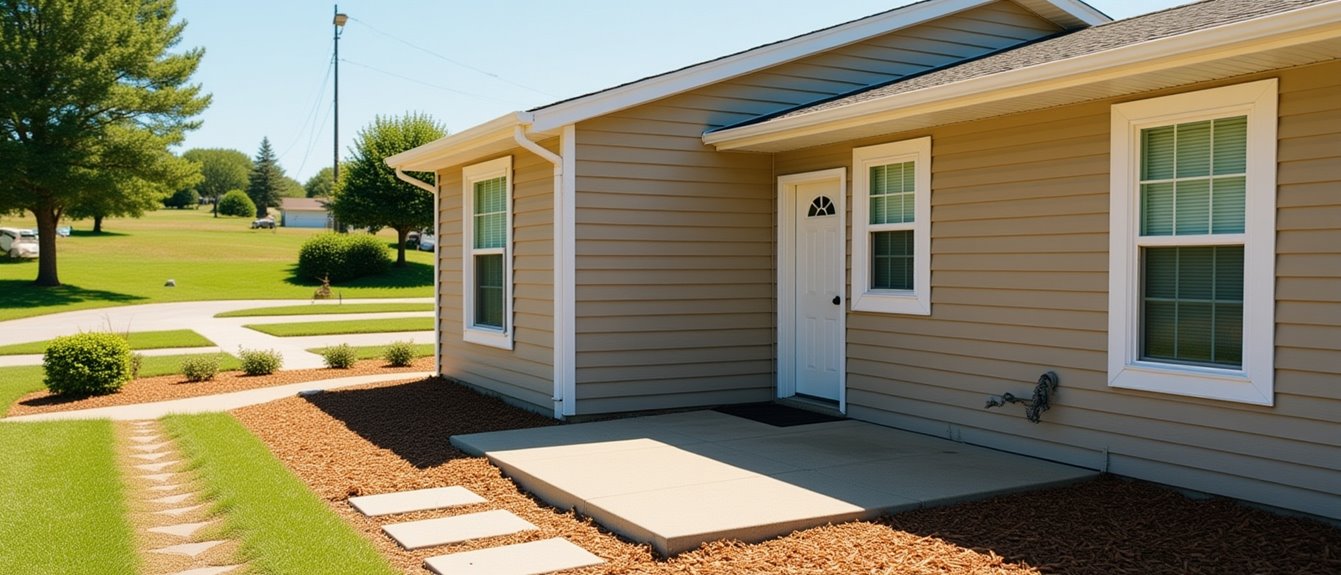
If you live where rain is rare, you can skip full gutters and use simpler fixes like drip paths, rain chains, or targeted downspouts. These cost less, are easier to install yourself, and need only light maintenance.
Use this quick checklist to choose among alternatives to gutters based on climate, cost, maintenance, DIY ability, and foundation protection.
- Assess climate: frequency and intensity of storms; drip paths and rain chains suit low-rain areas, French drains help where occasional heavy runoff occurs.
- Compare cost and DIY: drip paths and rain chains are low-cost, DIY-friendly; French drains or ground gutters cost more but still beat full gutter installs.
- Plan for maintenance and yard grading: keep paths clear, slope soil away from foundation for long-term protection. Additionally, consider custom sizing to optimize water flow management.
Frequently Asked Questions
What Can You Use Instead of Gutters on a House?
You can use rain chains, drip edges, drip paths, French drains, or underground ground-gutter systems; each directs water away, so you’ll visualize flow, prevent erosion, protect foundations, and choose based on runoff volume and yard grading.
Is It Bad if a House Has No Gutters?
Yes, without gutters you’ll face concentrated roof runoff that can erode soil, saturate foundations, invite basement leaks and mold, and damage siding; you’ll need careful grading, drainage solutions, and regular inspections to prevent long-term harm.
What Is the Rain Thing Instead of Gutters?
If you mean a rain chain, it’s a decorative linked-cup or chain system that guides water from the roof to the ground or a basin; you’ll see flowing water, reduce splash, and need occasional debris cleaning to keep it working.
Should You Remove Downspouts in Winter?
Yes, you can remove downspouts in winter to let rooftop melt drain away, but you’ll need to route water safely from roof edges, monitor snowmelt, and use temporary extensions or splash blocks to protect walkways and your foundation.