
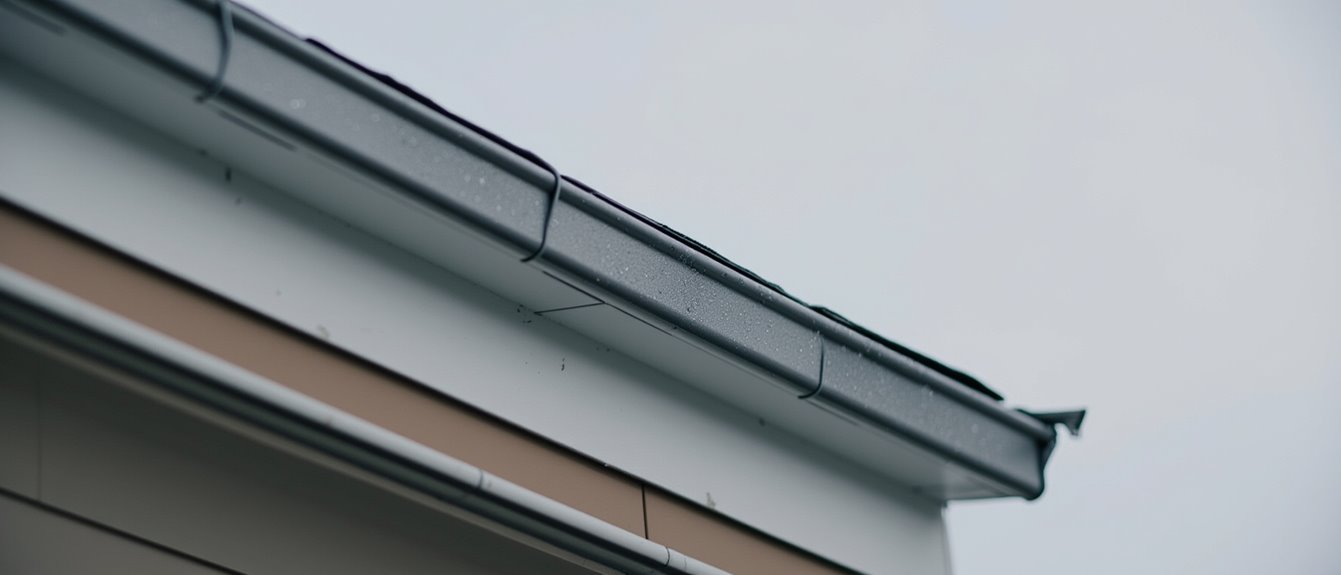
Summary: Seamless gutters are custom-formed, continuous channels that reduce joints, leaks, and maintenance compared to sectional systems, typically lasting 20 to 25 years. Choosing the right material and style, and hiring a professional installer, ensures better performance and long-term value for your home.
Seamless gutters are continuous, custom‑formed channels made on‑site from metal coils that match your roofline, so you get far fewer joints and leaks than with sectional systems. They promote smoother water flow and less debris buildup, lowering maintenance and repair needs. Commonly aluminum for rust resistance and aesthetics, they’re available in K‑style, half‑round, box, and premium metals like copper or zinc. Keep going to learn about costs, installation, and upkeep.
Highlights
- Continuous, custom-fabricated gutter channels made on-site to match rooflines with minimal seams.
- Fewer joints than sectional gutters, reducing leaks and debris buildup for more reliable water flow.
- Commonly aluminum for rust resistance and lightweight durability, with other options like copper or zinc available.
- Styles include K-style, half‑round, and box gutters to suit aesthetics and rainfall needs.
- Installed via on-site extrusion machines; proper installation and maintenance extend lifespan to about 20-25 years.
What Are Seamless Gutters and How They Work

Think of seamless gutters as a single, continuous channel that carries roof runoff away from your home; they’re custom-fabricated on-site from a metal coil to match your roofline exactly, which removes the multiple joints found in sectional systems and greatly reduces leak and debris buildup.
You’ll see the continuous design creates fewer seams, joints only appear at corners and downspouts, so water flow stays smooth and clogging risks fall.
Because they’re custom-made to fit, aluminum gutters are a common choice: lightweight, rust-resistant, and durable. That tailored fit minimizes leaks and lowers maintenance needs, cutting the chance of costly water damage. Additionally, seamless gutters are designed to resist corrosion and withstand the unique conditions of California.
Seamless vs. Sectional Gutters: Leak Risk and Flow
Because seamless gutters are formed from a single continuous piece, they cut the number of joints, and the leak points, dramatically compared with sectional systems, which rely on multiple connections that expand, contract, and trap debris.
You’ll see fewer leaks with seamless gutters; studies suggest up to a 70% reduction versus sectional designs. With fewer joints, water flow stays consistent, reducing clogging, overflow, and the maintenance you’ll face after storms.
Sectional gutter systems create more opportunities for debris buildup at seams and for thermal movement to open gaps that lead to leaks and eventual structural damage.
Choosing seamless means smoother water management, less routine repair, and a lower risk of sagging or compromised fascia over time, practical benefits for protecting your home. Additionally, seamless gutters offer custom-fit solutions that ensure optimal protection against runoff.
Seamless Gutter Styles (K‑Style, Half‑Round, Box)
Seamless gutters offer a custom fit that reduces leaks and improves water management across styles. K-style gutters pair a flat bottom with decorative edges, giving strong aesthetic appeal and good capacity for typical residential runoff.
Half-round gutters, shaped like a trough, suit historic homes but can be more prone to clogging because of their form. Box gutters handle large volumes and are often tucked under shingles, making them ideal for heavy rain or commercial roofs.
Each style with fewer seams delivers reliable performance; choose based on aesthetic appeal, local weather, and your priorities for clog resistance and flow. Additionally, seamless gutters can be customized with durable materials to enhance curb appeal and resistance to corrosion.
Materials Compared: Aluminum, Steel, Zinc, and Copper
When you’re choosing seamless gutters, the material you pick largely determines cost, lifespan, maintenance, and look, so weigh those factors up front.
For practical, cost-conscious homeowners, aluminum offers a lightweight, rust-resistant option with about 20-25 years of durability and low maintenance.
Steel gives greater strength and better protection in heavy-snow climates, but it’s prone to rust without regular upkeep and usually lasts near 20 years.
Zinc provides exceptional longevity, over 50 years, forming a protective patina that reduces corrosion; it’s pricier and typically needs professional installation for long-term protection.
Choose by budget, climate, and desired look.
Typical Costs: Materials, Labor, and Price Examples
What Are Seamless Gutters?
Typical Costs: Materials, Labor, and Price Examples
Expect to pay roughly $8, $15 per linear foot for K-style seamless gutters and $9, $17 for half-round profiles, with labor adding about $4, $10 per linear foot on a one-story home. You’ll weigh materials and labor to estimate installation cost and upfront costs for an average-sized home, typically $1,200, $2,500 total. Custom-made lengths raise price examples but reduce leak risk over sectional systems. DIY can cut costs up to 50%, yet seamless gutters usually need professional equipment and expertise. Regular gutter cleaning can further enhance the longevity and performance of your seamless gutters.
| Item | Typical Impact |
|---|---|
| Materials | Aluminum, steel, copper prices vary |
| Profile size | 5" vs 6" changes cost ~$3, $5 |
| Labor | $4, $10/ft |
| Total | $1,200, $2,500 (average) |
| Savings | DIY up to 50% but increases risk |
Installation for Homeowners: Process and What Contractors Use
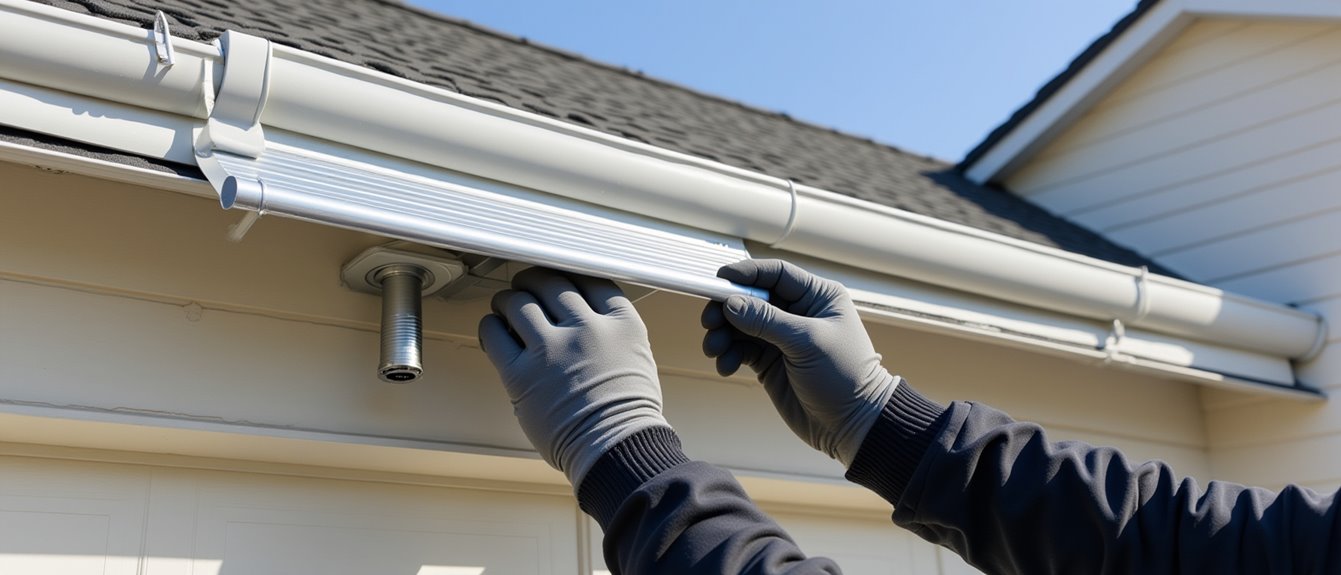
Because seamless gutters are cut and shaped on-site, your contractor will start by measuring every roof run so they can roll custom lengths that minimize joints and leaks.
You’ll see specialized machines, like KWM Ironman or Panther models, in mobile setups that form continuous gutters to fit rooflines precisely.
Ready to get started with a professional installation? Contact Newport Beach Gutters or call (949) 213-3332 for a free estimate from a trusted gutter installation company in Newport Beach.
The installation process includes setting the correct slope so you get proper water flow to downspouts and avoid pooling. Contractors attach hangers, place downspouts strategically, and trim ends for neat transitions.
Choosing professional installation helps reduce labor time, limits installation errors, and prevents misplacements that cause damage. This ensures compatibility with existing systems, as stated in durable materials we use for long-lasting repairs.
Expect fewer joints, a cleaner appearance, and a system sized to perform reliably for your home.
Maintenance, Cleaning Methods, and Expected Lifespan
Although they cut down on joints and debris, seamless gutters still need regular care to perform well and reach their typical 25-year lifespan.
You’ll find maintenance easier than with traditional gutters because fewer joints mean less debris accumulation and fewer entry points for leaks.
Use appropriate cleaning methods: low-pressure washing (1,200-1,800 PSI), soft washing, or manual removal to avoid damaging the finish.
Consider gutter elbow extensions so you can clean from ground level and reduce ladder risks.
Schedule inspections at least twice a year and after major storms to spot sagging, cracks, or developing leaks early.
When properly installed and maintained, seamless gutters offer a long lifespan; neglect shortens service life and increases repair needs.
Pros and Cons: When Seamless Gutters Are Worth It
When you weigh the decision, seamless gutters often pay off for homeowners who want fewer leaks, less upkeep, and a cleaner look: their continuous design cuts leak points to corners and downspouts.
They typically last about 25 years, and many owners report roughly 30% less maintenance time. You'll get fewer seams and a long lifespan that reduces the risk of leaks, which is valuable in heavy-rain areas.
The streamlined curb appeal and custom-made fit can boost home value, while professional installation helps avoid common errors.
Downsides: higher cost per foot ($4, $30) and the need for pros to install them.
If you want to reduce debris, cut upkeep, and prefer durability, seamless gutters are often worth it.
How to Decide and Get Accurate Quotes (Questions to Ask)
How do you separate good bids from vague ones? Ask specific questions: what materials do you use, aluminum, copper, zinc, and why for my roof?
Request a clear cost breakdown showing materials, labor, permits, and extras so quotes are comparable.
Ask if gutters are custom-made on-site and whether the installation process uses on-site fabrication to achieve a perfect fit with fewer seams.
Verify contractor's experience: how many installations, references, certifications, and examples of similar homes.
Clarify warranty options for both product and workmanship, and what triggers repairs or replacements.
Finally, confirm timeline, cleanup, and payment terms.
With these focused questions you’ll get transparent, accurate quotes and choose a contractor who delivers durable, properly fitted seamless gutters.
Frequently Asked Questions
What Are the Disadvantages of Seamless Gutters?
They’re pricier upfront and to repair, often needing whole-section replacement; you’ll need pro installation and special equipment; material and customization choices are limited; historic homes can incur higher fitting costs and reduced accessibility.
How Much More Expensive Are Seamless Gutters?
Like paying for a handcrafted coat, you'll pay about $5, $12 more per linear foot for seamless gutters versus sectionals; labor adds $4, $10 more, but you'll often save on long‑term repairs and maintenance.
What Is the Difference Between Seamless and Regular Gutters?
You get continuous, custom-fit seamless gutters that reduce leaks and maintenance, while regular gutters use joined sections prone to seams, clogs, and shorter lifespan; seamless installations need special machinery but offer better durability and flow.
Are Seamless Gutters Worth the Money?
Yes, think of them as a sturdy bridge you build once; you'll save time and repairs. You'll pay more upfront, but with longer life, fewer leaks and about 30% less maintenance, they often pay off over time.