
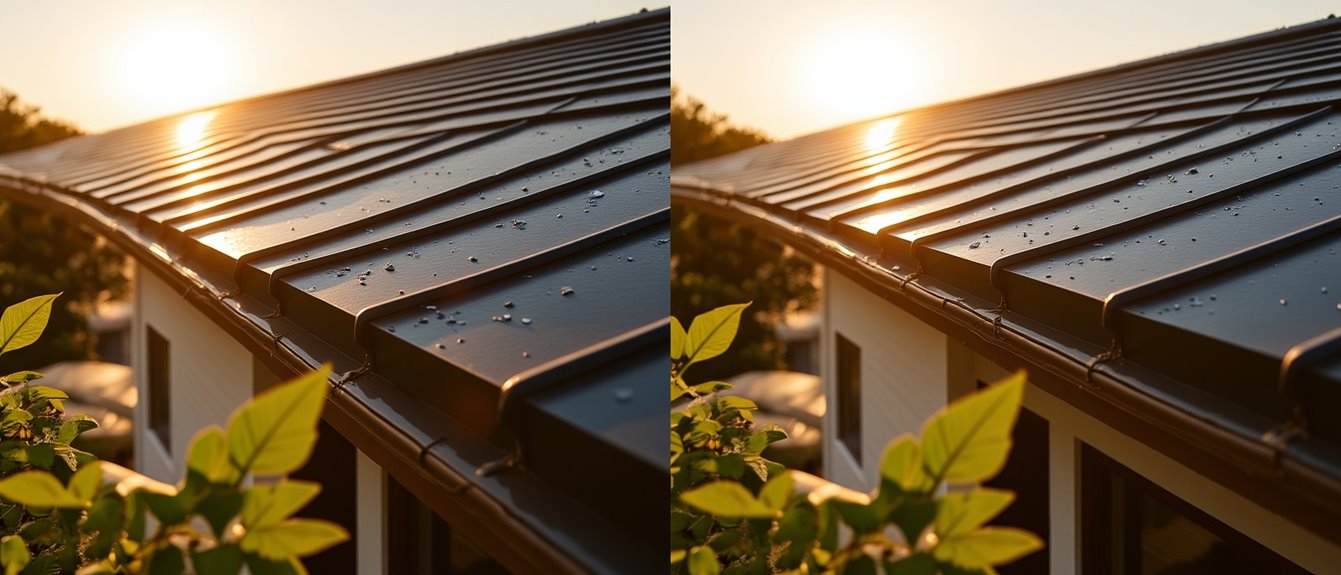
Summary: Seamless gutters cost more upfront ($6-12/ft) but last 25-30 years with fewer leaks and less maintenance, while traditional gutters ($3-5/ft) suit DIY budgets but need more frequent repairs and cleaning. Choose based on your budget, maintenance tolerance, and long-term value goals.
You’ll save time and long-term costs with seamless gutters if you want fewer leaks, better water flow, and a cleaner look, since they’re custom-formed on-site, more durable (.032" aluminum), and last 25-30 years, though upfront costs run $6, $12/ft and pros install them. Traditional sectional gutters cost $3, $5/ft, suit DIY installs, but have more seams, higher maintenance and replacement needs. Keep going to compare breakeven, ROI, upkeep, and curb appeal.
Highlights
- Cost: traditional gutters cost about $3, $5/ft upfront, while seamless run $6, $12/ft but lower long-term replacement needs.
- Leak risk: seamless gutters have fewer seams, significantly reducing leak and maintenance frequency compared with traditional systems.
- Lifespan: seamless systems typically last 25-30 years versus 10-15 years for traditional gutters.
- Installation: traditional gutters are DIY-friendly; seamless gutters require professional installation with specialized machinery.
- Water performance and damage prevention: seamless continuous design improves flow, reduces overflow, and lowers water-damage risk.
Which to Choose: Seamless or Traditional Gutters
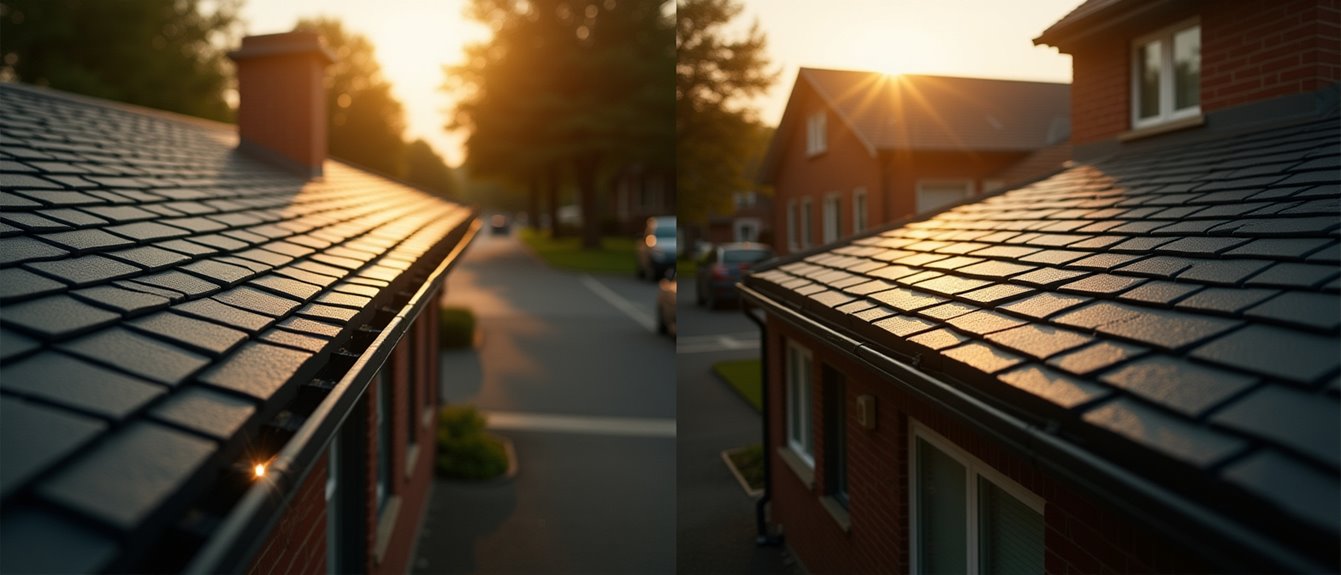
Which gutter system fits your needs depends on priorities like budget, maintenance time, and curb appeal.
You’ll choose seamless gutters if you want reduced leak points and a cleaner look: seamless systems are custom-made on-site, improving leak prevention, consistent water flow, and curb appeal. They typically last 25-30 years and need cleaning twice a year, but they require professional installation and come with a higher upfront cost. Additionally, seamless gutters are designed with custom lengths fabricated on site, providing a tight fit that enhances drainage efficiency.
If you’re budget-conscious and handy, traditional gutters let you DIY, cost less initially, and are prefabricated in sections, however they can mean more seams, more frequent maintenance (3-4 times yearly), and a shorter lifespan.
Weigh maintenance, lifespan, and curb appeal against cost and installation needs before deciding.
If you are ready to explore your options with a trusted gutter company in Newport Beach, getting a professional assessment can help you make the right call for your home.
Upfront vs. Lifetime Costs: Breakeven & ROI
Because seamless gutters cost more up front but last much longer, you'll want to look beyond the sticker price and calculate breakeven and ROI over the systems' lifespans.
Factor upfront cost: traditional gutters run roughly $3, $5/ft, seamless gutters $6, $12/ft (30-50% higher).
Then model lifetime costs: seamless lasts ~25-30 years versus 10-15 for traditional, reducing long-term replacement frequency.
Add recurring maintenance and repairs: traditional systems can average $200, $300 annually for fixes and upkeep, while seamless often needs only biannual cleaning.
Include leak potential and aesthetic impact, lower leaks boost resale value and lower hidden repair bills.
Run a simple cash-flow comparison to find breakeven year and quantify return on investment for your property goals. Additionally, consider the benefits of custom-fit seamless gutters as they provide optimal protection against runoff and foundation washouts.
Leak Risk & Water Performance: Seams, Flow, and Overflow
After you've run the breakeven numbers, the next practical question is how each system handles real rain, the places where seams, flow capacity, and overflow risk determine whether you get quiet performance or ongoing repairs.
You’ll find seamless gutters cut leak risk sharply because they've far fewer connection points, often three versus up to fifteen in traditional gutters, so water flow stays consistent and clogs are less likely.
In heavy rainfall, that continuous design prevents overflow and reduces water damage to fascia and foundations.
Traditional gutters concentrate problems at seams, increasing maintenance and sagging over time.
Choose based on how much you want to minimize repairs and protect structural integrity.
- Fewer joints = lower leak risk
- Better water flow in storms
- Less overflow and pooling
- Reduced maintenance and damage
Moreover, durable materials used in seamless gutters enhance their longevity and effectiveness in coastal conditions.
Durability & Lifespan of Gutters
Think of gutters as a long-term investment: seamless systems typically last 25-30 years while traditional, sectional gutters usually wear out in 10-15 years. You’ll notice seamless gutters’ continuous design reduces weak points, cutting leaks and boosting durability in harsh weather. Thicker materials (.032" aluminum) add superior strength and resist sagging. Additionally, seamless gutters can be custom sized to match outlet sizes and improve overall water flow efficiency.
| Feature | Impact |
|---|---|
| Seamless design | Fewer joints, fewer leaks |
| Material thickness | Greater durability, less repair |
Traditional gutters have multiple seams that invite corrosion, sagging, and frequent repairs. You’ll spend more on maintenance and replacements over time with traditional choices. Choosing seamless doesn't eliminate upkeep, but it lowers long-term costs and extends lifespan. Evaluate design and material to match your budget and expectations for durability and fewer repairs.
Installation: DIY vs. Pro, Equipment, and Timeline
When weighing installation options, you'll find traditional sectional gutters are DIY-friendly if you're comfortable with basic carpentry, local codes, and tools for cutting, sealing, and fastening.
On the other hand, seamless systems almost always require a pro because they're custom-formed on-site with specialized machines.
You should compare upfront equipment needs, job efficiency, and timeline before choosing.
Traditional gutters let you save labor but demand careful sealing at joints and more tools; seamless gutters reduce potential leak points and often finish faster but need pros with gutter-forming machines.
- Equipment: basic saws, sealant, fasteners for DIY traditional gutters
- Professional gear: mobile gutter-forming machines for seamless gutters
- Timeline: traditional 1-2 days, seamless often one day
Consider job efficiency, warranty, local code compliance, and preventive maintenance before deciding.
For expert guidance on seamless gutter installation and to get a free estimate, contact Newport Beach Gutters at (949) 213-3332 and speak with a pro who can assess your home's specific needs.
Maintenance & Common Repairs Over 5-20 Years

Over a 5-20 year span you’ll see clear differences in upkeep: traditional sectional gutters usually need cleaning 3-4 times a year, frequent joint inspections, and repairs as seams leak or sag, while seamless gutters typically require cleaning about twice a year and far fewer leak fixes thanks to their continuous design.
You’ll track maintenance costs against lifespan: traditional gutters often last 10-15 years and accumulate repair bills from leak points and sagging at joints. Seamless gutters, with fewer joints, can last 25-30 years and show greater long-term reliability with fewer repairs.
Plan biannual cleaning for seamless systems and quarterly checks for traditional gutters, budget for joint sealant and bracket replacement on sectionals, and expect lower hidden costs with seamless gutters.
Curb Appeal & Resale: How Gutters Affect Home Value
After weighing maintenance and repair needs, it's worth looking at how gutters influence curb appeal and resale value. You’ll find seamless gutters give a clean, uniform aesthetic that boosts curb appeal and signals lower maintenance to buyers. That perception can raise home value and shorten marketing time.
Traditional gutters, with visible seams and more frequent repairs, can detract from curb appeal and reduce buyer confidence.
- Seamless gutters present a modern, well-maintained look that attracts buyers.
- Reduced maintenance and fewer repairs make seamless systems a strong investment.
- Traditional gutters may require visible fixes that hurt perceived home value.
- Consider long-term ROI: seamless often lasts longer and supports higher resale.
Choose based on budget, but weigh resale impact, maintenance, and aesthetic.
Frequently Asked Questions
Are Seamless Gutters That Much Better?
Yes, they often are. With about 3 versus 15 joints, seamless gutters cut leak risk dramatically, so you’ll spend less on repairs, clean half as often, and enjoy longer lifespan and better curb appeal for higher resale potential.
What Are the Common Problems With Seamless Gutters?
Common problems include clogs at downspouts and corners, sagging from improper installation, small leaks at seals or corners, dents from poor materials, and debris buildup, so you’ll need regular inspections and occasional maintenance to prevent damage.
What Length Gutters Does a 2000 Sq Ft House Usually Have?
Ironically, you won't need a mansion's worth, a 2000 sq ft house typically requires about 150-200 linear feet of gutters. You'll also usually install 2-4 downspouts, adjusting for roof complexity and overhangs.
Can Mice Come Through Gutters?
Yes, mice can enter through gutters if seams, joints, or holes let them access your roof and attic; you should inspect, seal gaps, consider seamless gutters, and add gutter guards to reduce entry points and deter infestations.