
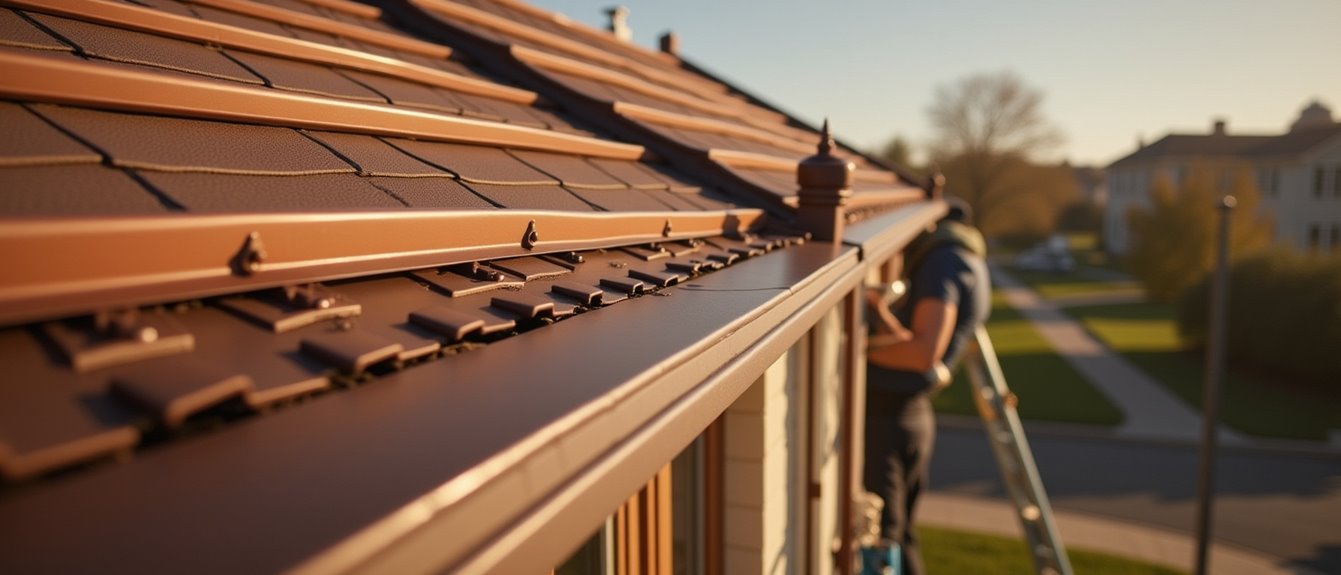
Summary: 7 inch gutters suit homes with heavy rainfall or large roofs, offering better overflow protection with fewer downspouts. Proper installation requires correct pitch, hanger spacing, seamless materials, and regular maintenance to ensure long term drainage performance and prevent water damage.
You should pick 7‑inch gutters when your roof and local rainfall produce heavy runoff, you want fewer downspouts, and you need better protection from overflow, ice, and snow. Match size to roof area and rainfall, keep a 1/4" pitch per 10', space downspouts about 30-40' apart, and use strong hangers every 2-3' in snowy areas. Choose seamless aluminum or copper profiles and add proper guards; follow proper installation and maintenance and you’ll learn practical next steps.
Highlights
- Confirm your local rainfall and roof area justify 7-inch gutters to prevent overflow and water damage.
- Plan pitch at 1/4 inch per 10 feet and place downspouts every 30-40 feet for proper drainage.
- Choose durable materials (aluminum .032, steel, or copper) and K-style or seamless profiles for maximum capacity.
- Use hanger spacing of 2-3 feet (2 feet in snowy regions) and minimize seams to reduce sagging and leaks.
- Schedule biannual inspections, clear debris, and ensure downspouts discharge 3-4 feet from the foundation.
When Should You Choose 7‑Inch Gutters?

When do you need 7‑inch gutters? You should choose 7-inch gutters when your region sees heavy rainfall or when larger roof areas generate increased runoff that smaller systems can’t handle. You’ll get more efficient drainage and more controlled water flow, which reduces overflow and potential damage. In climates with significant snow and ice, the larger capacity helps prevent blockages from melting snow and ice dams.
Make sure downspouts are sized and located to match the capacity, typically 3x4 inch or 4x4 inch, to preserve efficient drainage. Also confirm a proper slope during installation so water moves steadily to outlets. Finally, on larger homes, 7‑inch gutters can improve aesthetic appeal by providing proportions that look intentional and modern. Additionally, investing in durable materials will ensure long-lasting performance and reduce future maintenance needs.
If you are comparing gutter sizes to find the best fit for your home, understanding what oversized gutters are and how they work can help you make a more informed decision before committing to a larger profile.
How to Size and Plan 7‑Inch Gutter Runs
If you’ve decided on 7‑inch gutters for higher runoff, the next step is sizing and planning each run to handle local rainfall and your roof’s layout. You’ll match gutter size to local rainfall averages and roof size so you get adequate water flow without overflow.
Set a drainage pitch of 1/4 inch per 10 feet to guide water toward downspouts, and plan downspout placement every 30-40 feet to avoid pooling and foundation erosion. Properly sized downspouts will ensure effective drainage and minimize the risk of water damage.
For complex rooflines, break runs into manageable sections and add downspouts where valleys concentrate flow to maintain seamless water flow.
Use spacing for hangers at least every 2 feet in snow/ice regions to prevent sagging and ensure long‑term performance.
Best Materials, Profiles, and Accessories for 7‑Inch Gutters
Choosing the right materials, profiles, and accessories for 7‑inch gutters determines how well they perform and how long they'll last. So you'll want to weigh durability, appearance, and maintenance needs up front.
For materials, aluminum is the most popular, lightweight and rust‑resistant, while steel, copper, and vinyl remain options. Choose at least .032‑gauge aluminum or heavy steel for durability.
Profile choice affects function and style: K-style handles more runoff with a flat bottom; half-round suits traditional looks. Prioritize seamless 7‑inch gutters to reduce leaks; they typically require professional installation.
Essential accessories include downspouts sized for the larger flow, end caps, and gutter guards to prevent clogs. Professional services ensure that materials and accessories are matched to climate and maintenance willingness for long service life.
Installation Essentials: Pitch, Hangers, Seams, and Downspouts
Now that you've picked the right materials, profiles, and accessories for 7-inch gutters, you'll want to get the installation details right to make that investment perform. Focus on a 1/4" pitch per 10' for reliable water flow and to prevent standing water. Install a robust support system with hanger spacing at 3' (2' in snowy areas). Minimize seams to reduce leak risk and maintenance. Place downspouts strategically, at least one per 40', to ensure proper drainage away from foundations. Use high-quality materials (aluminum ≥ .032") and follow best practices during gutter installation to balance durability, capacity, and aesthetics. Additionally, consider using custom-fit seamless gutters to optimize protection against water damage.
| Element | Spec | Benefit |
|---|---|---|
| Pitch | 1/4"/10' | Prevents standing water |
| Hangers | 2-3' | Stable support system |
| Seams | Minimize | Fewer leaks |
Maintain and Troubleshoot 7‑Inch Gutters
Routine upkeep keeps 7‑inch gutters performing and protects your roof and foundation, so inspect them at least twice a year for debris, proper 1/4" per 10' pitch, and any sagging hangers.
To maintain performance, clear clogs and debris promptly, clean gutters twice yearly, and verify downspouts are unobstructed and discharge water 3-4 feet from the foundation.
Check that hangers every two feet and high-quality materials support the system, especially in heavy rain or snow.
When you troubleshoot, look for standing water (wrong pitch), leaks at seams, or bent hangers and tighten, reseal, or replace parts as needed.
Regular maintenance preserves effective drainage, extends lifespan, and prevents costly structural or moisture damage. Additionally, consider scheduling preventive maintenance based on local rain patterns to enhance the longevity of your gutter system.
When you are ready for expert help with gutter installation in Newport Beach, working with a local professional ensures your 7-inch system is sized, pitched, and secured correctly from the start.
Frequently Asked Questions
What Are Some Common Mistakes That People Make When Installing Gutters?
Like a leaky ship, you often use wrong-size gutters, space hangers too far, set incorrect pitch, add too many seams, and misplace downspouts. You’ll avoid overflow, sagging, leaks, and erosion by correcting these errors.
For personalized guidance on sizing, materials, and installation from a trusted Newport Beach Gutters team, call (949) 213-3332 to schedule a free estimate and get the right solution for your home.
Are 7 Inch Gutters Worth It?
Yes, you’ll likely find 7-inch gutters worth it if you have heavy rainfall, large roof areas, or want lower maintenance; they handle more water, reduce overflow risk, and can justify higher installation costs over time.
Can Mice Come Through Gutters?
Yes, you can get mice through gutters; ironically, your rain management can invite them. Keep gutters clean, seal gaps at joints and downspouts, install guards, and inspect regularly to prevent climbing, nesting, and entry.
What Is the Rule of Thumb for Gutters?
The rule of thumb is to size gutters to your roof area and rainfall: larger roofs or heavy rain may need 7-inch gutters; slope 1/4 inch per 10 feet, place downspouts every 30-40 feet, and hangers every 2 feet.