
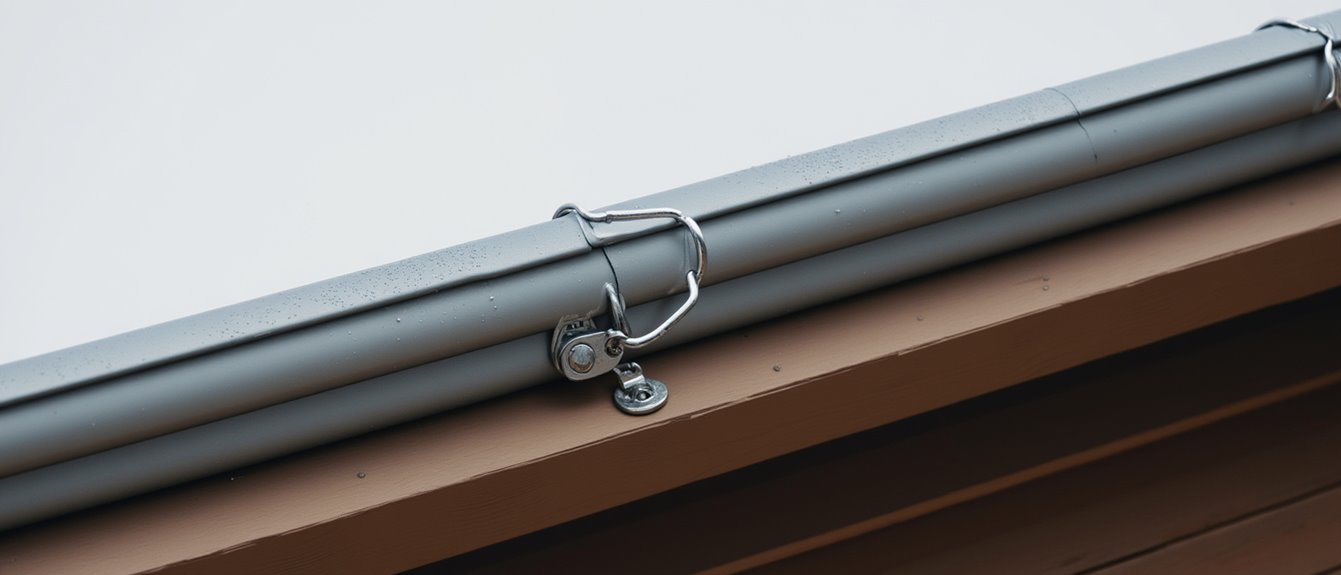
Summary: Hidden hangers are screw-in brackets that clip inside gutters and anchor into the fascia or framing, hiding hardware while spreading loads evenly to prevent sagging. Spaced about every 32 inches and rated 20-30 years, they outperform spikes and usually outlast the fascia itself.
Hidden hangers are heavy-duty, screw-in brackets that clip inside your gutter and fasten directly into the fascia or framing, so you secure the gutter invisibly and transfer loads to structural members. You space them about every 32 inches or closer, pre-drill to avoid splitting, and use corrosion-resistant screws to resist sagging and leaks. They conceal hardware, last decades, and often outlive fascia; keep existing spikes until sealed. Continue for installation steps, inspection tips, and maintenance guidance.
Highlights
- Hidden hangers are heavy-duty screw-in fasteners that clip inside the gutter for a concealed, low-profile attachment.
- They fasten through the gutter hem into the fascia or framing, transferring load directly to structure.
- Spaced every ~32 inches or closer, hangers control deflection and prevent sagging under weight.
- Installation uses pre-drilled screws and corrosion-resistant fasteners, often outlasting the fascia by 20-30 years.
- Inspect and repair fascia first; properly pitched, sealed seams and periodic cleaning ensure long-term performance.
What Are Hidden Hangers and How They Secure Gutters?
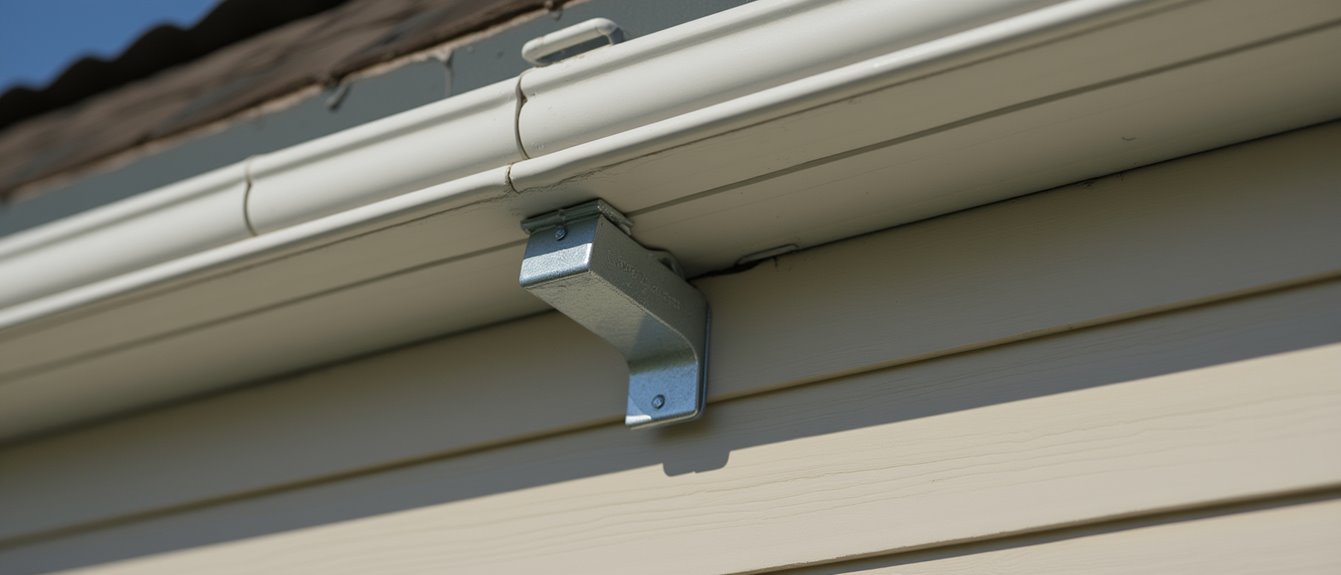
Hidden hangers are heavy-duty screw-in fasteners that clip inside the gutter and anchor directly into the fascia or the framing behind it, so they secure the gutter with a low-profile, concealed connection.
You’ll install Hidden Hangers by driving the screw into the fascia boards or structural framing through the hanger’s shank, which transfers gutter loads to solid backing rather than the gutter lip.
Space hangers every 32 inches or closer; that spacing controls deflection and resists snow and ice loads.
Because hangers fasten to framing, they often outlast the fascia and maintain alignment without visible hardware, preserving the roofline.
Compared with spikes, they resist loosening and provide consistent support, improving long-term performance of gutter systems. Additionally, using custom-fit seamless gutters can enhance the overall effectiveness of your gutter system by preventing leaks and ensuring optimal drainage.
If you are weighing gutter component options beyond hangers, learning about mistakes to avoid when installing rain gutters on metal roofs can help you plan a more reliable system from the start.
Hidden Hangers vs. Gutter Spikes: Key Differences
Although both attach gutters to the roofline, hidden hangers and gutter spikes perform very differently in durability, appearance, and load transfer.
You’ll see hidden hangers clip inside the gutter and screw into the fascia board, producing an unobtrusive finish and avoiding visible nail heads every two feet.
Gutter spikes are large nails driven through the gutter into the fascia board; they leave holes, loosen over time, and concentrate load at discrete points.
Hidden hangers, spaced ≤32 inches, distribute loads continuously, resist sagging, and are rated 20-30 years, often outlasting the fascia board itself.
Installation of hidden hangers is less damaging: you don’t re-nail existing holes as with gutter spikes, which can accelerate fascia deterioration and signal underlying board issues. Additionally, custom hangers ensure a secure fit and optimal drainage for your gutter system.
| Feature | Hidden Hangers | Gutter Spikes |
|---|---|---|
| Appearance | Concealed, no visible heads | Visible nail heads |
| Load transfer | Continuous, distributed support | Concentrated at each point |
| Lifespan | 20-30 years | Loosens over time |
| Fascia impact | Less damaging, no re-nailing | Leaves holes, can worsen rot |
| Spacing | Every 32 inches or closer | Every few feet, less controlled |
Should You Replace Spikes With Hidden Hangers? (Decision Checklist)
Ready to decide whether to replace spikes with hidden hangers? Use this concise checklist to evaluate need, feasibility, and benefits.
- Assess longevity: hidden hangers are rated 20-30 years and often outlast gutters and fascia; if you want a long-term fix, favor hangers over gutter spikes.
- Check appearance: if visible fasteners bother you, hidden hangers clip inside the gutter for a clean exterior.
- Verify stability: add hidden hangers to re-secure sagging gutters, this reduces movement that can cause water damage to the fascia.
- Plan installation: leave existing spikes in place during conversion to avoid leaks, then install hangers for increased support and tighter water protection.
Follow this list to decide logically and minimize risk.
Inspecting Fascia and Structure Before You Install
Before you swap spikes for hangers, inspect the fascia and underlying structure to confirm they can carry the new load and secure fasteners properly.
You should check the fascia board for cracks, soft spots, or rot; any compromise reduces holding capacity for gutter hangers and risks failure.
Look for exposed rafters, these can reveal hidden decay or improper original installation affecting structural support.
Probe areas around existing spikes for multiple holes or water stains; repetitive punctures often indicate past movement and moisture intrusion.
Assess firmness by applying pressure and use a moisture meter if available.
If the fascia shows significant deterioration or multiple repairs, plan replacement or reinforcement before installing hidden hangers to ensure reliable long-term structural support. Additionally, ensure that your system includes custom sizing options to fit your specific needs.
When fascia repairs are beyond a DIY scope, working with a trusted gutter company in Newport Beach ensures the structural work and hanger installation meet local standards and hold up against coastal weather conditions.
Step-by-Step Hidden-Hanger Installation and Mounting Options
Start by laying out the gutter sections and matching hidden hangers on the ground so you can work efficiently and maintain correct spacing; clip each hanger under the gutter’s front hem and pre-drill screw locations through the hanger into the fascia to ensure alignment and secure fastening.
You’ll then lift sections and fasten hangers to the fascia, spacing them every 32 inches or closer to preserve gutter integrity under load. Additionally, it’s important to use durable materials like commercial-grade sealants to enhance the longevity of your gutter system.
- Position and pre-drill: align hangers with seams, pre-drill to prevent splitting.
- Clip and secure: insert hanger under hem, drive corrosion-resistant screws into fascia.
- Join sections: assemble sealed seams, check pitch for drainage before final fastening.
- Inspect and adjust: confirm uniform spacing, tighten fasteners, test for firm support and proper slope to maintain installation integrity and function.
Hidden Hangers: Cost, Lifespan, and Maintenance Expectations
Curious how hidden hangers stack up on cost, longevity, and upkeep? You’ll pay more upfront for quality hidden hangers than for basic spikes, but the premium buys stronger support and fewer repairs.
Expect material-plus-labor costs to vary by profile and installer; aluminum or stainless options increase price but improve performance.
Design life for properly installed hidden hangers is typically 20-30 years, often outlasting the fascia they attach to. That lifespan assumes correct fastening and corrosion-resistant materials.
Maintenance focuses on periodic inspection and gutter cleaning. Check hanger security after storms and clear debris to prevent blockages that cause sagging. Additionally, regular gutter cleaning helps maintain optimal performance and prevent costly repairs.
Because hidden hangers avoid visible fascia penetration, they reduce long-term water-damage risk and lower cumulative repair costs.
Frequently Asked Questions
Are Hidden Gutter Brackets Better?
Yes, you’ll get stronger, neater, longer‑lasting support with hidden gutter brackets; they resist sagging, handle heavier materials and snow loads, last decades, and avoid exposed nail issues when spaced and installed correctly.
How Does a Hidden Gutter Hanger Work?
They support gutters by clipping inside and screwing into fascia; rated to last 20-30 years, they’re spaced about every 32 inches to prevent sagging, so you’ll get stronger, concealed support for heavy-duty aluminum gutters.
How Many Hidden Hangers Do You Need for Gutters?
You’ll need hangers every 24-32 inches; for 5" K-style gutters use at least one hanger per 2 feet. So a 40-foot run requires about 20 hangers, more in heavy snow or weaker fascia conditions.
What Is the Downside to Gutter Guards?
They reduce but don’t eliminate maintenance: you’ll still clean smaller debris, face fitment or installation issues, risk corrosion or material failure over time, and incur upfront costs that can be ineffective if improperly installed.
Hidden hangers install best with the right spacing and fastener choice for your fascia. The team at Newport Beach Gutters can inspect your existing hangers and recommend upgrades. Call (949) 213-3332 for a free estimate.