
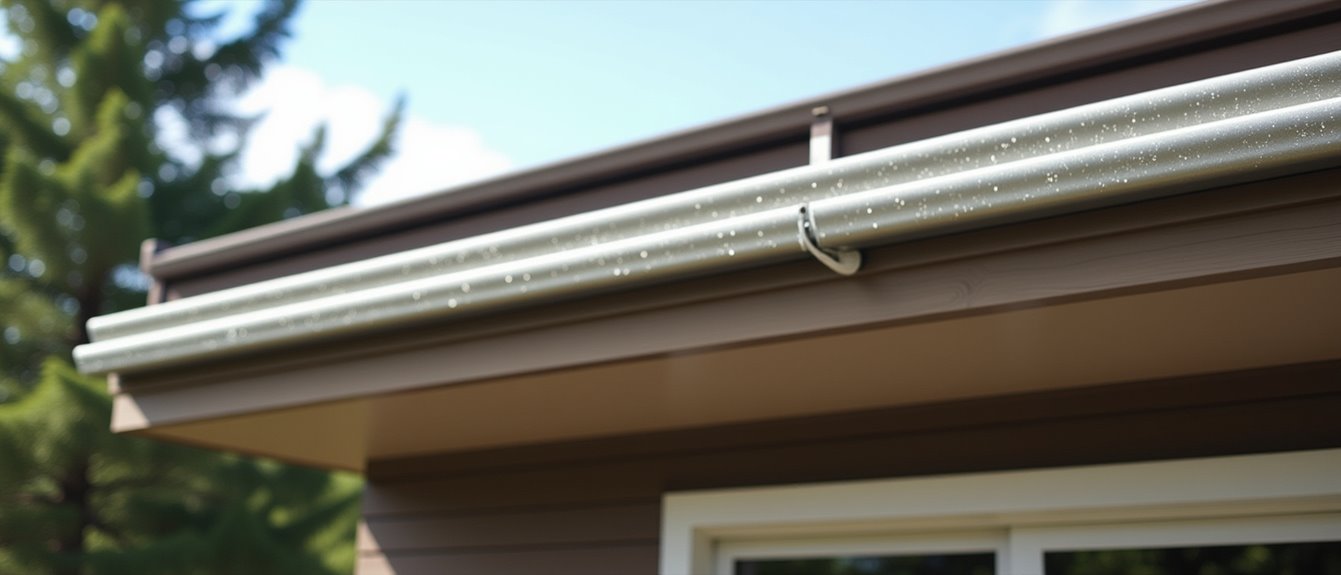
Summary: Oversized gutters (6-7 inches) with larger downspouts and closer hanger spacing move about 30-40% more water than standard systems, reducing overflow, clogging, and foundation damage on steep, large, or long-run roofs. Proper sizing, slope, and professional installation ensure reliable drainage and long-term protection.
Oversized gutters are larger-than-standard channels (typically 6-7") that move rapid roof runoff away from your house so you don't get overflow, foundation damage, or sidelining erosion. They increase cross-sectional capacity and, paired with 3"x4" downspouts and closer hanger spacing, handle about 30-40% more water and clog less. You’ll use them on steep, large, or long-run roofs and in heavy-rain areas. Continue for practical sizing, placement, and maintenance tips.
Highlights
- Oversized gutters are wider (typically 6-7 inches) systems that carry substantially more roof runoff than standard 5-inch gutters.
- Their larger cross-section and opening reduce overflow and clogging during heavy rain and steep-roof runoff.
- Paired with larger downspouts (commonly 3"x4") and more outlets, they move water away from roofs and foundations efficiently.
- Proper installation requires measuring roof area and pitch, maintaining a 1/4-inch drop per 10 feet, and hangers every 24 inches.
- Regular cleaning and biannual checks ensure performance, with professional sizing recommended for long runs or complex rooflines.
Do You Need Oversized Gutters? Quick Checklist
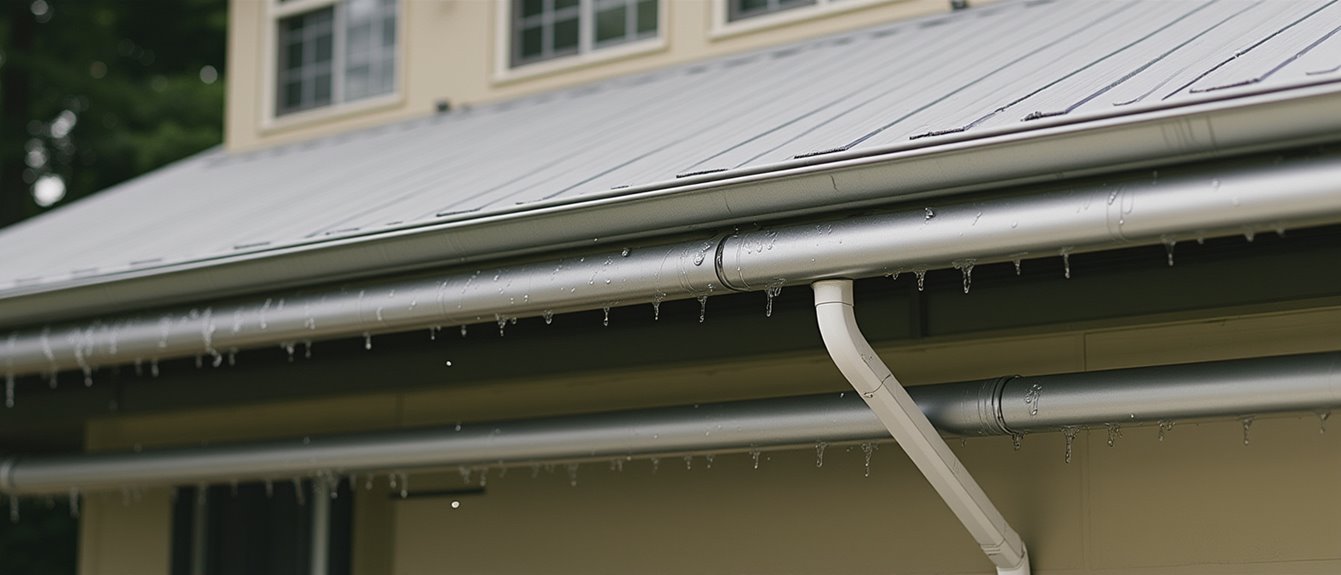
Wondering whether you need oversized gutters? Check this quick, practical list to decide.
Do you live where heavy rainfall is common? Oversized gutters (6 inches or larger) handle substantially more water, improving water management.
Is your roof steep or large in surface area? Fast-moving runoff and expansive roofs overwhelm standard gutter size.
Do long gutter runs exceed 40 feet without an intermediate downspout, or do you have multiple valleys and a complex roofline? Those configurations increase clog risk and reduce effective drainage.
Have you noticed water pooling near the foundation or signs of basement seepage? That’s a red flag for potential foundation damage.
If several items apply, consider professional gutter installation for reliable home protection and proper downspout placement. Additionally, smart drainage solutions ensure that water is efficiently routed away from your home.
How Oversized Gutters Manage More Water (And Why It Matters)
Because oversized gutters are wider and deeper than standard systems, they can catch and move substantially more runoff before water spills over, often up to about 40% more, so you'll see fewer overflow events during heavy storms.
You’ll manage more water because the wider design increases cross-sectional capacity and slows overflow at peak flow, which helps prevent overflow on steep-pitched roofs.
Less debris accumulation occurs since larger openings reduce clogging frequency, and pairing with 3x4-inch downspouts boosts throughput for efficient drainage.
That combination lowers standing water on roofs and directs runoff away from the house, reducing water damage risks and delivering foundation protection and healthier landscaping.
Choosing oversized gutters helps you reduce maintenance while improving overall stormwater control. Additionally, durable materials used in oversized gutters can enhance their longevity and effectiveness in managing heavy rainfall.
Choose the Right Oversized Gutter Size for Your Roof
When should you bump up to 6- or 7-inch gutters? You should choose oversized gutters when roof characteristics increase water flow: large surface area, steep pitch, long runs over 40 feet, or locations with heavy rainfall.
Opting for 6-inch gutters (or 7-inch where extreme) improves drainage capacity and reduces overflow risk. For long runs, pair larger gutters with multiple downspouts to distribute discharge and support effective water management without discussing specific downspout sizing here.
Larger gutter size helps protect siding and provides foundation protection by moving water away faster. Assess your roof area, pitch, and local rainfall intensity, and consider consulting with professionals to confirm the ideal gutter size and layout for reliable, long-term performance. Newport Beach Gutters offers customized solutions to ensure optimal drainage and protection for your property.
Ready to get started? Call our team at (949) 213-3332 for a free estimate and expert advice on the right oversized gutter system for your roof and local rainfall conditions.
Oversized Downspouts & Hangers: Sizing and Placement
If your roof’s been upgraded to oversized gutters, you’ll need matching downspouts and closer hanger spacing to prevent bottlenecks and sagging. Choose oversized downspouts (commonly 3"x4") because their increased water capacity, about 70% more than 2"x3", boosts drainage efficiency during heavy storms.
For sizing and placement, plan one downspout for every 20-30 feet of gutter run to keep flow steady and prevent overflow. Position downspouts at least 6-10 feet from the foundation to direct water away and reduce erosion risk.
Use appropriately sized hangers no more than 24 inches apart, tighter in snow-prone areas, to support the extra weight. Thoughtful downspout placement and hanger spacing together prevent bottlenecks and maintain long-term system performance. Additionally, regular gutter cleaning is essential to ensure that your oversized system operates effectively during heavy rainfall.
| Component | Spec |
|---|---|
| Gutter width | 6-7 inches |
| Downspout size | 3x4 inches |
| Downspout spacing | Every 20-30 feet |
| Hanger spacing | Every 24 inches |
| Downspout to foundation | 6-10 feet away |
Installing Oversized Gutters: Key Steps and Best Practices
Now that you’ve sized downspouts and set hanger spacing, you can move on to installing the oversized gutters themselves.
Measure roof area and pitch to choose 6- or 7-inch oversized gutters so capacity matches runoff for reliable water management. Mark the high and low points, then run a consistent pitch of 1/4 inch drop per 10 feet to ensure proper drainage and avoid pooling.
Use corrosion-resistant hangers spaced 24-36 inches, with extra support at corners and near downspouts. Connect gutters to larger 3x4-inch downspouts placed every 20-30 feet to maximize flow and reduce clogs. Additionally, ensure that you select materials that resist corrosion to withstand California conditions.
Tie outlets into safe discharge points that direct water away from the foundation. Follow these best practices during installation and plan routine maintenance checks.
If you are looking for a trusted gutter installation company in Newport Beach, our local specialists can assess your roof, recommend the correct oversized gutter size, and handle every step of the installation process.
Maintenance, Gutter Guards, and Common Problems to Watch
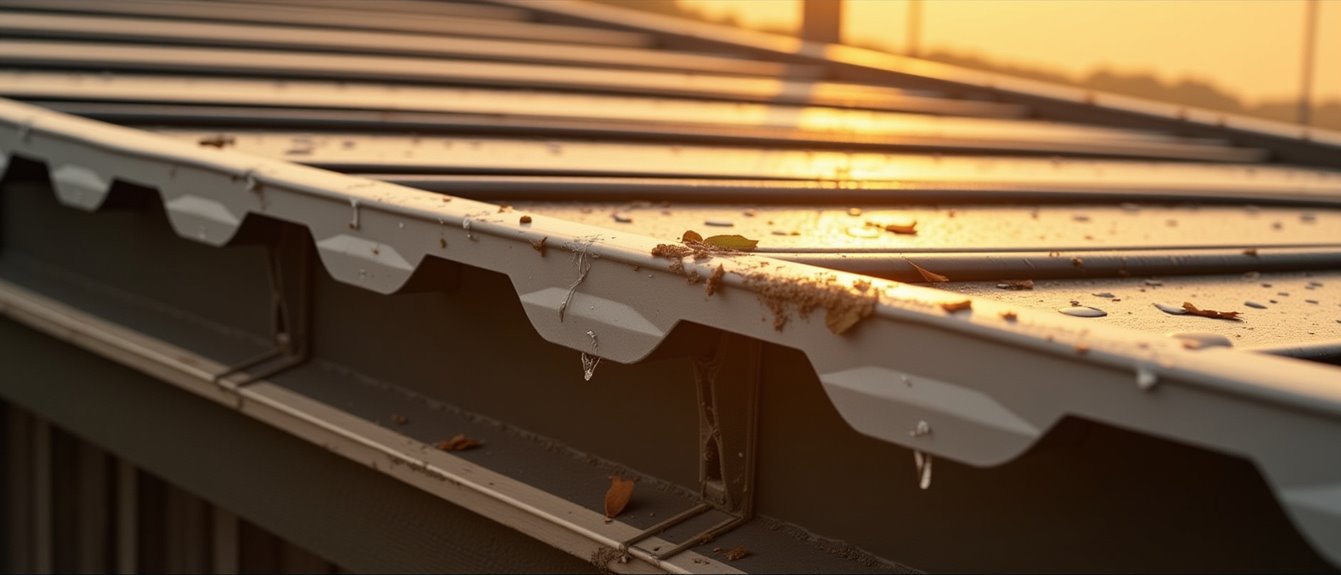
Because oversized gutters handle more water but still collect debris, you’ll need a clear maintenance plan that combines regular inspections, debris removal, and strategic guard installation to keep the system performing.
Follow biannual maintenance: do routine checks for debris buildup, test water flow with a hose, and clear any clogs before they cause overflow.
Gutter guards reduce large debris entry and cut maintenance frequency, but you’ll still watch for smaller clogging particles trapped at seams.
Check downspout placement, use 3x4-inch downspouts where runoff concentrates, to avoid pooling near the foundation.
Watch for erosion, wet spots, or sagging gutters as signs of performance loss.
Keep records of inspections and minor repairs so you catch repeat issues early and protect water flow and foundation health.
Cost, ROI, and When to Hire a Professional
When you weigh the upfront 30-40% higher cost of oversized gutters against their benefits, it’s clear they’re an investment in targeted protection: higher material and installation expenses buy greater drainage capacity that lowers the risk of foundation and water-related repairs.
You’ll pay more initially, but oversized gutters often deliver measurable ROI through fewer foundation repairs and lower maintenance costs over time. They handle heavy rainfall better, reducing water damage and the need for frequent fixes.
For optimal performance, get professional installation so sizing, slope, and downspout placement match your roof and runoff patterns. Consult a contractor if you have complex rooflines or live in a high-rainfall area; DIY fits standard systems, but not oversized gutters.
Frequently Asked Questions
What Are the Benefits of Oversized Gutters?
You’ll get better water handling, less clogging, and reduced foundation or basement risk; oversized gutters lower maintenance, suit steep roofs, and boost curb appeal, so you’ll avoid frequent repairs and manage heavy storms more reliably and efficiently.
What Is the Average Price of Having Your Gutters Cleaned?
You’ll typically pay $100, $300 for professional gutter cleaning, about $1, $2 per linear foot; expect higher charges for multi‑story or complex roofs, and consider bundled maintenance discounts to lower overall long‑term costs.
What Is Considered an Oversized Gutter?
An oversized gutter is one that’s 6 inches or larger in width, designed to handle about 40% more water than standard gutters; you’ll often pair them with larger downspouts (typically 3x4 inches) for efficient drainage.
Do Larger Gutters Make a Difference?
Right off the bat, they do, bigger gutters handle more runoff, cut overflow risk, and clog less, so you'll protect foundations and landscaping; pair them with larger downspouts and you’ll sleep easier when storms roll in.