

Summary: Upgrading to 6-inch gutters increases water capacity by about 50%, reduces overflow, clogging, and foundation or roof damage, and allows fewer downspouts for long, steep, or complex roofs. Though upfront costs are higher, larger gutters improve durability, winter performance, and long-term savings for homes with heavy rainfall or roofs over 40 feet.
If your roof, rainfall, or snowmelt exceed what 5-inch gutters can handle, upsizing to 6-inch gutters cuts overflow, lowers foundation and roof damage risk, and reduces clogging and maintenance. They handle about 50% more water, tolerate higher peak flows, and let you use fewer or larger downspouts to manage concentrated runoff from long runs, steep pitches, or complex rooflines. Upfront costs rise, but durability and winter performance improve, keep going to see sizing, downspout placement, and cost trade-offs.
Highlights
- Increased water capacity reduces overflow during heavy rain, protecting siding, landscaping, and foundations.
- Larger gutters handle steeper roofs and complex rooflines, preventing concentrated runoff damage and seam stress.
- Bigger systems require fewer downspouts and longer spans, simplifying drainage layout and reducing installation points.
- Reduced clogging and better winter performance lower maintenance needs and minimize ice-dam formation.
- Though costlier upfront, larger gutters cut long-term repair expenses and can enhance curb appeal and property value.
Quick Decision: Who Should Upsize to 6-Inch Gutters?
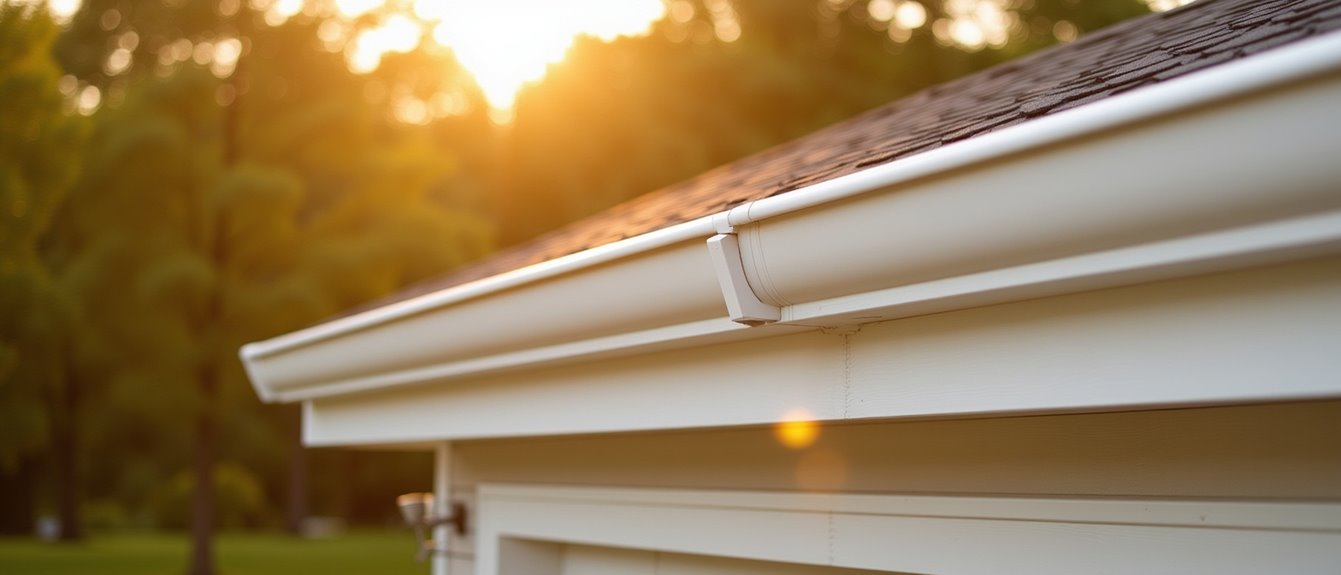
If you live in a heavy-rain area or have a long, steep, or complex roof, you should seriously consider upsizing to 6-inch gutters; they carry nearly 50% more water than 5-inch gutters, cut overflow risk, and handle multiple valleys and slopes with less clogging.
You'll want larger gutters if your roof exceeds about 40 feet, has steep pitches, or multiple valleys, those roof layouts concentrate runoff and can overwhelm a standard gutter system.
You should also choose them where snow melt or ice dam potential is high, since increased capacity reduces strain and helps protect roofing and foundation.
Upsizing supports protecting your home, improves durability, and can enhance curb appeal without complicating maintenance. Additionally, custom-fit seamless gutters provide optimal protection against water damage, ensuring your home remains safe and dry.
If you are ready to move forward, working with a trusted gutter installation company in Newport Beach ensures your system is sized and positioned correctly for your specific roof layout and local rainfall patterns.
How Gutter Size Affects Capacity and Overflow Risk
Because gutter capacity directly controls how much runoff your roof can move, choosing the right size matters for preventing overflow and water damage. You’ll reduce overflow risk by increasing gutter size: 6-inch gutters handle nearly 50% more volume than 5-inch systems, move water farther between downspouts, and cut pooling during heavy rainfall.
They also use larger downspout openings (about 3-3/8 inches), which lowers clogging from debris and improves drainage efficiency. Consider these practical points:
- Capacity: larger cross-section = higher peak flow tolerance.
- Span: 6-inch gutters can cover longer roof runs (50-60 ft) with fewer downspouts.
- Maintenance: reduced clogging means less cleaning and fewer overflow incidents.
Additionally, choosing custom sizing options based on your specific roof layout and local rainfall intensity can further enhance your drainage system's effectiveness. Choose based on roof layout and local rainfall intensity.
Do You Need 6-Inch Gutters? Roof Length, Pitch, and Rainfall Rules
Wondering whether you need 6-inch gutters for your home? Evaluate roof length first: roofs under 40 feet usually perform well with 5-inch gutters, while longer runs often require 6-inch gutters to handle increased runoff.
Consider the pitch of your roof next, steeper pitch accelerates flow, so larger gutters help channel water away before it overwhelms the system.
In regions with heavy rainfall or complex roof valleys, 6-inch gutters offer roughly 50% more capacity, reducing clogging and overflow risk. Additionally, gutter repair services can ensure your system is properly maintained and effective in handling heavy coastal rain.
If you’re facing frequent pooling or planning gutter replacement, factor in roof geometry and local storm intensity. Choosing 6-inch gutters proactively can protect your foundation and minimize emergency repairs caused by inadequate drainage.
Homeowners evaluating gutter styles beyond the standard K-style profile may also want to explore how box style gutters work and whether they suit high-volume drainage needs, since their larger cross-section can complement the capacity gains that come with upsizing. For roofs with steep pitches or metal panels, choosing the right gutters for a metal roof adds another layer of planning to ensure runoff is managed correctly from the start.
Downspouts for 6-Inch Gutters: Sizing and Spacing
Choosing the right downspouts for 6-inch gutters is crucial because these systems move roughly 50% more water than 5-inch gutters and need larger outlets, about 3-3/8 inches, to handle that flow without clogging.
You’ll want downspouts sized to match water volume handling and ensure clogging reduction during heavy rain. Consider spacing requirements and installation considerations so runoff exits efficiently.
- Determine spacing: 6-inch gutters can span 50-60 feet per downspout, reducing the number you need compared with 5-inch systems.
- Size selection: use ~3-3/8-inch outlets to optimize flow and minimize clogging, matching downspouts to roof runoff.
- Installation: position downspouts for straight, short runs to simplify discharge and protect foundation. Additionally, properly sized downspouts enhance gutter efficiency to manage heavy rain and prevent overflow.
Long Runs and Complex Roofs: Preventing Overflow and Pooling
After sizing downspouts for a 6-inch gutter system, consider how long runs and complex rooflines affect performance: longer gutters collect more water and, on standard 5-inch systems, often overflow beyond about 40 feet, but 6-inch gutters can span 50-60 feet or more and handle the increased volume. You’ll reduce overflow and pooling around the foundation by upsizing where runs exceed 40 feet or roof valleys concentrate flow. Larger downspout openings in 6-inch gutters improve drainage during heavy rainfall, providing better water management and a longer lifespan for the system. Additionally, preventive maintenance ensures that your gutters remain clear and functional throughout the rainy season. Plan gutter installation to route concentrated flows to multiple downspouts and minimize stress on seams.
| Situation | Recommendation |
|---|---|
| Long runs | 6-inch gutters |
| Complex roofs | Additional downspouts |
| Heavy rainfall | Larger downspouts |
| Foundation risk | Redirect flow away |
Maintenance and Winter Performance: Clogging, Ice Dams, and Durability

Because they carry more water and debris, 6-inch gutters cut clogging risk and simplify upkeep: their wider troughs let leaves and twigs pass or be removed more easily, reducing how often you need to clean, and their larger downspout openings keep runoff moving during intense rain or snowmelt.
You’ll find maintenance less frequent and more straightforward because debris clears faster and tools reach deeper troughs.
Winter performance improves too: the higher capacity handles heavy melt, lowering standing water that forms ice dams and reducing freeze points at downspouts.
Durability is better with heavier gauges resisting deformation and corrosion in harsh conditions.
- Reduced clogging: larger capacity displaces debris and eases maintenance.
- Ice dam mitigation: moves meltaway efficiently.
- Longevity: heavy-gauge materials increase durability.
Appearance, Cost and Installation Trade-Offs for Bigger Gutters
Having covered maintenance and winter performance, let’s look at how 6-inch gutters affect a home’s look, upfront cost, and installation needs. You’ll find larger gutters enhance appearance by matching architectural lines and can boost property value. They raise initial cost, materials and heavier profiles, but cut long-term expenses through fewer clogs and less roof repair. Installation often needs pros for correct sizing on complex roofs, which increases labor costs; however, larger capacity can mean fewer downspouts and reduced visible hardware.
| Factor | Benefit | Consideration |
|---|---|---|
| Appearance | Complements architecture | Larger profile visible |
| Cost | Long-term savings | Higher upfront cost |
| Installation | Fewer downspouts | May require pros |
| Durability | Better performance | Heavier materials |
| Maintenance | Reduced clogging | Still needs inspection |
Frequently Asked Questions
Are Larger Gutters Worth It?
Yes, you’ll often recoup the cost through reduced overflow, foundation risk, ice-damage and maintenance; 6-inch gutters handle more water, clog less, and protect complex or steep-roof homes, making them a practical long-term investment.
Is It Better to Have 5 or 6-Inch Gutters?
You should choose 6-inch gutters if you have a large roof, heavy rainfall, long runs, or want reduced clogging and fewer downspouts; choose 5-inch for smaller roofs or tighter budgets, but expect more frequent maintenance.
What Is the Best Size for Gutters?
For most homes, choose 6-inch gutters when you have long roofs, heavy rainfall, or complex rooflines; they handle about 50% more water, reduce clogging and maintenance, and let you span longer runs with fewer downspouts.
What Length Gutters Does a 2000 Sq Ft House Usually Have?
A 2000 sq ft house usually needs about 150 to 200 linear feet of gutters. You’ll measure roof edges, eaves, and slopes; complex roofs or additional downspouts will increase required length and placement considerations.
Upsizing your gutters is a straightforward upgrade when it is matched correctly to your roof. If you want help sizing a system for your home, Newport Beach Gutters offers free assessments. Call (949) 213-3332 to talk through your options.