
Summary: Metal roofs shed water fast and expand with temperature, so gutters must be sized, sloped, and fastened to match, typically 6-inch seamless aluminum, coated steel, or copper with thermal-movement brackets. Choosing corrosion-resistant materials, proper slope, and guards or heating cables, plus biannual maintenance, keeps the system leak-free and durable.
You should pick larger, corrosion‑resistant gutters (typically 6‑inch) with seamless runs and thermal‑movement compatible fasteners to handle rapid runoff from a metal roof. Choose aluminum for weight and cost, coated steel for strength, or copper/zinc for longevity. Use 3x4+ downspouts, 1/4" per 10' slope, gutter guards, snow guards and heat cables where needed. Install brackets at 24-36" and test drainage; continue for detailed installation, maintenance, and troubleshooting guidance.
Highlights
- Choose larger, commonly 6-inch seamless gutters to handle rapid runoff from metal roofs and reduce leak points.
- Select corrosion-resistant materials, aluminum for cost-effectiveness, coated steel for strength, or copper/zinc for longevity.
- Use specialized mounting brackets and fasteners spaced 24-36 inches to accommodate thermal expansion and prevent sagging.
- Maintain a 1/4 inch slope per 10 feet and at least 3x4-inch downspouts placed to direct water away from foundations.
- Add gutter guards, snow guards, and heating cables as needed, and perform biannual inspections and cleaning to prevent clogs and ice dams.
Who This Guide Is For (Homeowners, Contractors, Designers)
Whether you own, install, or design buildings, this guide gives you practical, technical guidance for choosing gutters that work with metal roofs.
You, as homeowners, get clear criteria to select gutter systems that balance aesthetics, durability, and low maintenance while protecting structure and landscape.
Contractors will find procedural detail on installation techniques, fastener selection, and material compatibility to reduce callbacks and extend service life.
Designers can evaluate aesthetic considerations, profile, finish, and material choices like aluminum or copper, to integrate gutters with architectural intent without compromising function.
Throughout, the guide ties materials and installation techniques to expected maintenance regimes and long-term durability, so you can make decisions grounded in performance data rather than aesthetics alone. Additionally, understanding custom sizing options ensures your gutter system effectively manages rainwater flow.
How Metal Roof Features Change Gutter Decisions
Because metal roofs shed water quickly and expand with temperature, you need to match gutter size, attachment, and accessories to those behaviors rather than treating the system like one for asphalt shingles.
You’ll choose larger gutters, commonly 6-inch, to handle rapid runoff in heavy rainfall and reduce overflow. Seamless gutters work best for a metal roofing system because fewer joints lower leak risk when flow spikes.
Specify mounting hardware that accommodates thermal expansion so the roof can move without stressing the gutters or fasteners; proper installation locks in that movement control.
Finally, select profiles (K-style or half-round) that balance hydraulic capacity with aesthetic appeal for a cohesive, functional roofing system. Newport Beach Gutters offers durable solutions that can enhance your gutter system's performance.
Quick Picks: Best Gutters for Metal Roofs
Selection matters: pick seamless, corrosion-resistant gutters sized and profiled to match the rapid runoff and thermal movement of metal roofs.
For reliable performance, choose seamless gutters to minimize leak points and maintain consistent water flow along metal roofing edges.
Aluminum gutters offer a rust-resistant, lightweight solution with color options that integrate with roof panels.
Copper gutters deliver longevity and a distinct aesthetic through patina development, suitable if you prioritize long-term durability.
In heavy rainfall zones, specify K-Style gutters and consider upsizing to 6-inch for optimal drainage; 5-inch often suffices elsewhere.
Ensure proper sizing and secure attachment to accommodate thermal movement and increased runoff.
Prioritize materials and profiles that handle peak water flow without compromising the roof edge or fasteners. Additionally, consider custom lengths fabricated to ensure a tight fit and efficient drainage.
Which Gutter Materials Work Best With Metal Roofs: Aluminum, Steel, Copper
Having picked the right profile and size, you now need to match gutter material to your metal roof's performance needs. Choose based on load, longevity and budget:
Aluminum is lightweight, rust-resistant, cost-effective, and suits most metal roofs in moderate local climate conditions; it also aligns well with coastal conditions to ensure durability against harsh weather.
Homeowners seeking a trusted gutter installation in Newport Beach can rely on local expertise to match the right aluminum or steel system to the specific rainfall and coastal conditions of Orange County.
Steel delivers superior strength for heavy rain and severe weather but needs a rust-resistant coating and careful installation.
Copper offers enduring aesthetics and low maintenance requirements with a patina that protects over time, ideal for high-end projects.
- Aluminum: easy installation, low cost, good optimal performance for typical climates.
- Steel: high strength, coated to resist corrosion, better for heavy runoff.
- Copper: high upfront cost, minimal maintenance, long-term value.
- Consider zinc where longevity with minimal maintenance is a priority.
| Material | Strength | Cost | Best For |
|---|---|---|---|
| Aluminum | Rust-resistant, lightweight | Cost-effective | Moderate, coastal climates |
| Steel | Superior strength | Higher, needs coating | Heavy rain, severe weather |
| Copper | Durable, develops patina | High upfront cost | High-end, long-term value |
| Zinc | Long-lasting, low maintenance | Moderate to high | Longevity priority projects |
Why Seamless Gutters Usually Win for Metal Roofs
For most metal roofs, seamless gutters outperform sectional systems by eliminating joints where leaks and clogs typically start; they’re fabricated to your roof’s exact dimensions so water flows more efficiently and maintenance needs drop.
You’ll find seamless gutters increase water flow capacity and reduce leaks because the continuous profile removes seam-related failure points.
On a metal roof, that means predictable water runoff and lower long-term maintenance costs versus sectional alternatives. They’re also more aesthetically pleasing, creating a clean edge that complements metal roofing lines.
Achieving those benefits depends on proper installation, you need professional installation to set correct alignment and pitch for effective drainage. Additionally, investing in preventive maintenance can further enhance the longevity and performance of your gutter system.
Getting professional installation right the first time saves you from costly repairs down the road. If you are ready to find a qualified installer for your metal roof gutter project, contact (949) 213-3332 to speak with the team at Newport Beach Gutters and get an estimate tailored to your home.
Invest in quality fabrication and expert fitting to maximize performance and longevity.
Sizing Gutters & Downspouts for Heavy Water Shed From Metal Roofs
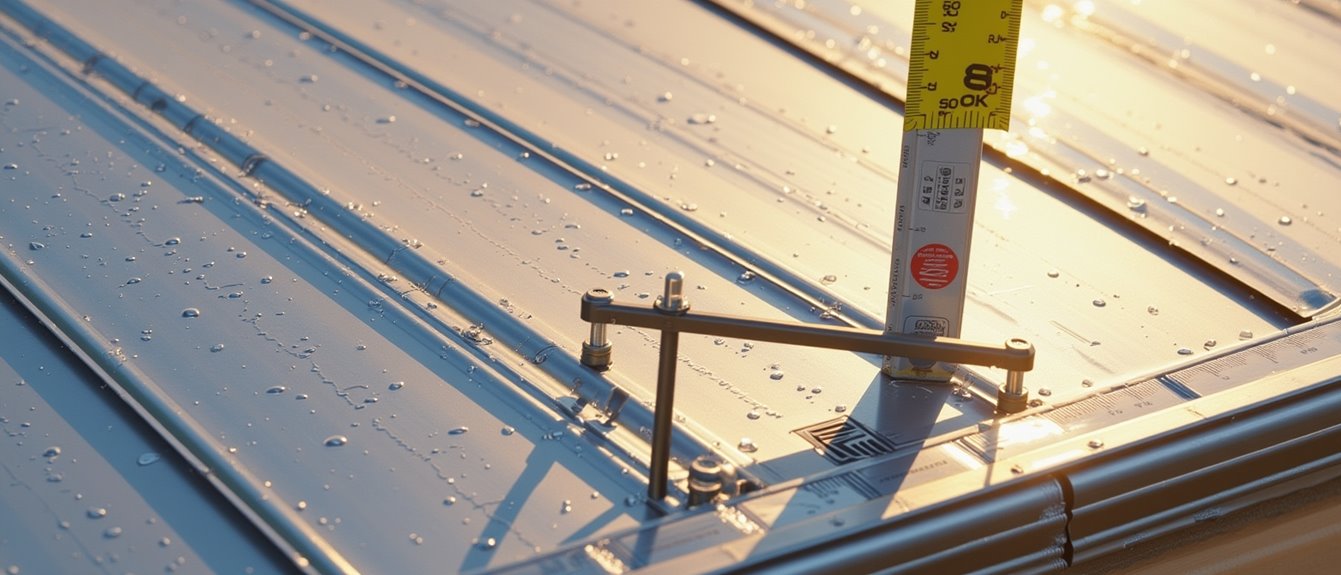
Seamless gutters give you predictable runoff, but when a metal roof sheds large volumes fast you need to size the system to match, undersized gutters or downspouts will overflow no matter how well they're fitted.
Use 6-inch gutters in heavy rainfall areas; oversized gutters handle rapid shedding from steep metal roofs and reduce risk of clogs and water damage.
Specify downspouts at least 3x4 inches and place outlets so drainage carries water 4-6 feet from the foundation.
Maintain a proper slope of 1/4 inch per 10 feet for optimal flow.
- Calculate roof catchment and select a 6-inch gutter system for heavy rainfall.
- Use 3x4 downspouts to ensure reliable drainage.
- Maintain 1/4" per 10' slope.
- Route downspouts to prevent overflow and foundation damage.
Mounting and Fasteners That Allow Thermal Movement on Metal Roofs
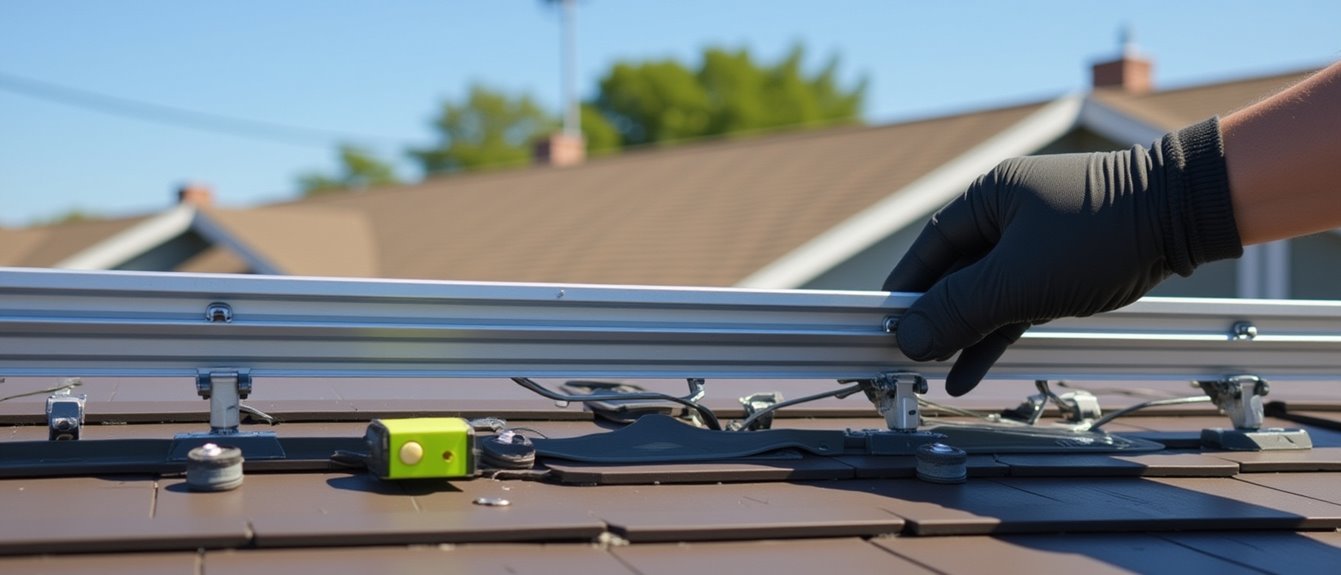
Because metal roofs expand and contract significantly, you need mounting brackets and fasteners that accommodate movement without stressing the gutter line.
Use specialized mounting brackets designed for metal roofs so thermal expansion doesn’t distort alignment or compromise drainage.
Space brackets per manufacturer guidance, typically 24-36 inches, to support load and movement.
Choose fasteners in stainless steel or aluminum to resist corrosion and perform predictably across temperature cycles.
Incorporate expansion joints at roof transitions, long runs, and corners to isolate movement and preserve structural integrity.
Secure but allow sliding where specified; don’t rigidly fix the system to expanding panels.
Implement a regular inspection schedule to check for loosening, wear, or seal failure.
Proper hardware selection and maintenance keep gutters functioning with metal roofs.
Gutter Guards, Snow Guards & Ice‑Mitigation for Year‑Round Performance
When you pair fitted gutter guards with properly positioned snow guards and targeted heating cables, the gutter system will handle debris, heavy rain, snow slides, and ice buildup without compromising drainage or roof integrity.
You’ll reduce debris accumulation and maintain effective water management through the seasons. Prioritize professional installation to ensure correct attachment, spacing, and integration with roof seams.
- Gutter guards: keep leaves out, reduce cleaning, preserve water drainage rates.
- Snow guards: control snow release, prevent sudden slides that can damage gutters and landscaping.
- Heating cables: provide ice mitigation in gutters and downspouts to prevent dams and leaks.
- Combined approach: coordinated components deliver year-round performance and help prevent damage to roof assemblies.
Specify materials and placement to match your metal roof profile.
Installation Steps for Gutters on Metal Roofs (Metal‑Specific Checklist)
Before you start fastening anything, confirm the materials, layout, and fastener pattern that match your metal roof profile and thermal movement characteristics.
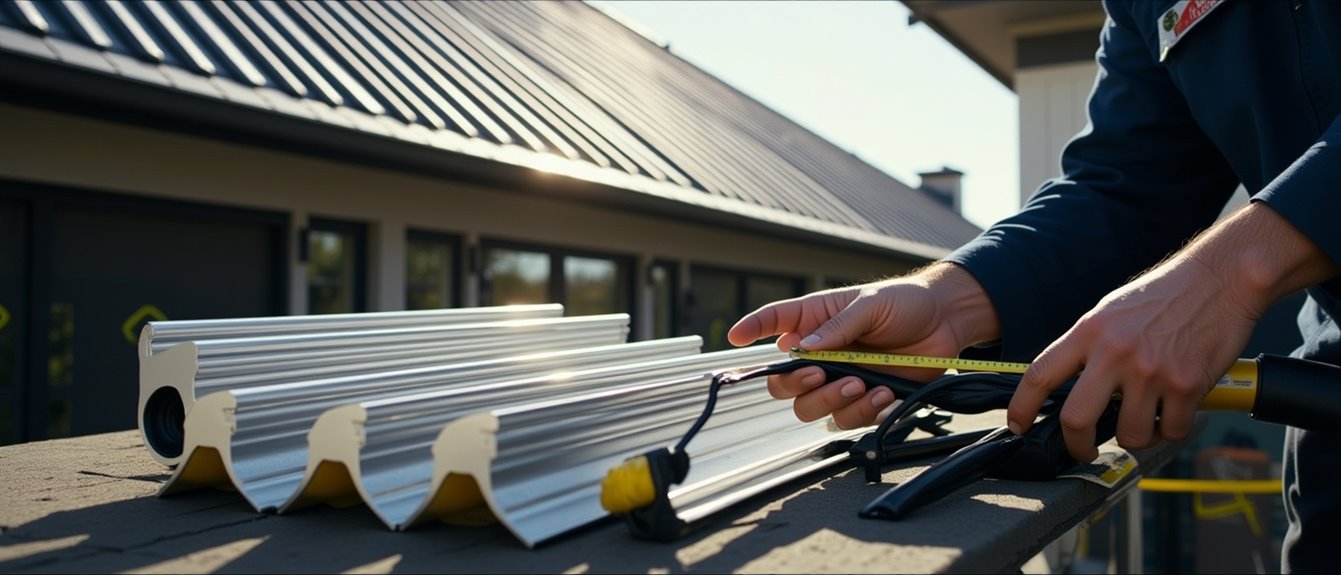
Select corrosion-resistant aluminum or coated steel gutters sized for your roof runoff. Measure and mark a consistent proper slope of 1/4 inch per 10 feet toward downspouts.
Lay out seamless gutters when possible to reduce joints and improve water flow. Position brackets at specified bracket spacing of 24-36 inches, using fasteners compatible with metal roofing to allow movement.
Cut and seal transitions, install end caps and downspouts, then secure hangers without deforming the roof panels.
Perform system testing by simulating rain, inspect for drainage issues, and document for future maintenance and warranty records.
Troubleshooting & Maintenance: Leaks, Clogs, Sagging, Ice Dams
After you've installed and tested the gutter system, ongoing troubleshooting and maintenance keep it performing under real-world conditions.
You’ll do regular inspections to catch leaks at joints and seams, using quality sealants where metal panels meet.
Set a cleaning schedule, ideally twice yearly, to remove debris and prevent clogs; consider gutter guards to reduce frequency.
Verify mounting bracket spacing (24-36 inches) and tighten or add brackets to stop sagging.
Prevent ice dams by improving attic insulation and ventilation so roof heat doesn’t melt snow into gutters that refreeze.
- Inspect joints and seams, seal promptly to prevent leaks.
- Clean gutters biannually; install gutter guards to limit clogs.
- Check bracket spacing; correct sagging with added supports.
- Pre‑winter attic insulation/ventilation to avoid ice dams.
Frequently Asked Questions
Do Gutter Colors Need Special Coatings to Match Metal Roofs?
Yes, you’ll want coated gutters to match metal roofs. Use prefinished Kynar or polyester paints with corrosion-resistant undercoats; they provide color stability, adhesion, and weather resistance, ensuring consistent appearance and long-term performance.
Can Gutters Be Installed on Historic or Standing-Seam Metal Roofs?
Like a tailor altering a vintage coat, you can install gutters on historic or standing‑seam metal roofs; use nonpenetrating clips, concealed fasteners, or engineered straps, and follow preservation standards plus installer-tested load and corrosion data.
How Do Warranties Interact Between Metal Roofs and Gutter Systems?
Warranties can interact: you’ll need to verify that gutter attachments and fasteners won’t void your metal roof warranty, confirm compatible materials/coatings, and document professional installation to preserve both warranties and ensure responsibility for related failures.
Are There Tax Credits or Rebates for Upgrading Gutters With Metal Roofs?
Possibly. Policies, programs, and provider rebates vary, so you’ll need to check local, state, and federal incentives; consult your contractor and utility or tax advisor, document eligible energy-efficient upgrades, and retain receipts for potential credits.
What Winter Maintenance Differs for Coastal Versus Inland Metal Roofs?
Coastal roofs need more corrosion inspections, salt rinses, and sacrificial coatings; inland roofs need focused snow/ice management and thermal movement checks. You’ll schedule inspections seasonally, address fastener corrosion, and clear gutters promptly.