
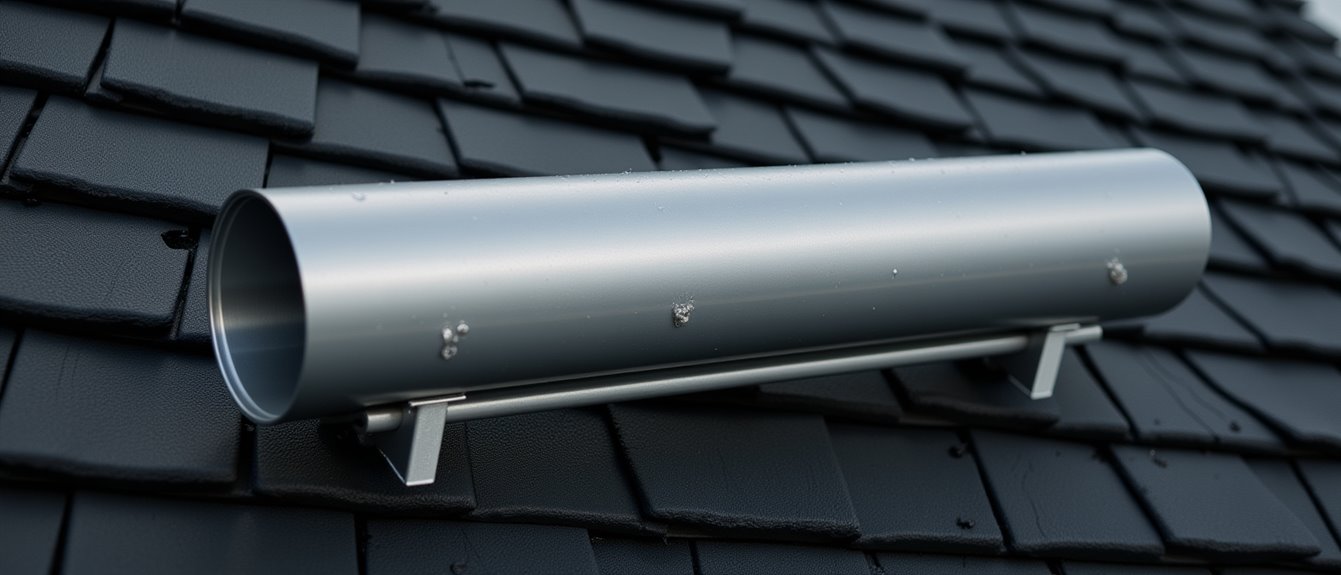
Summary: Half-round gutters are semicircular troughs, common on historic and upscale homes, that offer smooth water flow, less clogging, and lower maintenance than K-style gutters but cost 20 to 40 percent more and need specialized brackets. Choose them for classic aesthetics and durability, or K-style for higher capacity and lower cost.
Half‑round gutters are the classic, semicircular troughs that channel roof water smoothly away from your home. You’ll get efficient flow and less clogging thanks to their rounded shape, plus a cleaner, historic look that suits older or upscale houses. They come in aluminum, copper, or galvanized steel with painted or natural finishes, and need special brackets and slightly higher upfront cost. They’re durable with lower routine maintenance, and if you want details on installation, costs, and care, keep going.
Highlights
- Half-round gutters are semi-circular troughs that channel roof water away using a smooth, curved profile.
- They offer cleaner aesthetics and historical authenticity often used on period homes.
- Smooth interior reduces clogging and eases routine cleaning compared with K-style gutters.
- Common materials include aluminum, copper, and galvanized steel with various finishes.
- They cost 20-40% more, need specialized brackets, and typically last longer than K-style.
What Is a Half‑Round Gutter?

Think of a half-round gutter as a simple, semi-circular trough that channels roof water away from your home. Its smooth, curved shape promotes efficient flow and sheds debris better than boxier K-style profiles.
You’ll notice half-round gutters were the earliest metal gutters, often found on historic homes where the rounded look preserves period character. When you compare them to K-style gutters, the half-round’s profile is cleaner but typically narrower, so it handles less volume in heavy storms.
Installing them can demand specialized brackets and skilled gutter installation versus standard systems. If you want authenticity and smoother flow, they’re great, but you’ll need to weigh aesthetic benefits against drainage limits and installation needs. Additionally, custom-fit seamless gutters from reputable contractors can enhance their performance and longevity.
Half‑Round Gutter Materials and Finishes
Now that you know what a half‑round gutter looks like and how it performs, the next choice is which material and finish will meet your needs. You’ll pick aluminum for light weight and color options, copper for long life and a distinctive patina, or galvanized steel for strength where impact resistance matters. Finishes, painted, anodized, or natural, let you match trim or embrace aging. Additionally, selecting the right custom sizing will ensure optimal performance and drainage efficiency.
| Material | Strengths |
|---|---|
| Aluminum | Lightweight, many colors |
| Copper | Corrosion‑resistant, long‑lasting patina |
| Galvanized steel | Very strong, impact‑resistant |
| Finishes | Painted, anodized, natural options |
Consider budget, climate, and desired look; each choice affects maintenance, longevity, and curb appeal.
Half‑Round vs K‑Style Gutters: Drainage and Maintenance
Although half‑round gutters look sleeker, they channel water more smoothly because of their rounded profile, so you're less likely to get stubborn clogs than with K‑style gutters.
You’ll find half round gutters let debris flow out easier, making routine cleaning quicker. K style gutters, however, have greater drainage capacity and handle heavy rainfall better, so you might choose them in wetter climates to avoid overflow.
Maintenance differs: half‑round systems often need more brackets, which can create small gaps to monitor, while K‑style uses fewer brackets and a streamlined install.
No system is truly maintenance free, but half‑rounds reduce clog frequency. Additionally, choosing the right gutter system can protect your home from potential water damage caused by inadequate drainage.
Decide based on local rainfall, roof runoff, and how much maintenance you’re willing to do.
Cost, Lifespan, and When to Choose Half‑Round Gutters
Beyond drainage and maintenance, you’ll want to weigh cost and longevity when choosing half‑round gutters. They cost 20-40% more than K‑style because thicker materials and premium shaping increase price and often need specialized brackets; installation can be pricier and more complex. Their longer lifespan and durable materials mean fewer repairs and replacements over time, so you'll recoup value if you plan to stay long term. They boost aesthetic appeal and work well where visual accuracy matters, and they reduce clogging while improving water flow. Consider them over seamless gutters for historic restoration or when appearance matters.
| Feature | Impact |
|---|---|
| Upfront cost | Higher |
| Lifespan | Longer |
| Maintenance | Lower |
| Aesthetic appeal | Strong |
Architectural Styles That Suit Half‑Round Gutters
When you want gutters that look as intentional as the house itself, half‑round profiles are an excellent match for historic and classically styled homes. Their rounded, U‑shaped form echoes the curves found in Victorian, Colonial, and masonry architecture and preserves period authenticity while improving drainage.
You’ll find they reinforce a vintage aesthetic on older properties and add refined contrast on some contemporary designs. Architects recommend them for masonry buildings because they integrate cleanly with brick and stone facades.
- Victorian and Colonial, accent curved eaves and ornamentation with a half-round gutter that complements detailed trim.
- Masonry buildings, choose them to maintain historical lines and to match mortar and stone textures.
- Modern eclectic, use a subtle half-round gutter to introduce elegance without overpowering minimalist planes.
Half‑Round Gutter Mounting Methods and Installation Tips
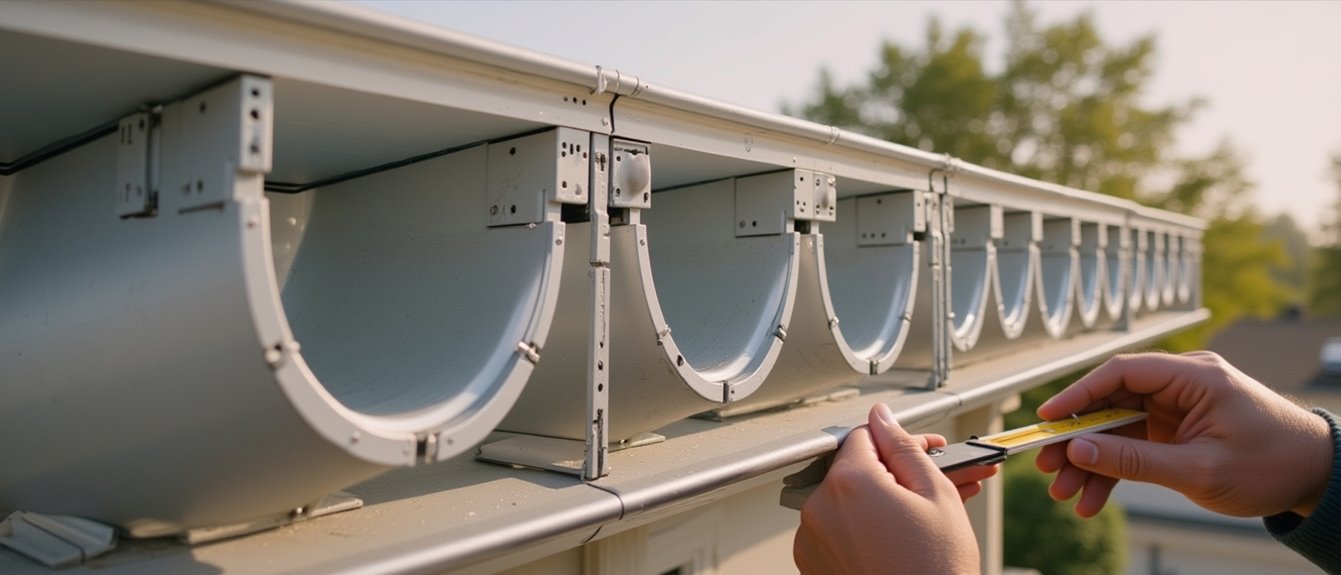
If you want your half‑round gutters to perform and look right, start with the right brackets and spacing: use the specialized supports designed for the U‑shaped profile, set them every 2 to 3 feet, and position the gutter slightly below the roofline so water flows toward downspouts at a minimum pitch of 1 inch per 10 feet.
Use a level during installation to maintain that slope and avoid pooling. Secure brackets tightly to prevent gaps that cause sagging or leaks.
Size and place downspouts so they extend 3-4 feet from the foundation to reduce risk of water damage. Additionally, consider using custom hangers for better support and alignment to enhance overall performance.
For expert guidance on half-round gutter installation in your area, reach out to Newport Beach Gutters or call (949) 213-3332 to get a free estimate from a team that knows the right brackets, pitch, and materials for your home.
These installation tips help your gutter system handle runoff efficiently; if you follow them, you’ll minimize maintenance and protect your home.
Winter Care, Cleaning, and Protection for Half‑Round Gutters
Because ice and debris can quickly turn gutters from helpful to harmful, you should make winter care and regular cleaning a top priority for your half‑round system.
Inspect gutters before freeze-up: look for rust, cracks, loose screws, and clogged downspouts so water won't back up and form ice dams during heavy snow. The half‑round shape sheds debris more readily, but you still need routine attention.
- Clean debris by hand or with a hose; focus on downspouts and corners to prevent blockages and ice buildup.
- Install a leaf guard and consider snow guards to reduce accumulation and simplify winter maintenance.
- Ensure downspouts extend away from the foundation to keep melting snow from refreezing near your house. Regular gutter cleaning is essential to maintain clear drainage and prevent damage.
Frequently Asked Questions
What Are the Disadvantages of Half-Round Gutters?
They’re less efficient in heavy storms, cost more to buy and install, need stronger hangers, can overflow or leak at joints, demand more maintenance, and risk pooling-induced corrosion and shortened lifespan if not properly cared for.
Why Are Half-Round Gutters More Expensive?
Think of a handcrafted watch: you’ll pay more because half-round gutters use thicker, premium materials, need specialized brackets and labor, boast historical craftsmanship, and last longer, so higher upfront costs often mean better long-term value.
Which Is Better, Half Round or K-Style Gutters?
Neither’s universally better; you’ll choose based on priorities. Pick K-style if you need higher capacity and lower cost; pick half-round for classic looks, easier cleaning, and historical appeal despite higher price and specialized installation.
Which Is Better, Half-Round or Square Guttering?
It depends: you’ll pick square gutters for greater water capacity and cost-effectiveness, but choose half-round if you want easier maintenance, classic aesthetics, and don’t mind paying more, match choice to rainfall, budget, and style.