
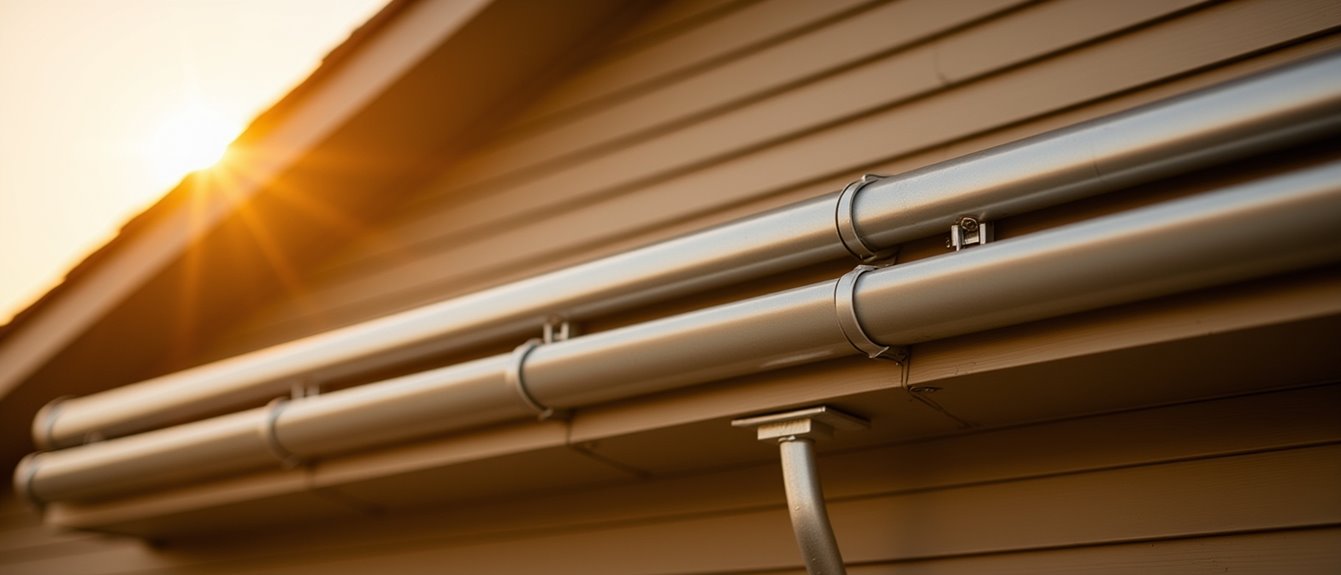
Summary: Galvanized half round gutters resist corrosion, shed water efficiently, and need less frequent cleaning, making them a durable, low-maintenance choice for traditional home styles. Proper sizing, slope, and installation maximize their long-term value, so consult a local specialist to assess your roof and rainfall needs.
You’ll get reliable, low‑maintenance roof drainage with galvanized half‑round gutters that resist corrosion, shed water quickly, and cut clogging risks thanks to a smooth rounded profile. They’re strong, impact‑resistant, and hold larger volumes, lowering overflow during heavy storms. Properly sized and sloped, they protect foundations and landscaping while matching traditional architecture for better curb appeal. They’re recyclable and cost‑effective over time, with modest upkeep, and you’ll find practical installation and maintenance tips ahead.
Highlights
- Smooth, rounded half-round profile promotes rapid runoff, reducing clogs and overflow during heavy rain.
- Galvanized steel with zinc coating resists corrosion and extends service life with minimal deformation.
- Larger interior diameter increases capacity, lowering overflow risk and protecting foundations and landscaping.
- Classic half-round design enhances curb appeal and complements historic and traditional architectural styles.
- Low-maintenance, self-cleaning effect and high recyclability reduce long-term costs and environmental impact.
Are Galvanized Half‑Round Gutters Right for Your Home?
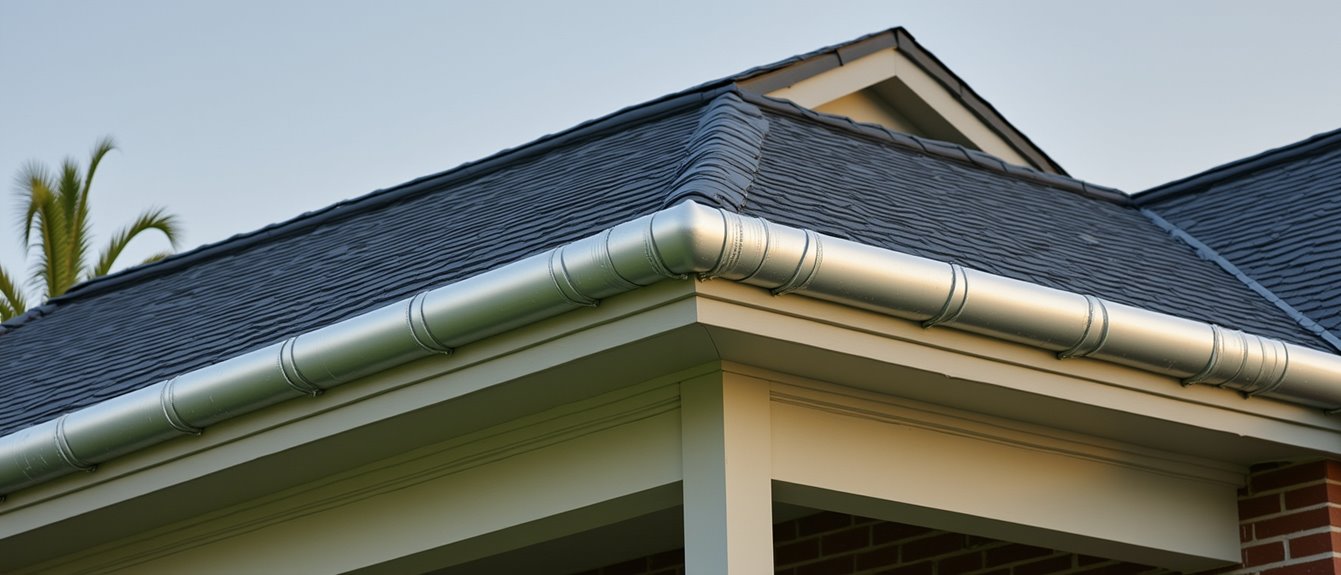
Wondering whether galvanized half‑round gutters suit your home? You’ll find they deliver efficient water management: the smooth, rounded profile promotes rapid runoff, reducing clogs and overflow in heavy rain.
You can size them (commonly 5-6 inches) to match roof area and local precipitation, so capacity aligns with performance needs. Built from galvanized steel, they combine structural strength with a protective zinc coating, minimizing upkeep while giving predictable service life.
Maintenance is simpler because debris slides off the curved surface, cutting cleaning frequency.
Aesthetic appeal is another factor, the classic half‑round form complements historic and traditional architectures without appearing industrial. Additionally, choosing custom-fit seamless gutters ensures optimal protection for your property by preventing foundation washouts.
If you want functional performance with understated style, these gutters are worth serious consideration.
Key Durability and Corrosion Benefits of Galvanized Half‑Round Gutters
Because they're coated in zinc, galvanized half‑round gutters resist corrosion and can last for decades with routine care. You get corrosion resistance that actively protects the steel substrate, reducing pitting and generalized rust.
Their structural strength gives you durability under snow loads, wind, and impact compared with plastic or thin aluminum. Inspect and maintain seals and hangers to catch wear early and preserve performance.
- Zinc coating: sacrificial barrier that prevents oxidation.
- Robust steel: resists deformation and impact damage.
- Smooth interior: limits debris buildup and localized corrosion.
- Maintenance: periodic inspections extend service life.
Choose galvanized half‑round gutters when you need a technically reliable system that balances long-term durability and proven corrosion resistance.
Half‑Round Design: Improved Water Flow and Fewer Clogs
When you choose half‑round galvanized gutters, their curved profile channels water more smoothly than box-style systems, reducing turbulence and the chance of clogs.
You’ll get improved water flow because the semicircular cross-section promotes laminar movement; debris encounters less resistance and is carried through more effectively.
The larger interior diameter versus square gutters increases capacity during heavy rainfall, lowering overflow risk and pooling at downspouts.
The smooth metal surface aids a self-cleaning effect, so leaves and small particles are less likely to adhere.
In cold conditions, the rounded geometry reduces ice‑dam formation by allowing meltwater to drain faster. Additionally, regular preventive maintenance can further enhance the performance and longevity of your gutter system.
Maintenance Needs: How Often and What It Costs
The half‑round profile’s smoother flow and reduced debris buildup already cuts down how often you’ll need service, but you still should plan maintenance on a regular schedule.
You’ll want scheduled cleaning at least twice a year to prevent clogs and preserve flow capacity. Seasonal inspections spot rust or fastener issues before they escalate.
- Biannual cleaning frequency: minimum two times per year.
- Cleaning costs: typically $100, $300, variable by size and access.
- Seasonal inspection: look for corrosion, seams, and hangers.
- Professional installation impact: reduces early maintenance and failure rates; installation averages $6-12 per linear foot.
Budget for regular maintenance and inspections; they’re cheaper than reactive repairs and extend system life. Additionally, ensuring smart drainage solutions in your system can further enhance its longevity and performance.
Picking the Right Size for Heavy Rain
If you expect heavy storms, size your gutters up so they can move peak runoff without overflowing; for most high‑rain areas that means 6‑inch galvanized half‑rounds rather than the standard 5‑inch. You’ll handle larger volumes of water with less risk of overflow, reduced maintenance, and fewer clogs.
Determine the optimal size by roof area: provide roughly one square inch of gutter per square foot of roof. In regions exceeding ~30 inches annual rainfall, err on the larger side.
Pair 6‑inch half round gutters with larger downspouts (3x4 or 4‑inch) to maintain flow capacity during intense events. Additionally, consider using seamless gutters as they are custom-formed on site, reducing the chances of leaks.
Check local climate data and calculate peak runoff for your roof to confirm sizing; this technical approach ensures performance and longevity without oversizing unnecessarily.
For expert guidance on sizing and installing galvanized half-round gutters at your home, reach out to Newport Beach Gutters or call (949) 213-3332 to speak with a local specialist who can assess your roof area and local rainfall conditions.
Installing Galvanized Half‑Round Gutters: DIY vs. Hiring a Pro
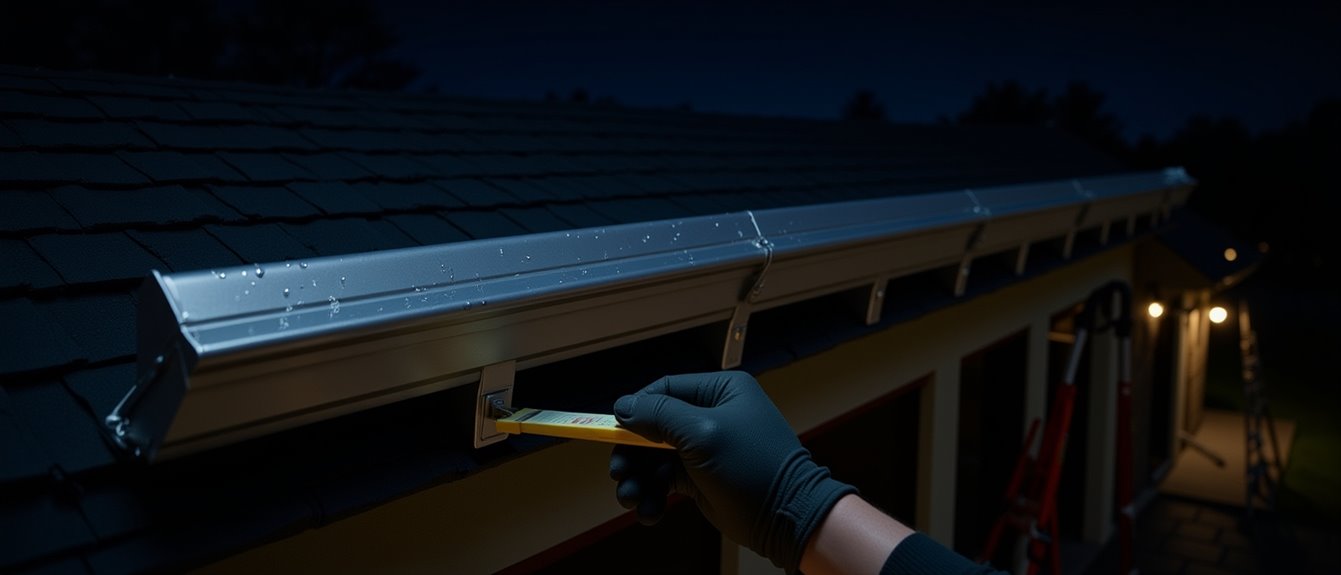
Because precise measurements, correct slopes, and tight joints determine long‑term performance, you should weigh cost savings against the technical demands before deciding to DIY galvanized half‑round gutters.
If you have metalworking skills and the right tools, DIY installation can work, but you'll need to ensure accurate cuts, a consistent slope, and secure fastenings to prevent leaks.
Hiring a professional reduces risk and typically includes a warranty and cleaner miters and brackets.
- Assess your skills: cutting, measuring, and joining metal precisely.
- Tools required: metal snips, crimpers, level, and secure ladders.
- Professional benefits: experience, warranty, and reliable water flow.
- Maintenance realities: cleaning and inspections are your responsibility if DIY.
Additionally, gutter repair services can help ensure that your installation meets the specific needs of your home and local conditions.
Decide based on competence, time, and risk tolerance.
Cost vs. Value: Long‑Term Savings and ROI
Having weighed DIY risks and pro benefits, you should compare upfront costs to long‑term value when choosing galvanized half‑round gutters.
Galvanized half round gutters cost may be higher, typically $10, $30 per linear foot, but that reflects the quality of materials and zinc coating that resists corrosion.
You’ll spend less over decades because durability reduces replacement cycles and cleaning frequency, producing measurable long-term savings.
Efficient water management prevents foundation and landscape damage, avoiding expensive repairs that would negate initial savings.
The gutters’ classic aesthetic can increase resale appeal, adding to ROI.
Evaluate lifecycle expenses (installation, maintenance, occasional repairs) against projected replacement costs for cheaper alternatives to quantify net present value for your home.
Recyclability and Lifecycle Impact of Galvanized Half‑Round Gutters
When you choose galvanized half‑round gutters, you're selecting a product whose zinc‑coated steel isn't only durable but highly recyclable.
So most of the material can be reclaimed at end‑of‑life and fed back into steelmaking. That recyclability reduces landfill waste and supports a circular economy.
Their durability extends service life, cutting replacement frequency and lifetime environmental cost.
Manufacturing galvanized steel typically uses less energy than some alternatives, lowering production environmental footprint.
Efficient rainwater management also reduces soil erosion and runoff.
- Long service life: fewer replacements, lower lifecycle waste.
- High recovery value: steel scrap re-enters mills efficiently.
- Production efficiency: reduced energy per ton versus some materials.
- Stewardship: preserves historic aesthetics while minimizing footprint.
Best Home Styles and Use Cases for Half‑Round Gutters
Half‑round galvanized gutters suit several home styles, Colonial, Victorian, Craftsman, Mediterranean, and modern farmhouse, because their rounded profile reinforces historic or rustic aesthetics while staying efficient and low‑maintenance. You’ll find half round gutters align with period detailing and boost homes aesthetic without appearing heavy or modern. Their geometry promotes efficient water flow, so they’re practical for heavy‑rain regions and reduce risk of runoff damage. Use cases include preservation projects, curb‑appeal upgrades, and functional replacements where form matters as much as performance.
| Home Style | Best Use |
|---|---|
| Colonial / Victorian | Maintain historic character, seamless visual lines |
| Craftsman | Match smooth eaves, integrate with woodwork |
| Mediterranean | Complement tile roofs, preserve silhouette |
| Modern farmhouse | Add rustic elegance, ensure robust drainage |
Common Installation Pitfalls and How to Avoid Them
Those aesthetic and performance benefits only hold up if the gutters are installed correctly, so you should watch for a few common mistakes that can undermine them. You’ll prevent premature failures by addressing slope, support, joints, handling, and downspout placement during the installation process.
- Improper slope, confirm 1/4 inch drop per 10 feet to avoid pooling and overflow that cause water damage.
- Inadequate support, space hangers every 2-3 feet to prevent sagging or detachment under load.
- Ignoring joints and seams, use proper sealants or solder critical connections for a watertight system.
- Incorrect material handling & downspout errors, avoid bending galvanized steel and place downspouts to direct flow away from the foundation.
Follow these checks to maintain performance and limit repair needs.
Frequently Asked Questions
What Are the Disadvantages of Half-Round Gutters?
They’re pricier, harder to DIY, can be incompatible with some rooflines, may struggle with heavy snow loads, and still need periodic inspections for downspout blockages despite reduced maintenance, potentially raising long-term costs and complexity.
Why Use Half-Round Gutters?
You’ll choose half-round gutters because they channel water efficiently, resist clogging, require less maintenance, handle heavy rainfall, and, when galvanized, offer durable corrosion protection, extending service life while preserving aesthetics and reducing long-term repair costs.
How Long Do Galvanized Gutters Last?
They'll last about 20 to 50 years depending on environment, maintenance, and installation. With proper zinc coating, slope, supports, and regular inspections you’ll minimize rust and blockages, extending service life toward the upper range.
Which Is Better, Half Round or K-Style Gutters?
Half-round gutters are better for reduced clogging and longevity; studies show they clear debris about 30% faster. You’ll prefer them for durability and aesthetics, while K-style wins if you need lower upfront cost and wider availability.
Galvanized half round systems perform best when they are sized and pitched correctly for your roofline, so it is worth having experienced Newport Beach gutter installers evaluate your home before you commit to a material.