
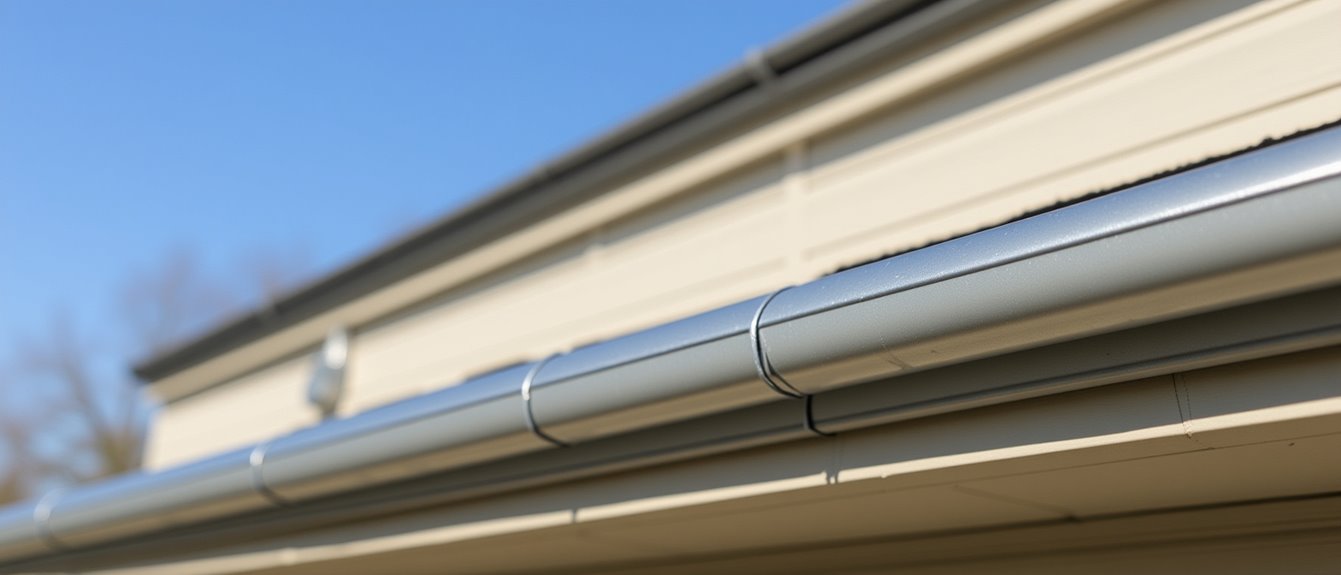
Summary: Galvalume gutters use a 55% aluminum, 45% zinc coating on steel, giving them 75-150 years of life and stronger corrosion resistance than galvanized steel. They cost more upfront and need skilled installation, but offer lower long-term maintenance and a durable, modern finish.
You’re getting steel gutters coated with a 55% aluminum, 45% zinc alloy that combines steel’s strength with superior corrosion resistance and heat reflectivity. The hot‑dip process bonds an even, durable layer that slows rust and often outlasts galvanized alternatives by decades. Expect minimal maintenance, strong weather performance, and a sleek finish in multiple colors, though installation needs careful handling. Keep going and you’ll find detailed comparisons, lifespan data, cost insights, and installation guidance.
Highlights
- Galvalume gutters are steel gutters coated with a 55% aluminum, 45% zinc alloy for enhanced corrosion protection.
- The hot-dip coating process creates a durable, even layer that resists rust and reflects heat.
- They typically last 75-150 years with proper installation and routine inspections.
- Compared to galvanized gutters, Galvalume offers superior longevity and corrosion resistance with slightly higher upfront cost.
- Best for many climates but can degrade faster in highly alkaline or aggressive coastal environments.
What Is Galvalume (And How Galvalume Gutters Are Made)
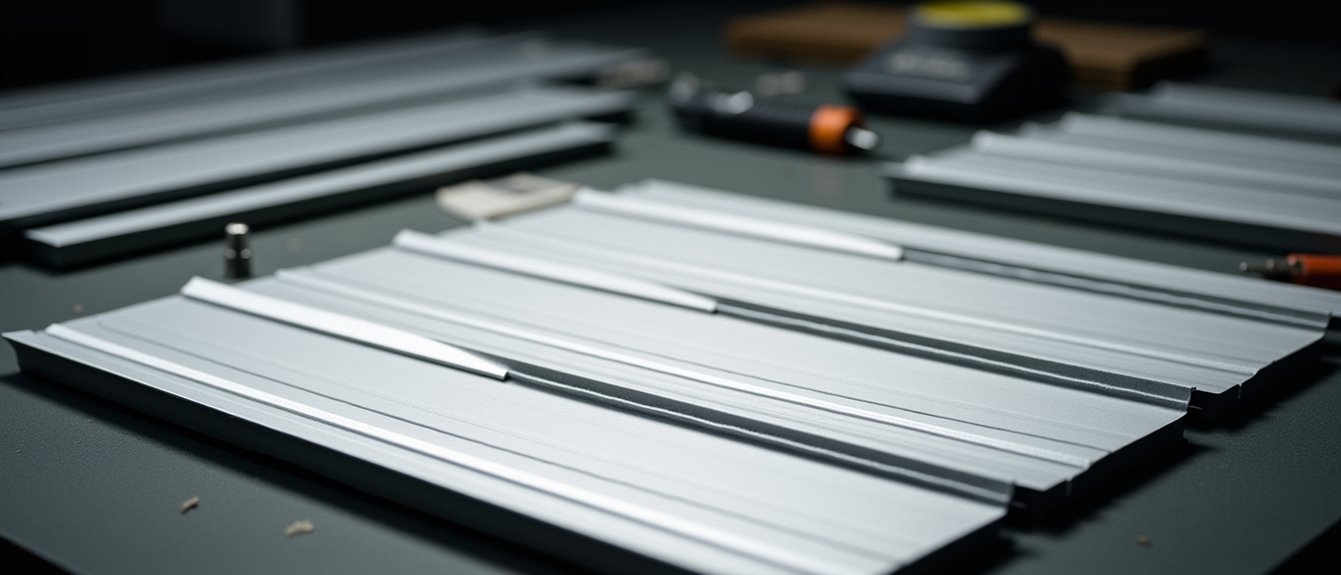
When you choose Galvalume, you’re getting steel coated in a 55% aluminum, 45% zinc alloy that outperforms traditional galvanized steel in corrosion resistance and longevity. Manufacturers apply this alloy via a hot-dip process to ensure an even, durable layer that can extend service life to 75-150 years with proper maintenance.
You’ll recognize Galvalume by its aluminum-zinc coating that interrupts rust initiation and reflects heat, reducing thermal absorption.
Production involves continuous cleaning, fluxing, and immersion in molten alloy to achieve metallurgical bonding and a consistent durable coating.
For gutter installation, you’ll need technicians versed in joining and sealing methods compatible with Galvalume, since conventional soldering isn’t suitable. Proper handling preserves the coating’s protective and reflective properties.
Galvalume Gutters vs Galvanized Gutters: Key Differences
Having covered how Galvalume is made and why its aluminum‑zinc alloy protects steel, you’ll want to compare it directly with traditional galvanized gutters to choose the best material for your project.
Galvalume gutters use a 55% aluminum/45% zinc coating; galvanized steel relies solely on zinc. That composition difference drives superior corrosion resistance for Galvalume, which can remain corrosion-free for over 50 years, while galvanized options often begin to show corrosion within about 20 years.
Longevity of Galvalume can reach up to 150 years with proper maintenance, offering better long-term value despite a slightly higher initial cost.
When you are ready to get an estimate or discuss whether Galvalume gutters are right for your home, Newport Beach Gutters is here to help. Call us at (949) 213-3332 to speak with a specialist about your project.
Note installation differs: Galvalume demands skilled handling and can't be soldered, potentially increasing installation complexity versus galvanized systems.
| Feature | Galvalume | Galvanized |
|---|---|---|
| Coating | 55% aluminum, 45% zinc | Zinc only |
| Corrosion resistance | 50+ years | About 20 years |
| Lifespan | 75-150 years | Shorter |
| Installation | Needs bonding, skilled labor | Solderable, simpler |
| Upfront cost | Higher | Lower |
Lifespan and Real-World Durability
Because Galvalume pairs aluminum and zinc in a resilient coating, you can expect gutters that routinely outlast galvanized steel by decades, typically lasting 75 to 150 years with proper maintenance.
You’ll see that Galvalume gutters can last far longer due to engineered corrosion resistance and the coating’s reflective properties, which reduce thermal stress.
In practice, durability hinges on installation quality and surface handling; damaged coating spots shorten service life.
- Inspect seams and fasteners regularly to confirm coating integrity.
- Use skilled installers to avoid scratches and exposed steel.
- Clean debris to prevent localized corrosion under wet deposits.
- Recoat or repair damaged areas promptly to restore protection.
With proper maintenance you preserve longevity and the material’s performance.
Weather Performance: Strengths and Limits
Although not impervious to every environment, Galvalume gutters deliver superior weather performance by combining aluminum and zinc to resist corrosion, withstand heavy rain and snow, and tolerate wide temperature swings for 50+ years in typical conditions.
You’ll find their aluminum-zinc coating offers robust barrier protection against rust, preserving structural integrity and appearance under severe weather conditions. The aluminum component’s reflectivity reduces heat absorption, aiding thermal performance in hot climates.
Routine maintenance is minimal: periodic debris clearance and inspections safeguard long-term function. Note a clear limit, highly alkaline environments can accelerate degradation; specification for such sites requires alternative materials or protective treatments. Additionally, custom-fit seamless gutters are available to optimize water management and protect your property effectively.
If you are weighing whether seamless gutters are the right fit alongside Galvalume, reviewing the top pros and cons of seamless gutters can help you compare the two options side by side before committing to an installation approach.
Pros and Cons of Galvalume Gutters
After reviewing weather performance, it's useful to weigh the practical advantages and limitations of Galvalume gutters so you can make an informed choice.
You’ll get a durable system with superior corrosion resistance from the aluminum-zinc alloy, outlasting galvanized steel and often lasting 75-150 years with proper care. Reflectivity reduces heat absorption, aiding thermal efficiency.
Installation is more technical: soldering won't work and skilled labor plus specific bonding agents are required.
For homeowners seeking reliable gutter installation in Newport Beach, working with a contractor experienced in Galvalume systems ensures the coating is handled correctly and the installation meets manufacturer standards from the start.
- Long lifespan and low long-term maintenance costs compared to galvanized steel
- Better corrosion resistance and thermal performance
- More complex installation requiring trained installers
- Higher upfront price than galvanized steel but cheaper than copper or stainless
You should balance longevity and technical installation needs when selecting Galvalume gutters.
Typical Costs: Material, Installation, and Lifecycle Value
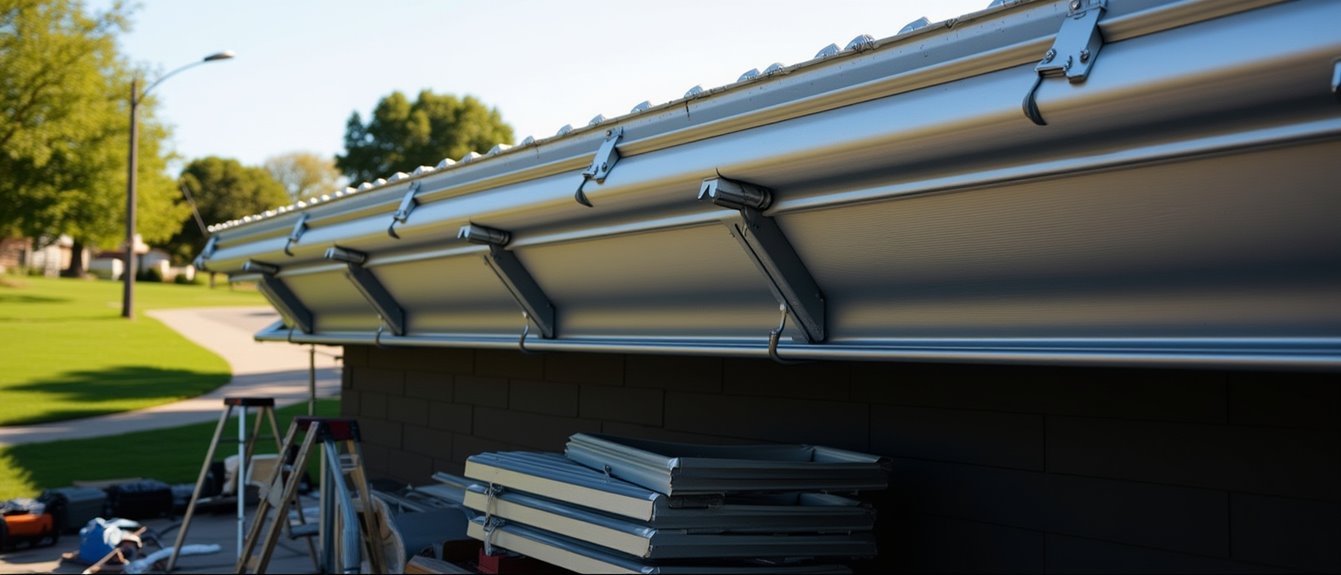
When budgeting for gutters, you should expect Galvalume to cost roughly $12, $30 per linear foot installed, about twice the price of seamless aluminum, and account for added labor time and skill due to specialized joining and bonding requirements.
You’ll pay a premium over galvanized steel because Galvalume gutters use superior alloying for enhanced corrosion resistance. Installation complexity can raise project costs beyond raw material pricing, so factor contractor time and potential custom fittings.
Over a 75-150 year service life, Galvalume’s durability and low maintenance translate to lower repair and replacement expenditures, improving lifecycle value compared with cheaper alternatives. For value-driven decisions, weigh higher upfront investment against predictable long-term savings and reduced maintenance frequency when selecting gutters. Additionally, opting for custom hangers can further enhance the performance of your gutter system.
Installation & Handling: What Contractors Should Know
One key priority for contractors installing Galvalume gutters is preserving the coating integrity from delivery through final fastening, since even minor scratches or improper bonding can accelerate corrosion and undermine longevity.
You’ll need trained personnel and the right consumables: Galvalume gutters require bonding agents rather than soldering, and protective packaging until installation.
Inspect site alkalinity; high-alkaline conditions make corrosion more likely and may contraindicate use.
- Handle coils and sections with soft slings and non-abrasive gloves
- Use approved adhesives/fasteners specified for Galvalume systems
- Isolate contact with dissimilar metals and alkaline substrates
- Include removal and disposal of old gutters in estimates
As gutter contractors, you’ll document coatings on delivery, minimize on-site handling, and provide accurate cost allowances.
Aesthetics & Finishes for Galvalume Gutters
Although they don’t mimic copper’s patina, Galvalume gutters deliver a consistent, modern silvery finish that retains color and resists fading, so you can specify them where a sleek, low-maintenance aesthetic is required.
You’ll appreciate Galvalume’s aluminum-zinc coating for predictable, uniform appearance across runs and easy color matching with trim or cladding. The coating’s reflective surface reduces heat absorption, supporting thermal performance without compromising looks.
Surface smoothness lets you integrate decorative elements cleanly and minimizes dirt accumulation, preserving the intended aesthetic with minimal upkeep.
Compared with copper, Galvalume provides a similar elegant visual at lower cost while remaining durable against weathering and corrosion.
Specify finishes and profiles to align with architectural intent and performance requirements.
How To Decide: Is Galvalume Right for Your Home?
Having reviewed Galvalume’s appearance and finish benefits, you should weigh performance, site conditions, and lifecycle costs to decide if it fits your home.
Galvalume offers 75-150 year longevity, superior corrosion resistance versus galvanized steel, and a sleek, modern look. It’s a durable choice with low maintenance requirements, but higher upfront cost. Assess these technical factors before choosing.
- Climate: avoid high-alkaline environments that accelerate corrosion.
- Budget horizon: higher initial price, lower long-term replacement costs.
- Maintenance tolerance: choose galvalume if you want minimal upkeep.
- Aesthetics: confirm the finish complements your architecture.
If your site and budget align, galvalume is a cost-effective, long-term gutter solution; otherwise, galvanized steel may be adequate short-term. Additionally, consider the importance of protection from water damage when evaluating your gutter options.
Frequently Asked Questions
What Are the Disadvantages of Galvalume?
You’ll face higher initial cost, edge rust until coatings cure, greater dent susceptibility from the aluminum content, installation complexity raising labor costs, and potential corrosion in high-alkaline environments that limit suitability in some regions.
How Long Do Galvalume Gutters Last?
You can expect Galvalume gutters to last roughly 75 to 150 years with proper maintenance; the aluminum-zinc coating resists corrosion for over 50 years, so you'll need far fewer repairs or premature replacements than with galvanized steel.
What Are the Best Gutters for Heavy Rain?
You want Galvalume gutters: they're corrosion-resistant yet lightweight, handling heavy rain with durable aluminum-zinc coating and high flow capacity. You’ll need professional installation and occasional maintenance to ensure optimal drainage and long-term performance.
Can Galvalume Gutters Be Painted?
Yes, you can paint Galvalume gutters. You’ll need a compatible metal primer and high-quality exterior metal paint to ensure adhesion and durability; expect occasional maintenance to address potential peeling or chipping over time.