
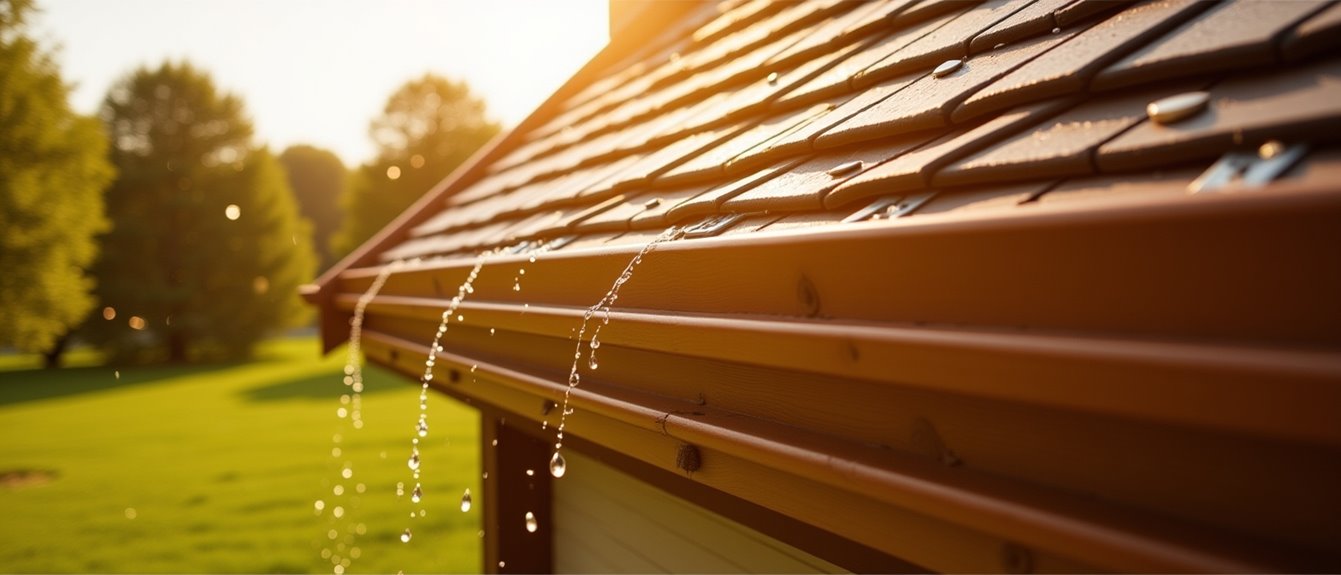
Summary: Cedar gutters offer natural decay and insect resistance, a lasting 20 to 50 years lifespan, and an attractive patina that matches cedar roofs, costing more than vinyl but less than copper. With proper installation and seasonal maintenance, they provide durable, eco-friendly protection for your home.
Cedar gutters give you durable, weather‑resistant protection that also boosts curb appeal, since cedar resists decay and insects naturally and develops an attractive patina. They handle heavy rain and snow well, stay dimensionally stable to keep tight joints, and can last 20-50 years with seasonal cleaning and fastener checks. Installation needs proper flashing and corrosion‑resistant fasteners. They cost more than vinyl but less than copper, and you’ll find practical maintenance, repair, and environmental disposal tips ahead.
Highlights
- Cedar gutters resist decay and insects naturally, reducing the need for chemical treatments.
- They offer long-lasting performance (20-50 years) with proper installation and maintenance.
- Cedar’s natural grain and patina provide a high-end, cohesive aesthetic with cedar roofs.
- Tight cellular structure and natural oils improve moisture resistance and dimensional stability.
- Cedar is renewable and biodegradable, making removal, recycling, or repurposing environmentally friendly.
Why Consider Cedar Gutters for Your Home
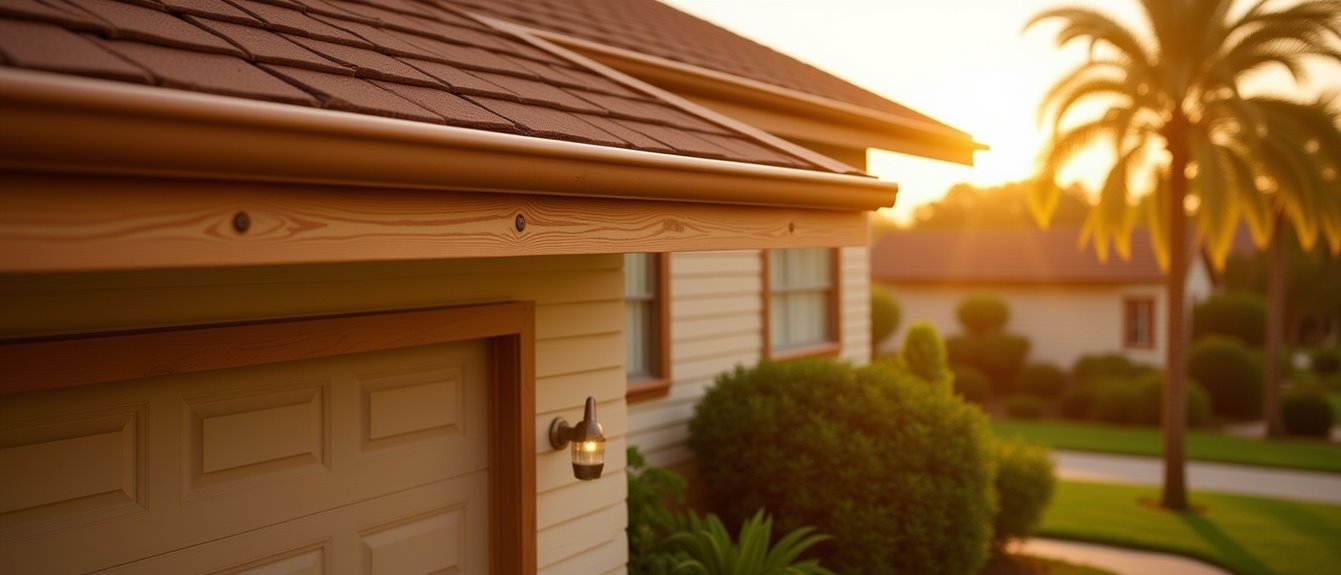
Because cedar naturally resists decay and insects, you’ll get gutters that stand up to weather and pests without relying on synthetic treatments.
You’ll choose cedar gutters as a durable material that combines longevity with design flexibility: profiles and finishes can be customized to match your home, and the wood develops a distinctive patina rather than degrading.
Expect aesthetic appeal that complements cedar roofs and enhances curb presence.
Functionally, cedar performs well across climates when you commit to regular maintenance, seasonal cleaning, inspection for joints, and periodic sealing where appropriate.
That upkeep is straightforward, and when done consistently it preserves water flow and structural integrity. Additionally, custom-fit seamless gutters can optimize protection for your home.
In short, cedar gutters offer practical durability and timeless visual character for informed homeowners.
How Cedar’s Natural Properties Extend Gutter Lifespan
When you pick cedar for gutters, its natural oils and stable cellular structure do most of the work to keep the system sound: the oils resist decay and insects, while the wood’s dimensional stability cuts down on warping and helps joints stay tight.
You’ll get a gutter system that endures because cedar weathers severe weather conditions better than many alternatives, and a natural patina adds protection while improving looks.
If cedar gutter systems are properly installed and maintained, you can expect 20-30 years of service, far surpassing vinyl or aluminum. Practical care like seasonal debris removal and checking fasteners preserves seals and prevents stress.
- Inherent resistance to rot and insects
- Dimensional stability reduces leaks and gaps
- Durable under heavy rain and snow
Moisture Resistance and Rot Prevention for Cedar Gutters
Although cedar isn't completely impervious to water, its natural oils and tight cellular structure dramatically slow moisture absorption, so your gutters resist decay and rot far better than most other woods.
You'll get clear moisture resistance from cedar gutters: the oils repel water and the cell makeup limits swelling, which improves durability in wet conditions.
That rot prevention means cedar performs well in humid or rainy regions, reducing the frequency of repairs or replacements.
You should still inspect seams and finishes regularly and apply preservative treatments as needed; proactive maintenance extends service life, often beyond 30 years.
How Cedar Gutters Handle Temperature and Seasonal Movement
If you live where temperatures swing widely, cedar gutters handle the change without giving you frequent headaches: their cellular structure and natural oils let the wood expand and contract smoothly, reducing cracking or warping that plagues many other materials.
You’ll find cedar wood offers dimensional stability, so your gutters keep their shape through seasonal movement and perform in hot summers and cold winters. That stability also helps prevent water damage by limiting gaps and misalignment.
With routine checks and simple maintenance, cedar gutters remain a durable gutter options choice that resists moisture-related problems longer than many alternatives.
The team at Newport Beach Gutters can help you choose the right cedar profile and maintenance plan for your climate and home style. Call (949) 213-3332 to request a free estimate or to speak with a local gutter specialist today.
- Dimensional stability reduces cracks and warping
- Natural moisture resistance limits water damage
- Proper upkeep extends lifespan and performance
Aesthetic Benefits: Matching Cedar Roofs and Architectural Styles
Because cedar gutters share the same grain, tones, and weathering patterns as cedar roofs, they create a unified, intentional look that lifts a home's curb appeal.
When you match gutters to roofing, the natural textures and colors, red, gold, brown, read as a single design element that strengthens overall aesthetic appeal.
As both components age, the developing silver-gray patina keeps the composition cohesive rather than mismatched.
You can align gutter finishes with an architectural style, choosing rustic warmth or clean modern lines to reinforce design intent.
That visual coherence adds character and makes the property more appealing to buyers, so your investment supports resale value as well as day-to-day enjoyment.
The result is clear, durable design harmony.
If you are ready to explore your options with a trusted gutter installation company in Newport Beach, getting a professional assessment ensures your cedar gutters are sized, profiled, and fitted correctly from the start.
Customization for Cedar Gutters: Sizes, Profiles, and Flow Capacity
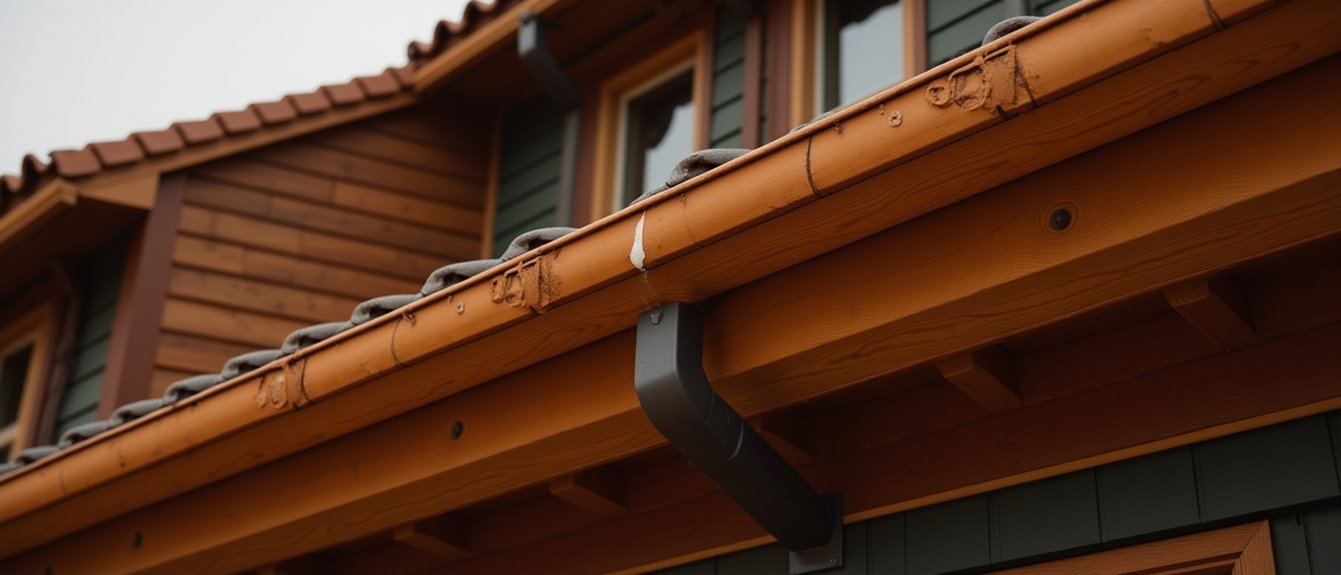
Matching cedar gutters to your roof's look is only part of the picture; you also want gutters that fit your home's roof geometry and local rainfall. You can order custom sizes so gutters match roof pitch, eaves length, and expected runoff, preventing overflow and water damage.
Choose from profiles like half-round, K-style, or box to suit architectural lines and improve aesthetic appeal. Consider flow capacity carefully so gutters handle your region's peak storms.
- Custom sizes accommodate varied roof shapes and drainage needs.
- Profile choices balance form and function to match style.
- Specifying flow capacity prevents backups and structural harm. Additionally, utilizing seamless gutters can enhance both appearance and reduce the likelihood of leaks.
Maintenance, Common Repairs, and Simple Seasonal Checks
When you keep cedar gutters on a regular schedule, cleaning them at least twice a year and checking downspouts, you'll avoid most clogs and the water damage that follows.
For maintenance, remove leaves and sediment, confirm the gutter pitch, and clear downspouts so water flows away from the foundation.
Seasonal checks should spot cracks, leaks, rot, or warped sections; replace affected boards promptly to prevent bigger failures.
Common repairs often mean swapping single sections, resealing joints, and reestablishing proper hangar spacing.
Every few years apply a protective sealant to extend life and preserve environmental benefits of cedar versus treated metals. Additionally, regular preventive maintenance can help ensure that your gutters function effectively, avoiding costly repairs down the line.
Keep a simple checklist after each season so small issues don’t become costly problems.
Cost Comparison: Cedar Gutters vs. Aluminum, Copper, and Vinyl
Cedar gutters typically run $15, $30 per linear foot installed, pricier than aluminum ($5, $15) and vinyl ($3, $10) but cheaper than copper (often over $40).
Cedar offers 30-50 years of service with regular maintenance, improving aesthetic appeal and property value, while copper can last up to 100 years with less frequent care.
Vinyl is low-cost but lacks durability and curb appeal.
- Cedar gutters: mid-high upfront, strong aesthetic appeal, ongoing maintenance.
- Aluminum: lower cost, less upkeep.
- Copper: highest cost, longest lifespan.
Additionally, maintaining cedar gutters can help protect roofs, siding, and foundations from potential water damage.
Installation Considerations: Mounting, Flashing, and Roof Compatibility
Because cedar gutters sit at the roof edge, proper mounting and flashing are critical to performance and water-tightness, so you’ll want a precise plan before work begins. You’ll secure mounting to the fascia with strong fasteners so gutters won’t sag during heavy rain. Flashing channels must direct water away from roof penetrations like chimneys and vents to prevent leaks. Check roof compatibility: box-style cedar gutters often sit beneath cedar shingles for seamless integration. Factor roof pitch, steeper roofs need special mounting techniques to handle faster water flow. Additionally, ensure proper drainage solutions are in place to direct water away from the foundation. Hire a skilled professional to ensure spacing, alignment, and installation meet performance and durability standards.
| Task | Purpose | Tip |
|---|---|---|
| Mounting | Support load | Use corrosion-resistant fasteners |
| Flashing | Prevent leaks | Seal at penetrations |
| Pitch | Flow control | Adjust slope |
| Compatibility | Aesthetics/function | Integrate with shingles |
Environmental Benefits and End-of-Life Disposal Options
Although cedar gutters require some care, they offer clear environmental advantages you’ll notice over their lifespan: cedar is a renewable, naturally decay- and insect-resistant wood that cuts the need for chemical treatments, lasts 30-50 years with proper maintenance, and is biodegradable or recyclable at the end of its service, so you’ll send less synthetic waste to landfills and need fewer replacements over time.
You’ll get an environmentally friendly option that reduces chemical use and conserves resources. Because cedar is a renewable resource from managed forests, choosing cedar gutters lowers embodied energy compared with synthetic materials.
At end-of-life you can compost small pieces, recycle or repurpose larger sections for projects, or send them to facilities that accept clean wood.
- Biodegradable material minimizes landfill impact
- Renewable resource supports sustainable forestry
- Repurposing/recycling options extend material value
Frequently Asked Questions
What Are the Downsides of Cedar Siding?
About 30% higher long-term costs hit you from maintenance and treatments; cedar siding warps, cracks, attracts insects like termites, needs annual upkeep, has higher installation expenses, and can be flammable without proper fire-retardant treatment.
What Color Roof Increases Home Value?
Darker roofs like charcoal or black usually increase home value most, often up to about 5%. You’ll also see benefits from neutral tones (beige, light gray) and complementary or energy-efficient light shades depending on market and climate.
How Many Years Does a Cedar Roof Last?
Likely 30 to 50 years, though some well‑maintained cedar roofs can last up to 90 years. You’ll extend life with quality wood, proper installation, regular inspections, debris removal, good ventilation, and treatments every 3-5 years.
What Kind of Gutters for House and the Value to Home?
You should choose gutters based on durability, appearance, and budget; aluminum and vinyl are low-cost and low-maintenance, steel offers strength, and wood or cedar adds premium curb appeal and can boost resale value when well maintained.