
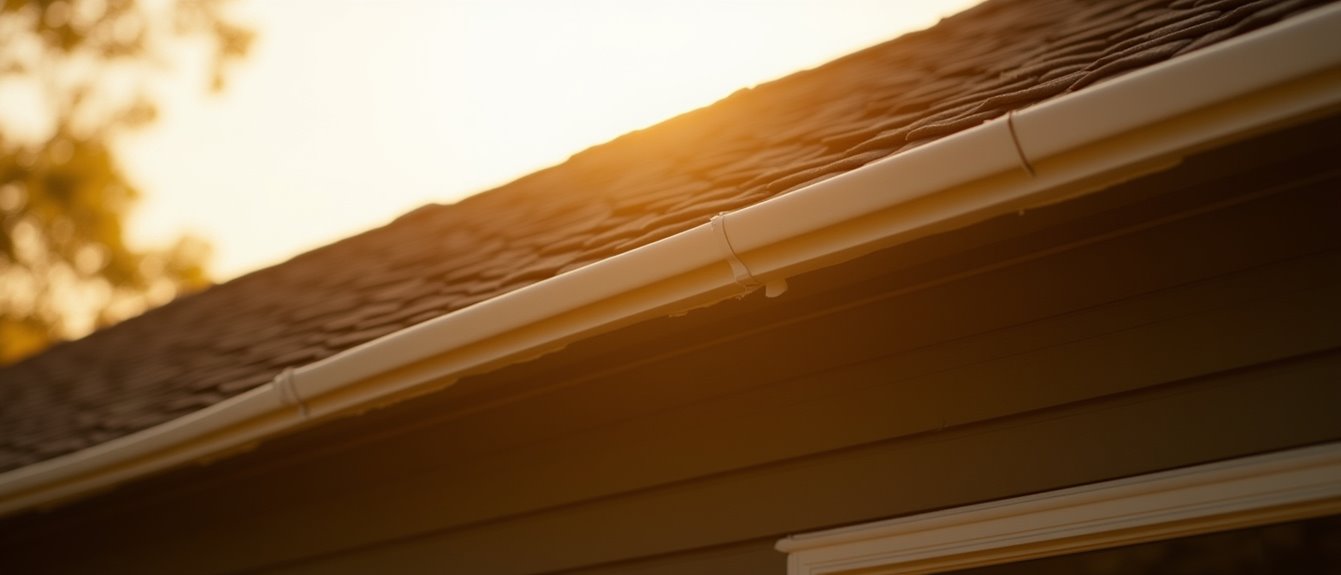
Yes — you can paint gutters to boost curb appeal and slow corrosion, but success hinges on material, prep and the right primer and paint. Clean thoroughly, scuff glossy surfaces, and use primers made for galvanized, aluminum, vinyl or steel before applying a quality exterior acrylic or oil‑based topcoat. Repaint for surface wear or small rust; replace for structural failure. Follow temperature and weather guidelines for durable adhesion, and keep going to learn specific steps and product choices.
Highlights
- Yes — most gutters can be painted to improve appearance and slow corrosion if properly prepared and compatible paint is used.
- Clean, degrease, and lightly sand surfaces, then apply appropriate primer for the gutter material before topcoating.
- Use material-specific products: acrylic/metal paint for aluminum, plastic-specific paint for vinyl, and zinc primer for galvanized steel.
- Repaint for peeling, fading, or small rust spots; replace if there’s widespread corrosion, sagging, or structural damage.
- Choose suitable weather (no rain, 50–85°F), consider safety for tall gutters, and hire pros for difficult or risky jobs.
Who This Guide Is For: Homeowners and Roofing Pros
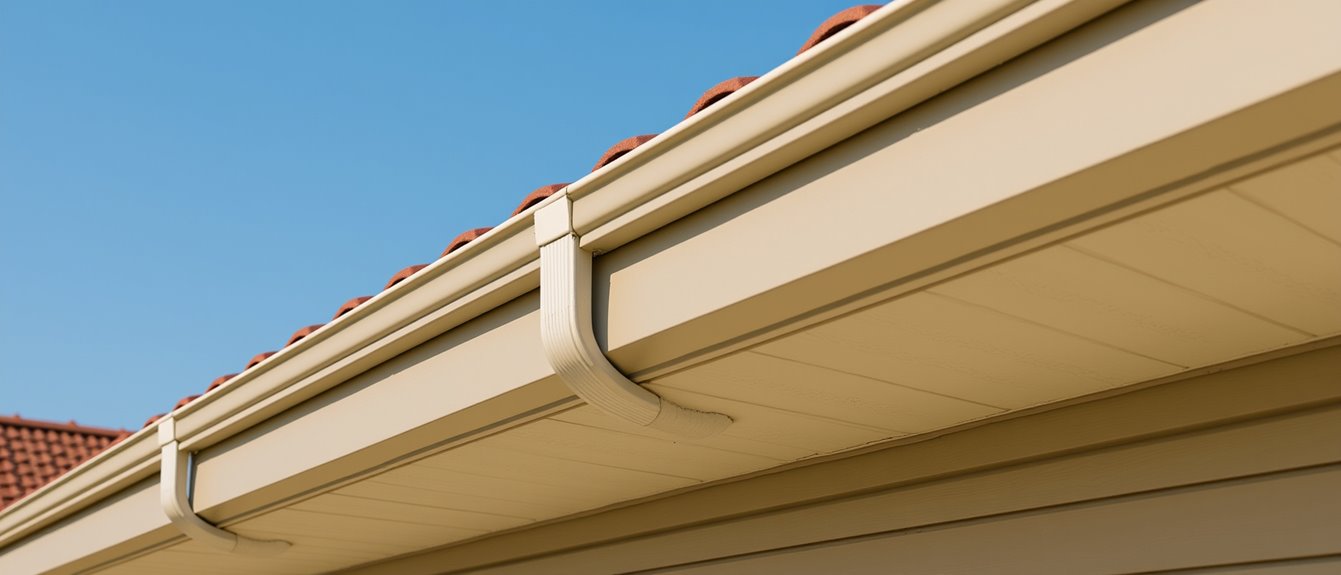
Whether you're a homeowner tackling curb appeal and maintenance or a roofing pro advising clients, this guide gives practical, no-nonsense advice on when and how to paint gutters.
You’ll learn when painting is a cost-effective option to enhance appearance, add a protective layer, and slow rust or corrosion.
If you handle gutter maintenance yourself, you’ll appreciate steps on cleaning, priming, and selecting acrylic house paint for metal or the right specialty paint for vinyl.
If you’re a pro, you’ll get clear criteria for recommending repainting intervals—typically every 3 to 10 years depending on material and climate—and realistic notes about labor intensity and touch-ups. Additionally, consider the benefits of custom-fit seamless gutters that can further protect your property and reduce maintenance needs.
This guide keeps focus on durable results, not gimmicks.
Can Gutters Be Painted? Quick Answer and When Not To
Can you paint your gutters? Yes—you can improve appearance and slow corrosion, but only when conditions and the gutter system allow proper adhesion. Use quality paint formulated for the material and prep surfaces so the paint will stick.
- Inspect the gutter system for factory finishes that repel paint; scuff or strip glossy coatings before painting.
- Choose high-quality acrylic or oil-based products designed for painting gutters and follow manufacturer directions.
- Time the job to avoid rain and extreme temperatures; local weather conditions determine drying and curing success.
Don’t paint if you can’t properly prep or if the finish prevents adhesion—forcing a paint job will peel quickly. Additionally, ensure that your downspouts are properly installed to prevent leaks and maintain effective drainage.
Repaint on a 5–10 year cycle, adjusting for local weather conditions and wear.
How Aluminum, Vinyl, Steel and Galvanized Gutters Accept Paint
If your gutters show wear or you want a new color, how well paint will stick depends on the material—aluminum sands and takes paint readily after scuffing, vinyl needs specialty plastic-formulated coatings, steel requires a rust-inhibiting primer, and galvanized metal calls for a primer made for zinc-coated surfaces; in all cases clean the gutters thoroughly first so dirt and oxidation don’t undermine adhesion.
For aluminum gutters, sand glossy factory finishes, wipe clean, then use an exterior metal paint for reliable paint adhesion.
With vinyl gutters, choose a paint labeled for plastics and follow surface prep instructions to avoid peeling.
Steel gutters demand a corrosion-blocking primer before topcoat.
For galvanized gutters use a primer formulated for zinc and an appropriate topcoat to maximize longevity.
Paint or Replace? How to Decide (Signs and Thresholds)
When you’re weighing paint versus replacement, focus on function first and appearance second: repaint to fix surface wear, mild rust, or fading, but replace when dents, holes, sagging, or structural corrosion affect drainage.
Inspect gutters for signs that guide your decision: peeling paint or small rust spots usually mean you can clean and paint; widespread corrosion, deep pitting, or compromised seams mean replacement.
Consider material—aluminum and steel often respond well to paint, while badly degraded vinyl should be replaced.
Also factor age and maintenance history: repaint every 5–10 years if intact, replace if repairs keep recurring.
- Peeling paint over large areas suggests underlying corrosion or adhesion failure.
- Sagging, holes, or repeated leaks are replacement thresholds.
- Severe pitting or structural rust means replace, not paint.
Additionally, regular maintenance, including gutter cleaning services, can help prolong the life of your gutters and prevent the need for premature replacement.
Best Paints and Primers for Gutters (Products and Why)
Now that you've decided whether to paint or replace, pick coatings that match your gutter material and local weather. Use acrylic latex paint for aluminum and vinyl to get a durable finish and weather resistance. For metal gutters, choose oil-based paints for superior adhesion and toughness. Always prime with specialty primers (Pro-Cryl or similar), tinting them for galvanized surfaces. Favor high-quality exterior-grade products like Sher-Cryl or SW DTM; they resist fading and chipping. Choose gloss or semi-gloss for easier cleaning. Additionally, consider gutter materials that are suitable for your climate to ensure long-lasting results.
| Component | Recommended Product |
|---|---|
| Primer | Pro-Cryl (tinted for galvanized) |
| Vinyl/Aluminum Paint | Acrylic latex paint (exterior-grade) |
| Metal Paint | Oil-based paints (Sher-Cryl, SW DTM) |
Gutter Painting Prep and Safety Checklist
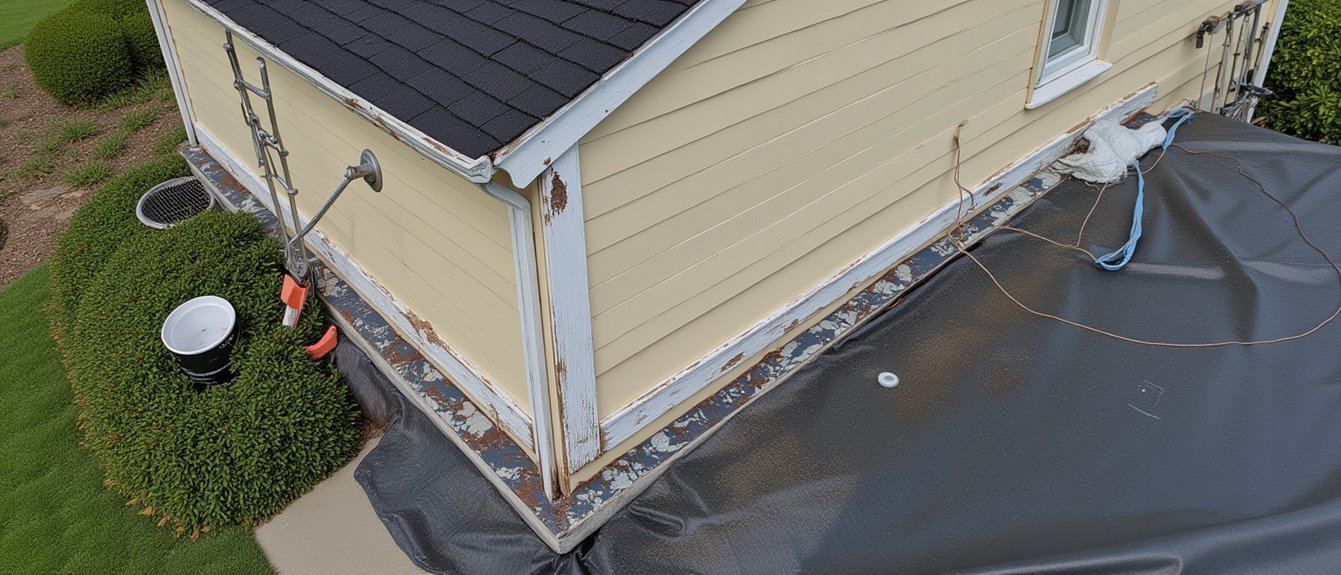
Start by setting up a safe, clean workspace: clear debris from around the gutters, lay down drop cloths, and mask off siding, windows, and landscaping with painter’s tape so paint drips and overspray won’t cause damage.
Next, confirm weather and temperature are suitable; avoid painting in rain or extreme cold.
Clean gutters thoroughly with a stiff brush and non‑abrasive cleaner so paint adhesion won’t fail.
Scuff surfaces with medium‑course steel wool or a maroon pad to improve bonding.
Always use safety equipment—gloves, goggles, and secure ladders—when working at height or handling chemicals.
- Inspect and remove clogs as part of routine cleaning before any paint job, as thorough debris removal is crucial for optimal results.
- Verify masking is tight to prevent overspray.
- Test a small area to confirm surface prep.
How to Paint Gutters for Durable Results: Step‑by‑Step
Follow the step-by-step process below to paint gutters that last: after you’ve prepped and cleaned the surface, apply an appropriate oil‑based or acrylic bonding primer to bare metal or PVC, let it cure, then lay down thin, even coats of high‑quality acrylic or enamel paint—allowing at least 24 hours between coats—so the finish bonds properly and resists chipping; finish with a careful inspection and touch up any thin spots once the topcoat is fully dry.
Now, clean thoroughly with soap and a scrub brush, removing dirt and debris. Mask nearby surfaces and use steady strokes with a brush or small roller.
Apply a primer designed for the material, then two thin coats of paint gutters with high-quality acrylic for a durable layer of protection. Inspect and maintain periodically.
Troubleshooting: Peeling, Bubbling, Rust and Fixes
If your gutter paint is peeling, bubbling, or showing rust, don’t ignore it — these signs mean the coating’s failed and moisture or corrosion is getting in; you'll need to remove damaged finish, address the underlying cause, and refinish with appropriate products to prevent recurrence.
Start by scraping and sanding away peeling paint and any rust formation until you hit sound metal or substrate. Clean thoroughly and allow gutters to dry to avoid trapping moisture that causes bubbling paint.
Treat rust spots with a rust converter or sand to bare metal, then apply a high-quality exterior-grade primer before topcoat. Schedule regular inspections to catch issues early.
- Remove damaged paint, sand, and clean surfaces completely.
- Use rust-inhibiting primer and compatible paint for your gutter material.
- Verify gutters are dry before priming to prevent bubbling paint.
Gutter Painting Maintenance Timeline and Touch‑Ups
Now that you've removed failed coatings and treated rust, keep a regular maintenance rhythm to protect your work and extend gutter life.
Inspect gutters annually for fading, peeling, or rust spots; address issues early with targeted touch-ups instead of full repainting when damage is localized.
Generally plan repainting every 3–5 years, adjusting for sun exposure, salt air, or heavy storms. Use high-quality exterior paint and proper prep to stretch intervals between jobs.
For touch-ups, clean, sand, prime bare metal, and feather new paint into surrounding areas to blend color and seal edges.
Keep records of dates and products used so you’ll know when maintenance or a full repainting is due.
Consistent maintenance saves time and preserves function.
Cost, Pros vs Cons, and When to Hire a Pro
When you weigh the decision to paint your gutters, consider both cost and complexity: DIY jobs typically run $1–$3 per square foot but demand time, safety precautions, and ongoing touch-ups, while pros add labor and material fees but handle prep, repairs, and high‑work safely.
You’ll balance immediate cost against longevity: paint can boost curb appeal and protect against rust, extending gutter life 5–10 years, but maintenance needs and ladder risks are real.
Hire professional painters if gutters are tall, damaged, or you want guaranteed adhesion in optimal temperatures (50–85°F).
- Pros vs cons: improved curb appeal and protection vs labor, touch-ups, and safety risks.
- Cost: DIY saves money up front; pros increase total but reduce hassle.
- When to hire a pro: extensive prep, hard-to-reach areas, or warranty needs.
Frequently Asked Questions
Is It Cheaper to Paint Gutters or Replace Them?
Painting gutters is cheaper: you'll typically pay $200–$800 versus $1,500+ for replacement. You’ll spend less up front, extend gutter life by years, and accept periodic touch-ups every 3–5 years.
How Long Do Painted Gutters Last?
Sun-savvy surfaces: you’ll typically get five to ten years from painted gutters. Use high-quality acrylics, match paints to material, and do regular cleaning and touch-ups to prevent rust, fading, and premature repainting.
What Kind of Paint Do You Use on Gutters?
Use exterior-grade acrylic paint for metal or steel gutters, and specialty vinyl/plastic paint for nonmetal. Prime first with a compatible exterior primer, choose gloss or semi-gloss for durability, and avoid very dark colors in hot sun.
How to Make Old Gutters Look New Again?
About 70% of curb appeal comes from exterior maintenance, so revive old gutters by thoroughly cleaning them, priming with a bonding primer, painting with high-quality acrylic or enamel, and finishing with gloss for durability and easier cleaning.