

Summary: This article outlines ten common mistakes that cause leaks, corrosion, and failure when installing rain gutters on metal roofs. It recommends proper sizing, spacing, materials, pitch, and drainage design to ensure long-term performance and avoid costly repairs.
You’ll avoid leaks, corrosion, and failure by skipping ten common errors: undersized gutters, wrong pitch, poor hanger spacing, incompatible metals, wrong fasteners, no thermal joints, inadequate flashing, bad downspout placement, neglected maintenance, and no snow/ice controls. Use 6-8" gutters sized to roof area and rainfall, metal‑roof hangers every 24-36" with expansion brackets, matching materials, neoprene seals, and proper downspout routing away from foundations. Keep checking systems to ensure long‑term performance, more practical fixes follow.
Highlights
- Undersizing gutters: match width and downspout count to roof area, pitch, and peak rainfall to prevent overflow and pooling.
- Wrong material pairing: avoid dissimilar metals; use compatible alloys or stainless components to prevent galvanic corrosion.
- Incorrect pitch or hanger spacing: set proper slope and hangers every 24-36 inches to prevent standing water and sagging.
- Ignoring thermal movement: provide expansion joints, slip brackets, and elastomeric sealants to accommodate metal roof movement.
- Poor downspout placement and maintenance: place outlets away from foundations, increase count in heavy rain, and clean regularly to avoid clogs.
| Issue | Recommended Fix |
|---|---|
| Gutter size | Minimum 6 inches, up to 8 inches for heavy rain |
| Hanger spacing | Every 24 to 36 inches |
| Pitch | 1/4 inch per 10 feet |
| Downspouts | One per 40 feet of gutter |
| Materials | Match metals to prevent galvanic corrosion |
| Maintenance | Clean quarterly, inspect for ice dams |
Why These Metal‑Roof Gutter Mistakes Matter
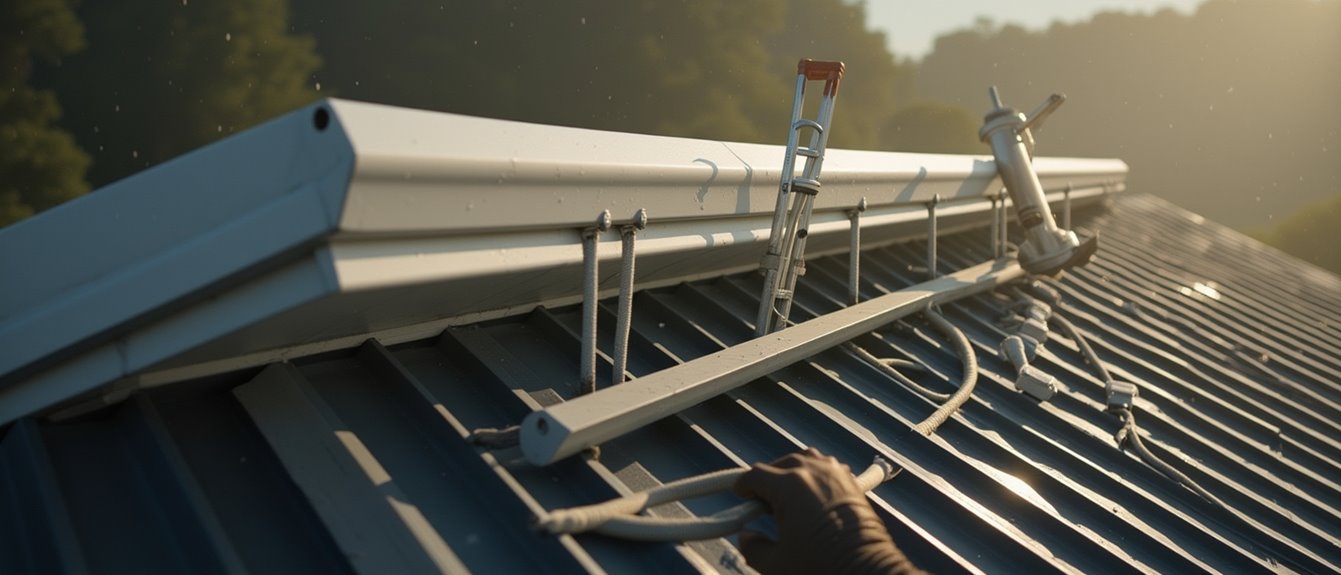
Because your roof’s drainage ties directly to the building’s structure, gutter mistakes on metal roofs can produce rapid, costly damage: you’ll see foundation erosion, rusting at roof edges, and compromised structural members if you ignore proper gutter installation.
In metal roofing systems, incorrect pitch creates standing water that accelerates corrosion and leaks. Undersized gutters or poor downspout placement cause overflow during heavy rain, stressing walls and footings.
Sparse hanger spacing lets gutters sag and pool, increasing separation risk; follow climate-based spacing standards. Multiple seams amplify leak points, so seamless options reduce failure modes. Additionally, using durable materials ensures that your gutter system withstands harsh coastal conditions.
Address these gutter problems during design and installation to preserve roof performance, prevent water intrusion, and avoid expensive structural repairs down the line.
Working with a trusted gutter company in Newport Beach ensures that every detail of your metal roof drainage system is handled correctly from the start, protecting your home for years to come.
Pick the Right Gutter Size for Metal Roofs
When you size gutters for a metal roof, err on the side of larger: a minimum 6-inch width is typically recommended to handle heavy downpours and reduce overflow risk.
You’ll match gutter size to roof area, pitch, and local rainfall intensity; higher precipitation zones often need 7-inch or 8-inch systems.
Calculate peak flow from roof catchment, then select a capacity-rated section to avoid pooling, sagging, and foundation risk.
Improperly small gutters accelerate clogging and structural strain, increasing maintenance and repair costs.
During gutter installation, verify manufacturer flow tables and local building codes, and plan downspout quantity and placement to preserve capacity. Dependable gutters can significantly enhance the effectiveness of your system.
Consult professionals if your roof geometry or climate pushes sizing beyond standard recommendations.
The team at Newport Beach Gutters is ready to help you size and install the right gutter system for your metal roof. Call (949) 213-3332 for a free estimate or expert guidance on your project.
Avoid Metal‑to‑Metal Compatibility and Galvanic Corrosion
Sizing your gutters correctly won't help much if incompatible metals start eating each other out. You must control metal compatibility in gutter systems: mixing aluminum gutters with steel hangers or fasteners creates a galvanic corrosion cell whenever moisture bridges the metals.
That electrochemical reaction accelerates deterioration of the less noble metal, undermining joints, hangers, and downspouts. Specify matching materials, aluminum gutters with aluminum hangers, or stainless components with stainless roofs, to eliminate the dissimilar-metal interface.
When matching the gutter material to the roof (aluminum or stainless steel), you reduce corrosion risk and extend service life. Regular maintenance and periodic inspections of connections can help catch early corrosion and avoid costly repairs or premature replacement.
Use Metal‑Roof‑Specific Hangers and Correct Spacing
1 key step to durable gutter performance is using hangers made for metal roofs and placing them correctly to accommodate thermal movement and load.
You must select hangers and dedicated screws designed for metal to handle expansion, resist corrosion, and securely anchor the gutter system. Space hangers every 24-36 inches, tightening enough to support load but allowing lateral movement for thermal expansion.
Inadequate spacing or wrong fasteners raises collapse risk under snow and ice.
- Fear of failure: improper hangers lead to sagging and costly repairs.
- Frustration avoided: correct screws stop corrosion and loosening.
- Confidence gained: proper spacing ensures continuous flow.
- Relief felt: accommodation for thermal movement preserves seals. Additionally, using custom hangers can enhance the stability and performance of your gutter system.
Set the Right Pitch to Prevent Pooling or Overshoot
Although it seems minor, setting the pitch at 1/4 inch per 10 feet is essential to keep water moving to downspouts and prevent pooling or overshoot. You must calculate run length and roof slope to set that grade precisely; deviation creates common installation mistakes.
Too little pitch lets water stand, accelerating corrosion and stressing seams. Too much pitch forces fast flow, causing overshoot and erosion at the foundation.
Use a level and slope gauge during installation, anchor hangers to maintain consistent fall, and verify transitions near corners and outlets. Additionally, thorough debris removal ensures that your gutters remain clear and function effectively.
After heavy rains or snow, inspect alignment and measure fall at intervals to confirm drainage performance. Corrective adjustment early prevents long-term gutter failure and landscape damage.
Choose Seamless Gutters to Minimize Seams and Leaks

Once you’ve confirmed proper pitch to keep water moving, pick seamless gutters to cut down on leak points and maintenance. Seamless gutters eliminate frequent joints that cause gutter damage, improving reliability across your roof system.
Fabricated on-site to exact dimensions, they deliver a continuous channel that boosts flow capacity and reduces inspection cycles. You’ll get cleaner aesthetics and fewer failure modes versus sectional systems.
- Relief: you won’t dread seasonal leaks anymore.
- Confidence: fewer seams means predictable performance.
- Pride: a streamlined roof system looks professionally finished.
- Security: reduced maintenance lowers long-term risk.
Expect specialized equipment for precise installation; insist on measured fits and corrosion-resistant materials to protect metal roofs and minimize future repairs.
Use Brackets and Hardware Made for Metal Roofs
Choose brackets and fasteners engineered for metal roofs so they can accommodate thermal movement and protect the roofing material under changing temperatures.
You’ll avoid stress points and panel deformation by using brackets and hardware rated for the substrate rather than generic gutter kits.
Space brackets per manufacturer guidance, typically 24-36 inches, to maintain straight runs and proper slope; wider spacing invites sagging and overflow.
Prefer hidden hangers over spike-and-ferrule systems for superior pullout resistance, cleaner lines, and reduced puncture risk.
Use self-tapping screws and neoprene-sealed fasteners specified for metal roofs to preserve watertightness and allow movement.
Installors who match bracket design, finish, and fastener type to the metal roof will minimize leaks, mechanical failure, and costly rework.
Place Downspouts for Proper Drainage and Erosion Control
Because downspout placement determines where hundreds of gallons exit your roof during a storm, you should plan locations that prevent overflow, control erosion, and protect foundations. Position at least one downspout per 40 feet of gutter; increase count in heavy-rain zones.
Locate outlets 3-4 feet from the foundation and tie into drains or extend discharge to stable splash blocks to avoid soil erosion and pooling. Inspect periodically for clogs, misalignment, or damage.
- You’ll feel relief knowing downspouts handle peak flow.
- You’ll avoid the panic of basement seepage or wall stains.
- You’ll prevent the frustration of washed-out landscaping.
- You’ll reduce long-term foundation risk and repair costs.
Place for optimal drainage, erosion control, and durable performance.
Seal, Flash, and Allow for Thermal Movement
When metal gutters expand and contract with temperature shifts, you must seal joints with flexible materials, install flashing at all roof-to-gutter intersections, and incorporate brackets or expansion joints that accommodate thermal movement without stressing connections.
You’ll choose elastomeric sealants compatible with metal to maintain watertight joints despite cyclic movement; rigid caulks will fail. Install continuous flashing where the roof meets the gutter to redirect runoff and protect fasteners.
Design hanger spacing and bracket geometry to allow longitudinal slip or deflection; use dedicated thermal expansion joints at prescribed intervals for long runs. Inspect seals and flashing periodically for degradation and reseal or replace before leaks develop.
Proper detailing for seal, flashing, and thermal movement preserves attachment integrity and prevents premature system failure.
Maintain Gutters and Plan for Snow/Ice Control
Having sealed joints and allowed for thermal movement, you now need a maintenance and snow/ice strategy to protect performance and prevent damage.
You’ll schedule regular maintenance, quarterly cleanings, to remove debris, prevent clogs, and reduce ice buildup. A gutter specialist can assess bracket selection that accommodates thermal movement and prevents warping during freeze/thaw cycles.
Install snow guards on the metal roof to stop sudden snow slides that dent gutters and disrupt drainage. Inspect annually for ice dams and verify downspout placement directs meltwater away from the foundation.
- Fear collapsed gutters from hidden ice pressure.
- Relief when meltwater flows freely, away from foundations.
- Confidence after a gutter specialist certifies brackets and downspouts.
- Security knowing you install snow guards to prevent sudden damage.
Frequently Asked Questions
Can You Put Rain Gutters on a Metal Roof?
Yes, you can install gutters on a metal roof. You’ll trim the overhang to about 1 inch, use specialized hangers for thermal movement and load, ensure correct pitch, and preferably hire a professional for reliable results.
Why Do Insurance Companies Not Like Metal Roofs?
They’re wary because you’ll face higher corrosion, repair complexity, and dent risk, which can raise long‑term costs and premiums; installers and insurers prefer easier, cheaper materials, and noise or maintenance concerns can worsen their risk assessment.
What Are Some Common Mistakes That People Make When Installing Gutters?
You commonly choose undersized gutters, space hangers too far apart, set insufficient pitch, add too many seams, and misplace or undercount downspouts; these errors cause overflow, sagging, standing water, leaks, and erosion.
What Are the Best Gutters for Metal Roofs?
You should choose seamless aluminum for most metal roofs; pick steel (rust‑protected) for heavy runoff, or copper/stainless for premium durability. Oversized profiles help high rainfall or steep pitches; match material to environment and budget.