
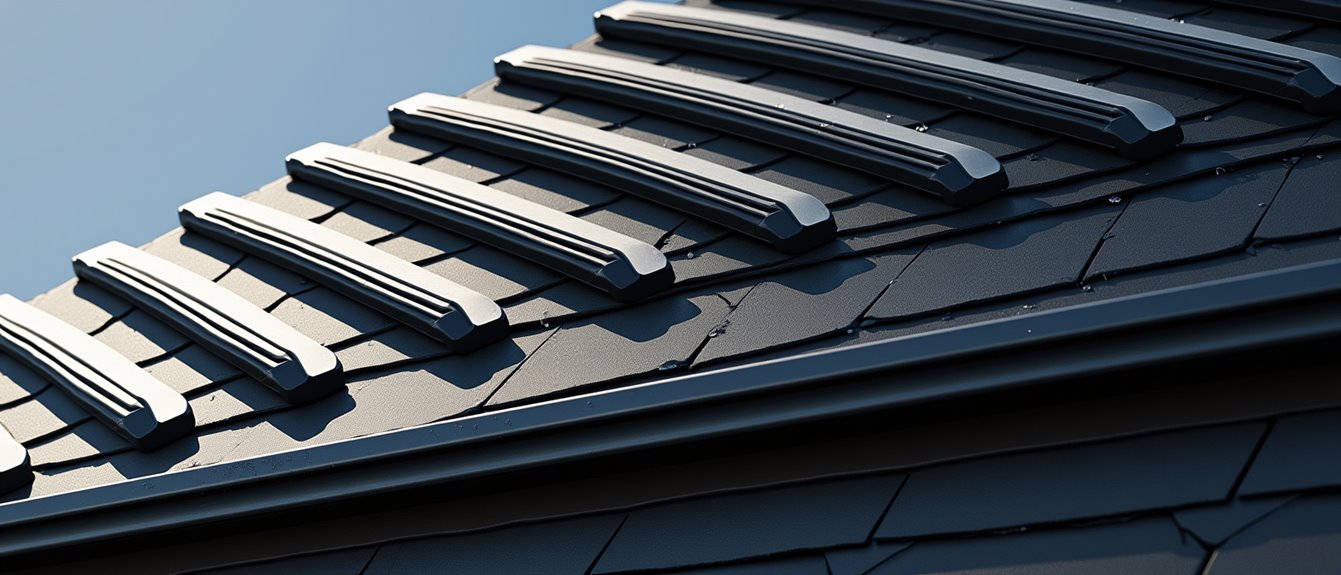
Summary: 5-inch gutters suit smaller roofs and moderate rain with lower cost and easier installation, while 6-inch gutters handle about 50% more water, making them better for larger roofs, steep pitches, or heavy rainfall. Choose based on roof size, rainfall intensity, and budget.
Choose 5‑inch gutters if you have a smaller roof, moderate rain, and want lower upfront cost and easier DIY installation; they handle about 5,520 sq ft of roof and need downspouts every 30-35 ft. Pick 6‑inch gutters for larger, steeper roofs or heavy‑rain regions, they carry roughly 50% more water (≈7,960 sq ft capacity), allow wider downspout spacing, and reduce overflow risk though they cost more and need stronger hangers. Keep going to see sizing, spacing, and maintenance tradeoffs.
Highlights
- 6-inch gutters carry about 50% more water than 5-inch gutters, lowering overflow risk on large roofs.
- 5-inch gutters suit smaller roofs and moderate climates, costing about $8, $10 per linear foot.
- 6-inch gutters handle up to ~7,960 sq ft of roof vs ~5,520 sq ft for 5-inch gutters.
- 6-inch systems need fewer downspouts (50-60 ft spacing) while 5-inch require more (30-35 ft).
- 6-inch gutters cost slightly more, need stronger hangers, but reduce clogging and maintenance frequency.
Quick Answer: 5-Inch vs 6-Inch Gutters - Which to Choose?
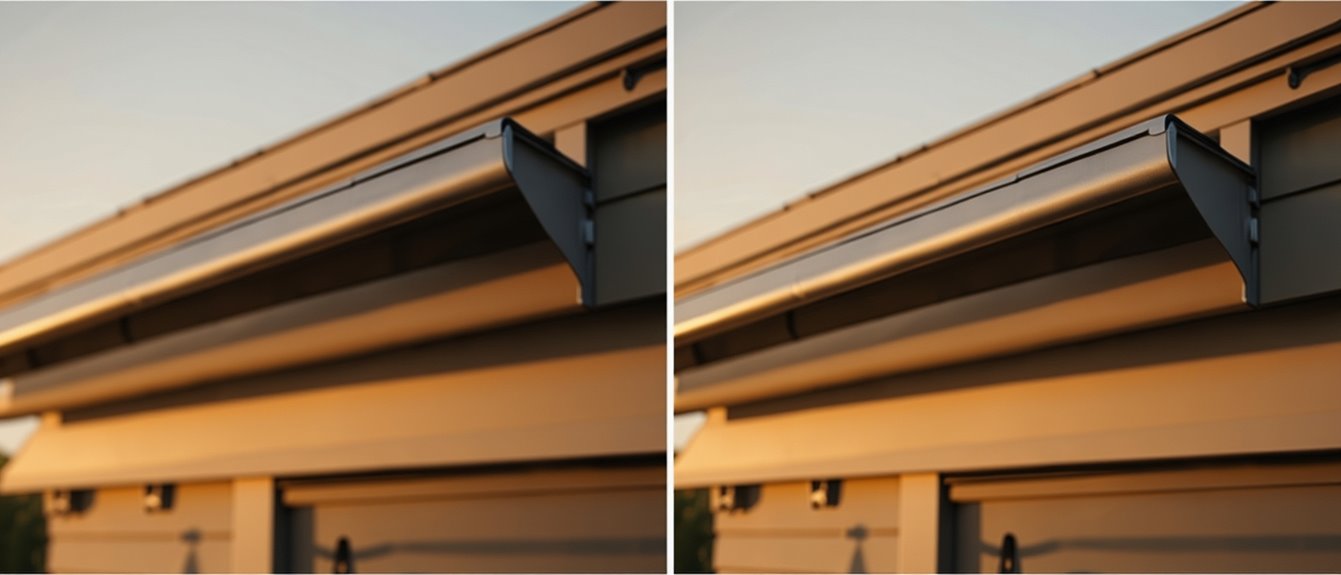
Looking for a quick decision? You’ll pick 6-inch gutters when larger homes or heavy rainfall demand higher performance; they offer a clear capacity difference (about 50% more) and improve proper drainage with fewer downspout requirements, often spacing 50-60 feet.
Choose 5-inch gutters for smaller roofs where lower cost and lighter installation matter; they typically require downspouts every 30-35 feet.
In a cost comparison, expect $8, $10/ft for 5-inch and $10, $14/ft for 6-inch.
Maintenance needs favor 6-inch gutters since clogging is less frequent, but installation complexity increases: larger brackets and bulkier handling can raise labor and difficulty.
Use roof size, rainfall intensity, and budget to guide your selection. Additionally, consider the benefits of custom hangers and drainage checks to ensure optimal performance and longevity of your gutter system.
When you are ready to move forward, working with a trusted gutter installation company in Newport Beach ensures you get an accurate assessment of your roof dimensions and local rainfall data before any material is ordered.
| Feature | 5-Inch Gutters | 6-Inch Gutters |
|---|---|---|
| Roof Capacity | About 5,520 sq ft | About 7,960 sq ft |
| Downspout Spacing | 30-35 ft | 50-60 ft |
| Cost per Linear Ft | $8 to $10 | $10 to $14 |
| Best For | Smaller roofs, moderate rain | Larger roofs, heavy rain |
| Maintenance | Clean twice yearly | Less frequent clogging |
How Much More Water Can a 6″ Gutter Handle?
Now that you’ve weighed the practical differences between 5‑ and 6‑inch gutters, let’s quantify capacity: a 6‑inch K‑style gutter carries roughly 50% more water than a 5‑inch, handling up to about 7,960 sq ft of roof area under standard rainfall assumptions versus ~5,520 sq ft for a 5‑inch.
That extra capacity means you’ll reduce overflow risk on larger roof surface area and in regions with heavy rainfall. Additionally, custom sizing ensures that your downspouts are perfectly matched to your specific needs, optimizing the entire drainage system.
6-inch gutters pair with larger downspouts (about 3-3/8") to improve drainage and span longer runs before needing additional outlets, lowering the chance of gutters becoming clogged with debris and backing up.
For residential homes in intense storms, the increased water capacity provides measurable protection versus 5-inch systems.
When 5″ Gutters Are the Right Choice (Homes, Climates, Costs)
When your roof area and local rainfall are moderate, 5″ K‑style gutters give a cost-effective, technically sufficient solution: they handle typical residential runoff for smaller or uncomplicated roof plans, install more easily because they’re lighter, and cost roughly $8, $10 per linear foot, making them a smart choice where overflow risk is low.
You’ll find 5-inch gutters best on smaller roofs in moderate climates where peak water flow stays within their capacity. Their affordable price and lighter weight simplify installation and appeal to DIY enthusiasts.
They’re sufficient provided you commit to routine maintenance, cleaning at least twice yearly, to prevent clogs. Choose them when you prioritize cost-effectiveness and straightforward performance without the need to upsize for heavy storms. Additionally, consider custom-fit seamless gutters to enhance water management and prevent foundation washouts.
If you are unsure whether gutter guards could extend the life of your system and cut down on cleaning frequency, learning about essential gutter guards for 4 inch gutters is a useful next step before committing to a size.
5-Inch vs 6-Inch: When to Upsize - Roof Size, Long Runs, Downspouts
If your roof is larger, steeper, or runs long, you should consider upsizing to 6-inch gutters because they carry roughly 50% more water and reduce overflow risk during heavy storms.
6-inch systems perform better on runs over ~40 feet and let you space downspouts farther apart (often 50-60 feet), which cuts installation complexity and helps prevent backups on expansive roofs.
You should upsize when these technical conditions apply: larger roofs, steep pitches, long runs, or high local rainfall.
6-inch gutters increase water capacity and drainage efficiency, lowering water damage risk from heavy rain and overflow. Additionally, proper pitch is crucial for maintaining optimal water flow and preventing clogs.
Consider these practical triggers:
- Roof size exceeds typical single-story footprints
- Multiple long runs over ~40 feet
- Areas with heavy rain (>0.3 in/hr)
- Need to reduce downspouts and potential clogging
Installation, Materials, and Long‑Term Costs (Durability & Maintenance)
Although the basic installation steps for 5-inch and 6-inch gutters are similar, you’ll need stronger hangers and sometimes beefier fascia attachments for 6-inch runs because of their greater weight and larger downspout connections.
For installation, you’ll factor the modest cost difference, typically $0.50 to $1.00 more per linear foot for 6-inch gutters, and possible higher labor for heavier materials.
Material choices affect durability: aluminum lasts 25-30 years, vinyl 5-8 years, so choose accordingly.
For a deeper look at how gutter materials and sizing work together to protect your home, our overview of what rain gutters are and why you need them covers the fundamentals that inform every sizing decision.
6-inch gutters paired with 3"x4" downspouts increase water flow and reduce clogging versus standard downspouts on 5-inch gutters. That larger capacity means less frequent maintenance and lower long‑term service costs, though initial outlay and stronger fastenings offset savings.
Newport Beach Gutters can help you weigh these lifecycle costs with a free on-site estimate tailored to your roof size and local rain patterns. Call us today at (949) 213-3332 to speak with a gutter specialist.
To ensure optimal performance and longevity, consider scheduling preventive maintenance based on local rain patterns.
Assess roof size, run length, and lifecycle cost.
Frequently Asked Questions
Do 6-Inch Gutters Make a Difference?
Yes, you’ll get significantly greater capacity, fewer clogs, longer spans without extra downspouts, reduced overflow and ice-dam risk, and better handling of steep roofs, so maintenance and water damage potential both decrease noticeably.
How Do I Determine if I Need 5 or 6 Gutters?
You determine that you need 6-inch gutters when your roof area, steep pitch, heavy rainfall (over 0.3"/hr), infrequent downspouts, overflow signs, or persistent clogging exceed 5-inch capacity; otherwise 5-inch typically suffices.
Are 6 Gutters More Expensive Than 5?
Yes, you’ll pay more for 6-inch gutters; imagine sturdier channels handling heavy rain. They cost about $10, $14 versus $8, $10 per linear foot, raising installation and support expenses but reducing long-term damage risks.
Should I Get 6 or 7 Inch Gutters?
You should choose 6-inch gutters for almost all residential roofs; they handle substantially more water than 5-inch and pair with standard downspouts. Opt for 7-inch only for commercial or extreme runoff scenarios despite higher cost.