
Summary: Choosing between 5 inch and 6 inch gutters depends on roof size, pitch, and local rainfall, with 6 inch systems handling 50 to 100 percent more water for larger or steeper roofs and storm-prone areas. Match downspouts accordingly (3x4 for 5 inch, 4x5 for 6 inch), and watch for overflow, pooling, or sagging as signs to upgrade.
You’ll usually pick 6‑inch gutters for large roofs, steep pitches, heavy roofing, or stormy climates because they carry about 50-100% more water and clog less; choose 5‑inch for smaller homes and moderate rain to save cost and look proportionate. Match 6‑inch runs with larger 4x5 downspouts, and use 3x4 for 5‑inch. Watch for overflow, foundation pooling, or sagging as failure signs. Keep going to see sizing, costs, and an on‑site checklist.
Highlights
- Use 5-inch gutters for small roofs (600-800 sq ft) with moderate rainfall and standard roof pitches.
- Choose 6-inch gutters for roofs over 1,400 sq ft, heavy rain areas, or frequent storms to reduce overflow.
- Steep pitches (7:12+), heavy roofing materials, or large overhangs favor 6-inch gutters for faster water capture.
- Match downspouts: 3x4 in for 5-inch gutters, 4x5 in for 6-inch systems in high-flow conditions.
- Signs you need larger gutters include frequent overflow, pooling near foundation, sagging, or persistent clogging.
Quick Answer: 5” Vs 6” - Who Needs Which
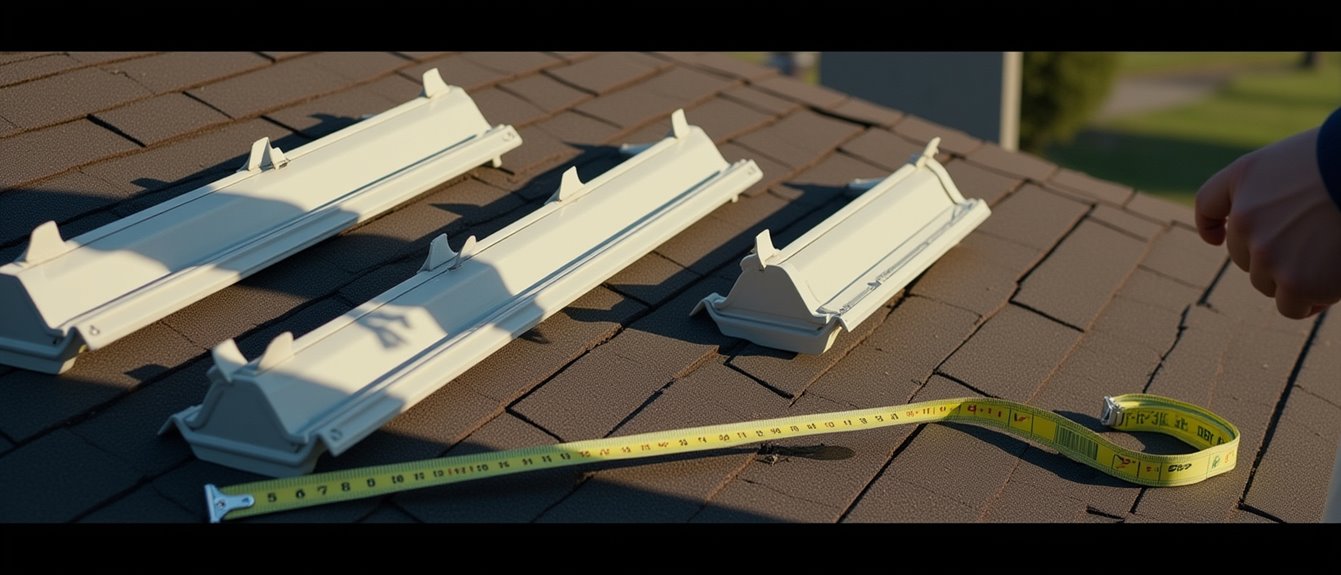
If your roof has large planes, a steep pitch, or you live where heavy storms are common, go with 6‑inch gutters; they hold nearly twice the water of 5‑inch gutters and handle bigger runoff with less clogging.
You’ll pick 6-inch gutters when your roof area is large, typically above about 1,400 sq ft, or when heavy rain is routine, because their greater water capacity reduces overflow risk.
For smaller homes and moderate rainfall, 5-inch gutters can work and look proportional on narrow fascia.
Consider maintenance needs: 6-inch systems clog less and need cleaning less often.
Also weigh aesthetics on larger roofs, 6-inch gutters fit wider fascia.
Decide by matching roof size, local rain intensity, and desired upkeep. Additionally, choosing custom-fit seamless gutters can enhance protection against potential water damage.
Roof Area & Rain: Choosing 5” Vs 6” Gutters
Now that you’ve got the quick take on when 5‑inch or 6‑inch gutters make sense, let’s look at how roof area and local rainfall should guide your choice.
You should match gutter size to roof areas and rainfall: 600-800 sq ft roofs can usually use 5‑inch gutters, while roofs over 1,400 sq ft typically need 6‑inch for proper water management.
In storm-prone places like Tampa, larger gutters reduce overflow because a 6‑inch K‑style holds roughly 50% more water volume than a 5‑inch.
Steep pitches increase runoff speed and often push you toward 6‑inch even on moderate roof areas.
Picking the right size cuts maintenance and makes gutters less likely to fail, delaying costly gutter replacement. Additionally, custom lengths fabricated on site ensure a tight fit, enhancing drainage efficiency.
If you are unsure which size fits your home, reach out to Newport Beach Gutters for an on-site assessment, or call (949) 213-3332 to speak with a local gutter specialist who can size your system correctly the first time.
Roof Pitch and Materials: When 6” Is Safer
Because steep pitches and heavy roofing materials speed up runoff, you’ll generally be safer choosing 6‑inch gutters for roofs pitched 7:12 or steeper or finished with metal, tile, or slate. You want a gutter that handles rapid water flow; 6-inch gutters capture a larger volume of water and reduce overflow risks on a steep roof. Roof materials with big overhangs throw more water; 6-inch gutters cut chances of clogging and maintenance headaches. Additionally, custom sizing availability allows you to tailor the gutter system to your specific needs.
| Roof Condition | Recommendation |
|---|---|
| 7:12+ pitch | 6-inch gutters, handles fast water flow |
| Metal/tile/slate | 6-inch gutters, captures overshoot |
Choose 6-inch gutters where runoff volume of water and complexity increase overflow risk.
Matching Downspouts to 5” and 6” Gutters
Matching downspouts to your gutters is critical to prevent overflow and clogging, so choose sizes that match expected runoff. You should pair 5-inch gutters with standard 3x4-inch downspouts for reliable performance in typical rain.
For 6-inch gutters, consider 4x5-inch downspouts where heavy storms are common; they boost flow capacity by roughly 50% over the 5-inch system and improve water flow. Larger downspouts enhance debris management and cut clog risk, especially when paired with wider gutters.
Pay attention to installation compatibility: mismatched sizes can cause backups and localized overflow. Cost considerations are minor for labor but slightly higher for larger materials; the marginal expense often pays off in long-term drainage efficiency. Additionally, preventive maintenance can help ensure that your system remains clear and functional.
Choose based on roof runoff and local rainfall patterns.
Signs Your 5” Gutters Are Failing Now
If your 5‑inch gutters are repeatedly overflowing during storms, you’re seeing a clear sign they can’t handle your roof’s runoff.
You’ll also notice water pooling near the foundation, which signals erosion risk and potential structural damage if not addressed.
Frequent clogging forces constant maintenance, another clue that 5-inch gutters are undersized for debris and volume.
Check for visible sagging or sections detaching from fascia, those are signs the system is overloaded by water weight.
If you spot mold and mildew on roofing or siding, that indicates backup and poor drainage.
Taken together, overflow, pooling, clogging, sagging, and biological growth tell you larger gutters or upgraded support are needed to prevent ongoing damage and reduce upkeep. Additionally, it’s crucial to ensure your gutters are inspected regularly to maintain their effectiveness and longevity, especially in coastal conditions.
Gutter Costs: Materials, Installation, Long‑Term Value
Choosing between 5‑inch and 6‑inch gutters comes down to balancing upfront material and upgrade costs against long‑term performance and maintenance savings.
You’ll pay roughly $10, $15 per foot for 5-inch gutters and $13, $18 for 6-inch gutters; material choices like aluminum, vinyl, or copper shift those numbers and affect durability.
Installation labor is similar for both sizes, though contractors may charge extra when mixing sizes, raising total gutter costs.
Upgrading a 200-foot system to 6-inch typically adds $600, $800 but improves water management and can reduce maintenance frequency and expense.
Weigh material and installation outlay against the long-term value: in heavy-rain regions, larger, higher-quality materials often pay back via fewer repairs and better performance.
On‑Site Checklist: Decide Today or Call a Pro
You’ve weighed costs and long‑term value, now make a practical, on‑site call: walk the roofline, note roof square footage and pitch, and look for signs of trouble like sagging, pooling, or foundation dampness that indicate current gutters aren’t handling runoff.
Measure roof area, over 1,400 sq ft usually needs 6-inch gutters; steep roofs can require them sooner because they increase water per linear foot during storms.
Check local rainfall patterns and recent heavy‑storm performance. Inspect attachment points and downspouts for a balanced gutter system and plan for regular maintenance to preserve capacity.
If you see overflow, erosion, or are unsure about calculations, get a pro assessment and a free estimate so you’ll choose the right size and configuration.
Frequently Asked Questions
What Looks Better, 5 or 6 Inch Gutters?
Five-inch gutters look better on smaller homes with narrow fascia, while six-inch gutters suit larger roofs and wider fascia; you’ll choose based on scale, architectural harmony, and neighborhood context to keep proportions balanced and functional.
Should I Get 6 or 7 Inch Gutters?
Like a wider river, you should pick 7-inch gutters if your roof’s over 2,800 sq ft or you get heavy storms; they handle more water and use larger downspouts, though they cost about 20-30% more.
Are 6 Inch Gutters Too Big?
No, 6-inch gutters aren’t too big; they handle about 50% more water, suit roofs over 1,400 sq ft or steep, complex designs, reduce maintenance, and visually fit wider fascia, choose them for heavy-rain or large roofs.
Do 6 Inch Gutters Add Value to a House?
Yes, you’ll likely boost value by reducing water damage risk and maintenance needs; 6-inch gutters handle more runoff, suit larger roofs, improve curb appeal, and signal long-term protection that buyers often pay extra for.