
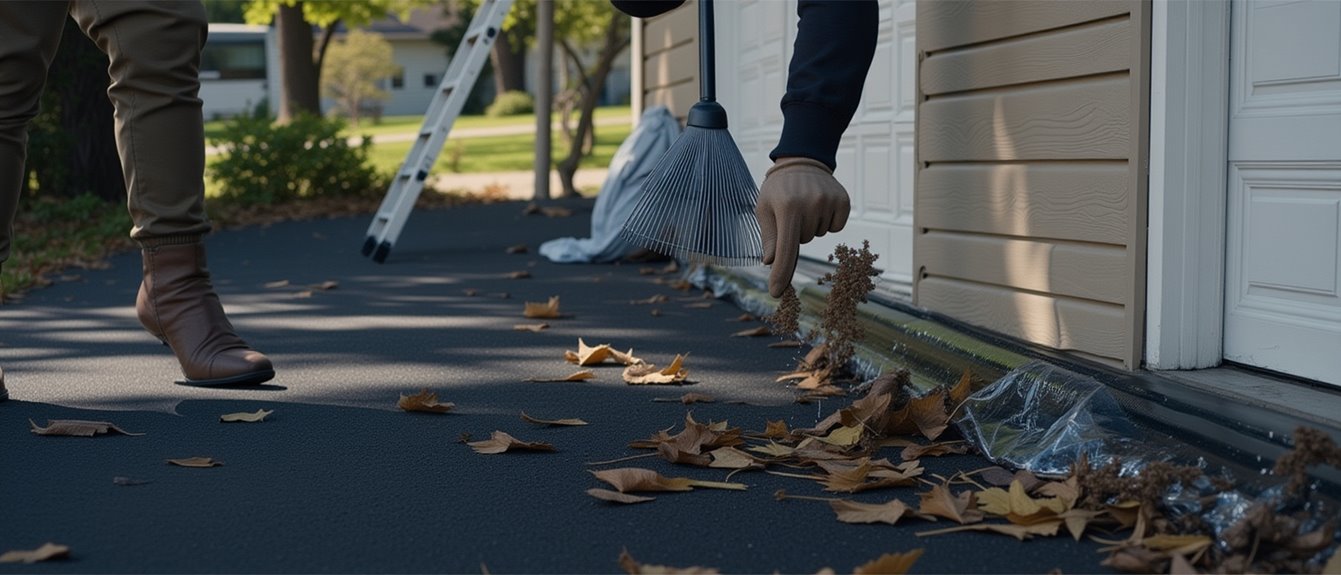
Summary: Fix overflowing gutters by inspecting the roofline, clearing debris and flushing downspouts, correcting slope and sagging sections, and sealing or replacing damaged lengths. If leaks recur, upgrade to larger gutters, add guards once structural issues are resolved, and schedule seasonal maintenance to keep water flowing properly.
Start by inspecting the roofline for pooled water, sagging, or holes and note downspout count versus roof area. Scoop debris from gutters and outlets with gloves, flush lines from the gutter toward the outlet, and snake stubborn clogs. Check and adjust the slope to about 1/4 inch per 10 feet, straighten sagging sections, and tighten hangers. Seal small leaks or replace badly damaged sections, consider larger gutters or guards, and keep going to learn the full step-by-step fixes.
Highlights
- Inspect the entire roofline for pooled water, sagging, holes, and count downspouts to identify capacity issues.
- Remove debris by hand or scoop, then flush gutters and downspouts with a hose to verify clear flow.
- Check and adjust gutter slope to about 1/4 inch drop per 10 feet, straightening sagging sections and tightening hangers.
- Seal small leaks with quality gutter sealant; replace severely damaged sections and consider larger-capacity gutters if leaks recur.
- Install gutter guards if clogs persist, but fix structural problems first and schedule seasonal inspections.
Diagnose Overflowing Gutters (Quick Checklist)
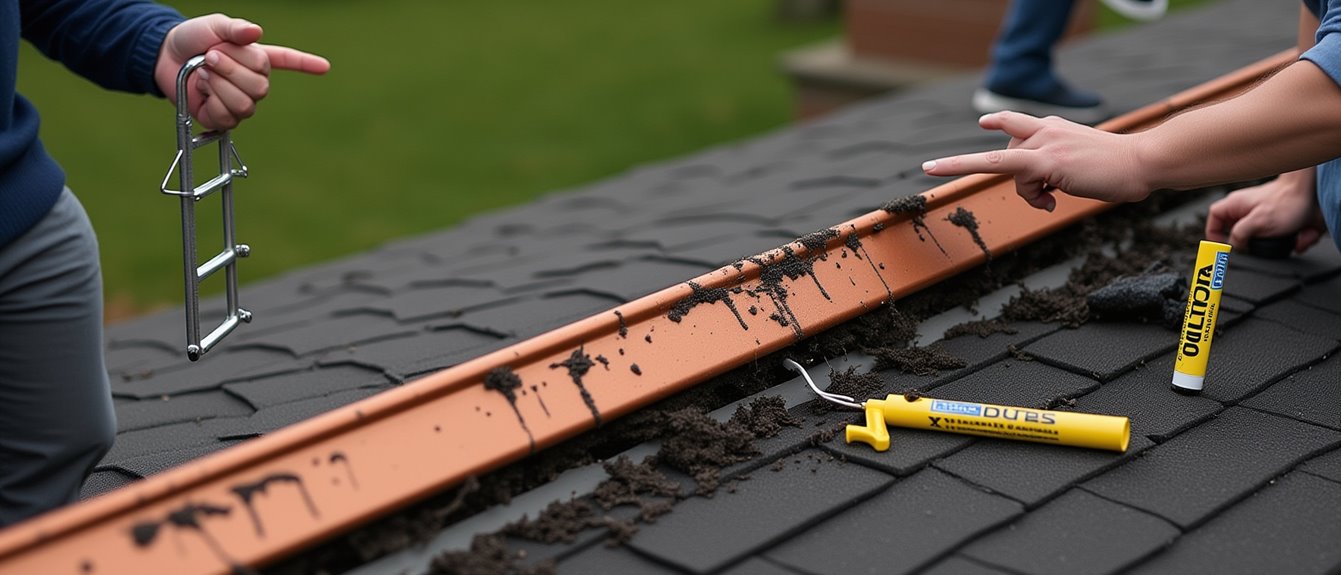
Start by doing a quick, systematic inspection so you can pinpoint why your gutters are overflowing. Walk the roofline with safety gear and look for obvious signs: pooled water, sagging sections, or visible holes.
Check for clogged gutters where leaves and twigs block flow; probe with a gloved hand or scoop to confirm obstructions without diving into full cleaning yet.
Assess gutter slope by measuring drop, aim for about 1/4 inch per 10 feet toward each downspout; adjust hangers if sections are flat.
Count downspouts and compare to roof area so you’re not undersized for heavy rain. Note any cracks or detached seams that trap water.
Ensure you're aware of the importance of preventive maintenance to help avoid future overflow issues.
Record each issue so you can prioritize repairs, adjustments, or replacement steps next.
Step 1 : Clear Debris & Flush Downspouts Correctly
Climb a stable ladder with gloves and a narrow garden trowel, then work methodically from the downspout outlets, scooping out leaves and twigs so you don’t push debris farther down the run.
Begin at the outlet and move outward, using the trowel to clear debris and drop it into a bucket or tarp.
Once visible blockages are removed, attach a hose and flush downspouts from the gutter toward the outlet; watch where water flows to confirm proper drainage.
If water backs up, use a high-pressure nozzle or a plumber’s snake to dislodge stubborn clogs in the downspout.
After flushing, inspect outlets to ensure they direct water at least 5-10 feet from the foundation. Additionally, ensure your gutters are custom-fit seamless gutters to optimize protection against overflow.
Repeat seasonally or after storms.
Step 2 : Fix Slope, Straighten Sagging Sections, and Tighten Hangers
Begin by checking the gutter slope with a bubble level, aim for about 1/4 inch drop for every 10 feet toward the downspout, and identify any low or sagging sections that trap water. Use the level to locate trouble spots, then tighten hangers or straps to lift the run. If spikes are loose, hammer them back or use plastic shims to stabilize until you can replace fasteners. Regular maintenance of downspouts ensures effective drainage and prevents overflow.
| Task | Tool | Action |
|---|---|---|
| Check slope | Bubble level | Aim 1/4" per 10' |
| Straighten sagging sections | Ladder, shim | Reposition, insert shim |
| Tighten hangers | Screwdriver/wrench | Fasten securely |
| Temporary fix | Hammer | Re-seat spikes |
Work systematically along the gutter, testing drainage after adjustments. Regular checks prevent worsening damage and overflow.
Step 3 : Repair Leaks or Replace Damaged Sections; When to Upgrade Capacity
After you’ve straightened and secured the run, inspect for cracks, holes, and split seams and seal small leaks with a high-quality gutter sealant applied liberally to both sides; for large gaps or severely damaged sections, replace the affected length rather than patching.
If leaks keep recurring it’s a sign your gutters may be undersized and you should consider upgrading to larger-capacity gutters and downspouts.
Next, work methodically: remove debris, dry the area, and apply sealant over and under the seam to repair leaks effectively.
For bent, rusted, or split damaged sections, cut out the bad length and fit a matching replacement with proper connectors and sealant.
If you're repairing often or water still overflows, upgrade capacity by choosing wider gutters and larger downspouts to handle peak flow. Additionally, consider installing seamless gutters for a reduced risk of leaks and a cleaner appearance.
When to Add Gutter Guards: And When to Call a Pro
If your gutters keep clogging despite regular cleanings or you live under trees that shed constantly, adding gutter guards can cut maintenance and keep water flowing; however, don’t install them over gutters that are sagging, leaking, or undersized, have a pro fix structural problems first so guards can work properly.
You should add gutter guards when debris repeatedly causes overflow or when trees make regular maintenance impractical. Choose a system compatible with your roof and downspouts, and inspect guards seasonally to catch hidden blockages.
- Add guards if overflow continues after routine cleaning and inspection.
- Call a professional gutter service if you see sagging, multiple leaks, or poor pitch.
- Maintain guarded gutters with regular maintenance checks and downspout flushing.
- Replace or repair before installing guards to ensure long-term performance. Our gutter repair services are specifically tailored for heavy coastal rain and wind, making them ideal for those living in coastal areas.
Frequently Asked Questions
How Do You Fix Overflowing Gutters?
You clear debris, check pitch, and unclog downspouts, then inspect for damage and seal or replace sections as needed, directing water 5-10 feet from the foundation, and consider gutter guards to prevent repeat overflow.
How to Stop Overflowing Gutters?
You stop overflowing gutters by cleaning them regularly, ensuring a 1" per 10' slope, repairing sagging sections, upgrading to larger gutters if needed, and installing gutter guards to minimize debris and reduce maintenance.
Why Are My Seamless Gutters Overflowing but Not Clogged?
About 40% of gutter failures stem from design or installation, so your seamless gutters likely overflow from poor pitch, undersized downspouts, hidden debris, or sagging sections; inspect slope, downspout capacity, and structural integrity.
How to Slow Down Water Flow in a Gutter?
You slow down gutter water by ensuring a 1/4" slope per 10', installing gutter guards, adding extra downspouts, fitting rain diverters, and performing regular cleaning and inspections to remove clogs and optimize flow control.