
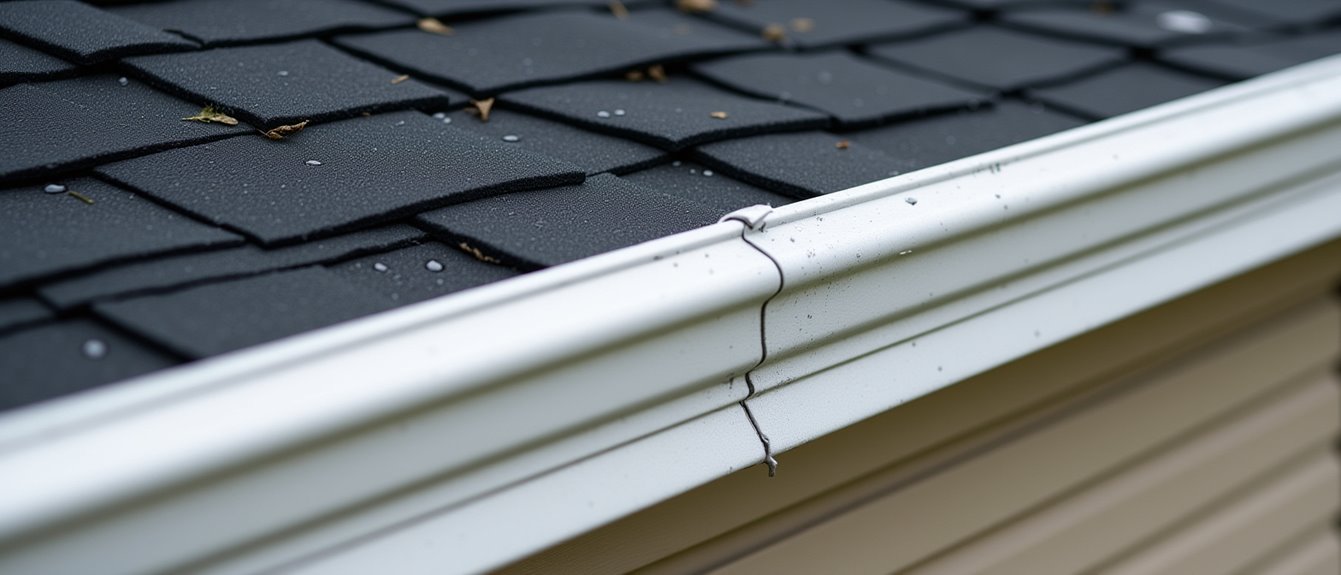
Summary: Gutters channel roof runoff away from the foundation, while drip edge flashing guides water into gutters and protects fascia and roof deck from rot and leaks. Install quality materials like aluminum, steel, or copper, and maintain both regularly to prevent costly water damage.
Gutters are channels that collect roof runoff and carry it away from your foundation to prevent pooling, erosion, and water damage to fascia and shingles. A drip edge is metal flashing installed at the roofline that directs water into the gutter and keeps it from seeping behind fascia or under shingles. Together they reduce rot, leaks, shingle lift, and ice dam risks. Install quality materials and maintain them regularly, and keep scrolling to learn practical signs and options.
Highlights
- Gutters are channels that collect roof runoff and direct it away from the foundation to prevent pooling, erosion, and structural damage.
- A drip edge is metal flashing installed at the roofline to guide water into gutters and protect underlying wood from moisture.
- Properly installed drip edge prevents water from seeping behind gutters, reducing rot, shingle lift, and ice dam risks.
- Gutters and downspouts together maintain landscape integrity and prevent basement leaks by controlling water flow and discharge.
- Common drip edge materials include aluminum, galvanized steel, and copper, balancing durability, corrosion resistance, appearance, and cost.
Do Gutters Need a Drip Edge?
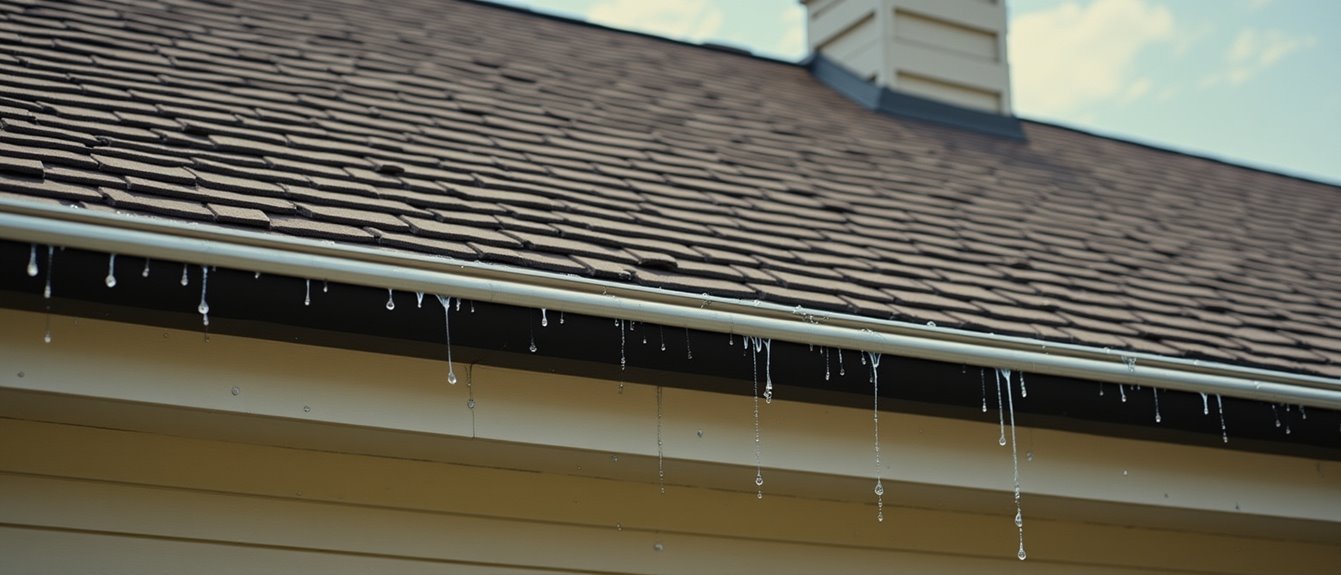
Wondering if your gutters really need a drip edge? You do. A properly installed drip edge stops water from seeping behind gutters and damaging the fascia board, helping prevent water damage and mold.
As part of the roofing system, the drip edge redirects water away from vulnerable wood and into the gutters, reducing shingle lift and leaks. Without it, water can wick under shingles, accelerate shingle deterioration, and compromise the structural integrity of eaves.
You’ll also lower the risk of ice dam formation by keeping runoff flowing off the roof instead of backing up under roofing materials. Installing a drip edge during gutter installation is a straightforward, cost-effective step that preserves your roof’s performance and extends its service life. Additionally, a well-maintained gutter system is essential for protection from water damage, ensuring that water is effectively directed away from your home.
What Gutters Do and How They Protect Your Home
Gutters collect rainwater running off your roof and channel it away from the house, preventing pooling around the foundation that can lead to cracks, soil erosion, or basement leaks.
You rely on gutters to direct water away from vulnerable areas so your roof and gutter system prevents water damage and extends roofing lifespan.
By moving runoff properly, gutters stop water from seeping under shingles, reduce mold risk, and protect fascia and soffit from moisture exposure.
They also limit soil erosion and keep water from undermining landscaping or foundations.
Regular maintenance keeps gutters flowing, prevents clogs that cause overflow and wood rot, and preserves aesthetics.
In short, well-maintained gutters protect structure, value, and curb appeal. Additionally, custom-fit seamless gutters provide optimal protection against potential water damage.
What a Drip Edge Is and Where It Fits
While gutters move water away from your foundation, a drip edge sits at the roofline to steer runoff directly into those gutters and keep it from soaking the fascia and roof deck.
You’ll recognize a drip edge as metal flashing installed along the roof edge; it slips under shingles and over the roof deck to form a waterproof barrier. When installed correctly, it directs water away from vulnerable wood, helping prevent rot and broader water damage. Additionally, proper installation of a drip edge complements gutter installation by enhancing overall drainage efficiency.
- Function: guides runoff from roof into gutter, protecting fascia and soffit.
- Materials: aluminum, galvanized steel, copper, choose for durability and appearance.
- Installation: a roofing company should fit it precisely so the metal flashing seals and the system works.
Signs Drip Edge or Gutter Installation Is Wrong
If your roofline shows bubbling metal, visible gaps between the drip edge and gutter, or water pouring behind the gutters, you’re likely dealing with poor installation or maintenance. You’ll notice bubbling or warped drip edges, water stains on walls or ceilings, and an injured fascia board from installation issues. Overflowing gutters often signal clogs or improper installation that stop water away from the house. Regular preventive maintenance ensures your gutters function optimally and helps avoid these issues.
| Symptom | Likely Cause | Action |
|---|---|---|
| Visible gaps | Misaligned drip edges / improper installation | Re-seat drip edges, secure fasteners |
| Water stains | Water leaking behind gutters | Inspect drip edges and drainage |
| Overflowing gutters | Clogs or poor placement | Clear clogs, adjust slope/drip edge |
Check fasteners, clear debris, and restore proper drainage promptly to prevent bigger damage.
Drip Edge Materials: Aluminum, Steel, Copper Compared
Because the drip edge is the first line of defense for your roof edge, choosing the right material matters for performance, appearance, and budget. You’ll weigh aluminum, galvanized steel, and copper against your roofing system needs.
Aluminum is lightweight, cost-effective, and corrosion-resistant, so it moves water away from the fascia and suits many residential styles.
Galvanized steel brings superior durability and rust resistance for windy, storm-prone areas, protecting roof edges under severe weather.
Copper offers unmatched longevity and distinct aesthetic appeal; it’s corrosion-resistant and often chosen for high-end installations. Additionally, selecting proper downspout dimensions can significantly enhance the effectiveness of your drainage system.
- Aluminum: affordable, versatile color options, good corrosion-resistant performance.
- Galvanized steel: robust, high durability for harsh climates.
- Copper: premium look, exceptional longevity and corrosion resistance.
Hiring Help: DIY Triage, When to Call a Pro and What to Expect
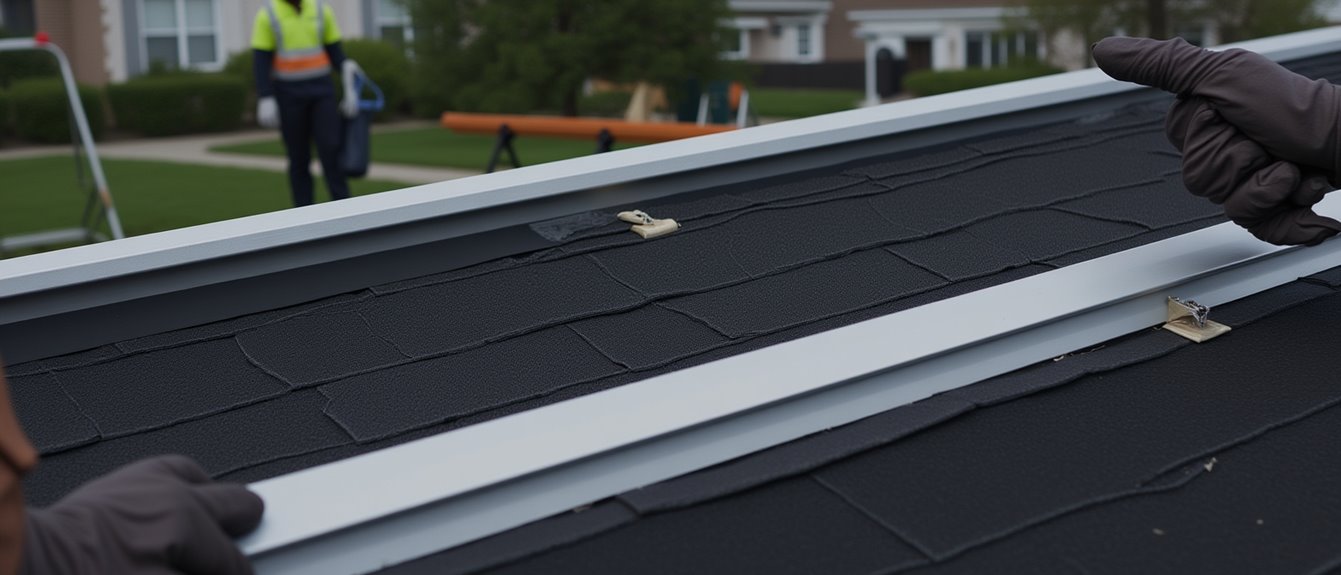
When you spot sagging gutters, water pouring behind the fascia, or warped drip edge flashing during a quick ladder check, act quickly: small fixes may be DIY, but these signs usually mean you should call a pro.
Do routine inspections to catch loose fasteners, clogs, or failing drip edge before they let water damage start. DIY can clear debris or tighten hangers, but severe bubbling, overflow, or warped metal calls for hiring contractors.
Expect a contractor to assess gutters and Drip Edge Installation, confirm components are installed along the eaves correctly, and recommend repairs or full professional installation.
Get multiple quotes, check reviews, and pick licensed pros who’ll help prevent future issues, or call us for a trusted referral.
Frequently Asked Questions
Is Drip Edge Necessary With Gutters?
Yes, you should install a drip edge even with gutters. It directs water under control, prevents shingle and fascia damage, reduces leaks and clogs, and strengthens roof longevity, so you avoid costly repairs later.
How Much Does It Cost to Have Drip Edge Installed?
On the whole, you’ll pay about $1, $3 per linear foot for drip edge, up to $5 for copper; adding it during a roof job costs $200, $500 extra, and retrofits raise labor and total expense.
What Does a Gutter Drip Edge Look Like?
A gutter drip edge looks like a slim, angled metal strip tucked under shingles and extending over the gutter; you’ll see a small lower flange directing water into the gutter, matching roof color and giving a neat, finished edge.
Which Is Better, Drip Edge or Gutter Apron?
Drip edge’s better for roof protection overall, but you’ll want a gutter apron for efficient drainage. You’ll typically install both: prioritize drip edge to prevent water damage, add apron to keep gutters working properly.