
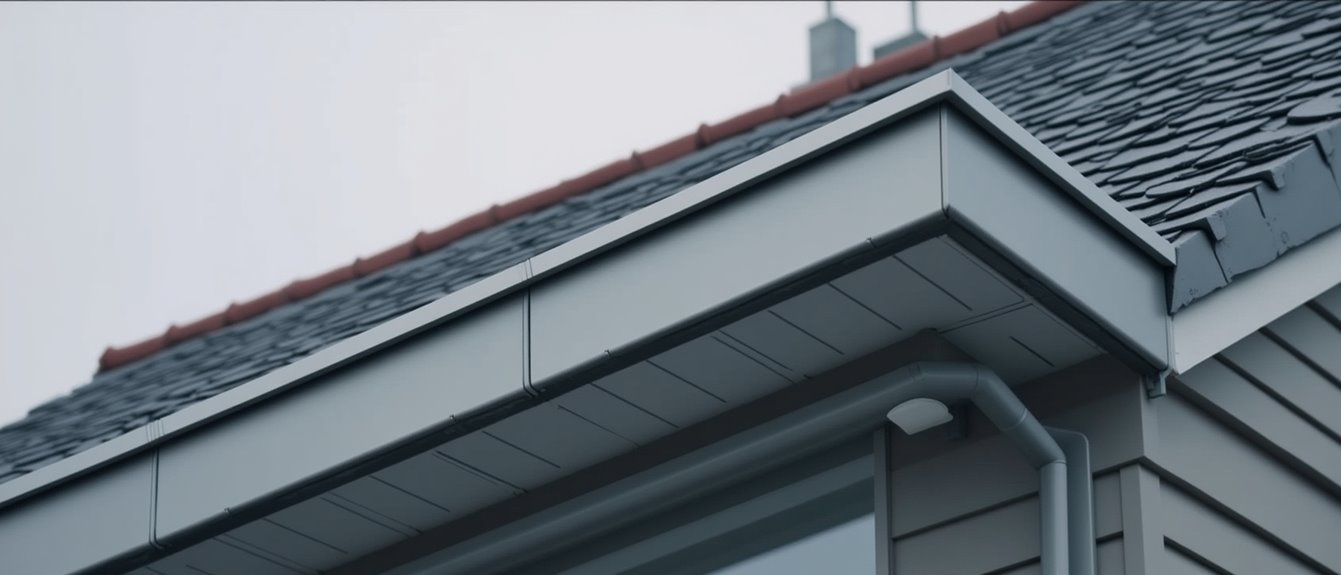
Summary: Box gutters are deep rectangular channels built into roofs to handle heavy runoff, requiring proper slope, waterproofing, and downspout placement. Regular inspection and maintenance prevent clogs, sagging, and leaks over the long term.
You’ll find box gutters as deep, rectangular channels built into roof edges or between roof planes to capture large volumes of runoff and funnel it to downspouts. They’re made from metal or lined with EPDM, felt, or asphalt and rest on a solid wood substrate rather than hung brackets. You’ll need a minimum slope, good waterproofing, and strategic downspout placement to prevent pooling, clogging, or rust, continue for details on materials, sizing, and maintenance.
Highlights
- Box gutters are deep, rectangular roof channels set into edges or between roof planes to collect roof runoff.
- They’re typically 6-12 inches wide, supported by a wood substrate rather than hung brackets.
- Constructed from metal or lined with EPDM, asphalt, or felt to ensure waterproofing and durability.
- Sloped at a minimum of 1/8 inch per foot, they direct large volumes of water smoothly toward downspouts.
- Regular inspection, cleaning, and properly placed downspouts prevent clogs, sagging, and water pooling.
What Box Gutters Are and How to Identify Them
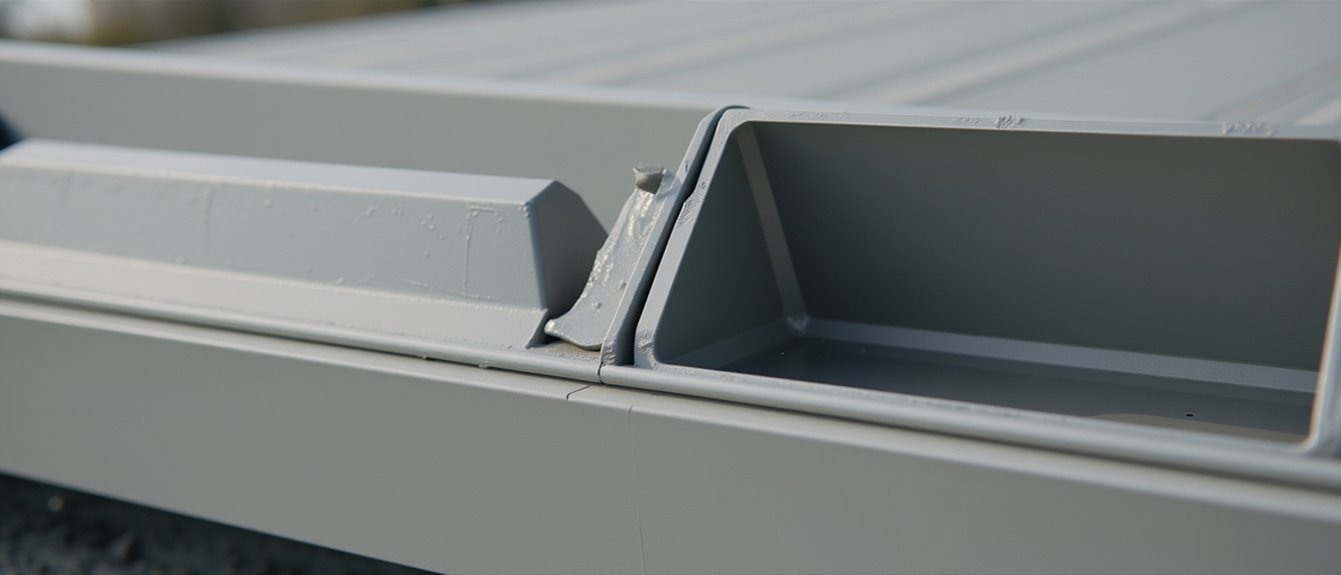
Box gutters are deep, square-profile channels with sharp 90-degree angles that collect and direct runoff from flat or low-slope roofs; you’ll typically find them set into the roof edge or between roof sections rather than hanging off the fascia.
You’ll identify box gutters by their wider channels, commonly 7-10 inches, and by their recessed installation between roof surfaces, supported by a wood substrate instead of hung brackets.
They’re often custom installations tailored to the building’s rooflines, so you’ll see seamless integration with parapets or intersecting planes.
Because they’re typically made from metal like aluminum or stainless steel and use waterproofing materials for linings, you’ll rely on them for effective water drainage when flat roofs concentrate large runoff volumes.
Materials, Sizes, and Linings for Box Gutters
After identifying a box gutter on your roof, the next thing to consider is what it's made of, how big it should be, and what lining will prevent leaks and deterioration.
You’ll choose box gutters from durable materials such as aluminum, stainless or galvanized steel, or copper for longevity and weather resistance. Sizes typically span 6 to 12 inches in width to handle larger runoff; select a width based on roof area and local rainfall.
Linings include EPDM rubber, asphalt, metal, or roofing felt to provide reliable waterproofing and reduce leak risk. Additionally, opting for seamless gutters can minimize leaks and enhance the overall appearance of your drainage system.
Custom fabrication matches architectural profiles and minimizes seams, improving performance.
Specify material, size, and lining together to ensure functional, low-maintenance drainage.
| Aspect | Detail |
|---|---|
| Width | 6 to 12 inches |
| Materials | Aluminum, steel, or copper |
| Linings | EPDM, asphalt, felt, or metal |
| Substrate | Solid wood frame support |
| Slope | Minimum 1/8 inch per foot |
How Box Gutters Channel Water: Flow Paths and Downspouts
One well-designed gutter section can move large volumes of roof runoff by channeling water along a broad, deep trough toward strategically placed downspouts. You’ll rely on the box gutters’ 7-10 inch width to accommodate peak water flow, reducing overflow risk.
Integrated into the roof structure, the trough directs runoff laterally to collection points where downspouts transfer it vertically and away from the foundation. Seamless construction and EPDM rubber or metal linings maintain smooth water flow and limit leak paths. Additionally, custom-fit seamless gutters provide optimal protection against overflow and foundation washouts.
In practice, you’ll design downspout spacing and capacity to match expected runoff rates so gutter systems avoid bottlenecks. Regular inspection of linings and outlets keeps flow unobstructed, preserving system performance and protecting the building.
If you are comparing drainage options for your roof, understanding how fascia style gutters work and where they fit best can help you make a more informed choice alongside box gutters.
Installation Factors That Matter: Substrate, Slope, and Waterproofing
Because a box gutter carries concentrated roof runoff, you’ll need a firm, well-aligned substrate, a measurable slope, and reliable waterproofing to keep the system functional and leak-free.
You’ll build the substrate, often a sturdy wood frame, so box gutters sit true to roof lines and transfer loads to structure. During gutter installation, set a minimum slope of 1/8 inch per foot; you’ll measure runs and adjust framing to prevent standing water.
Choose waterproofing, EPDM, metal liners, or compatible membranes, to protect joints and extend service life. Integrate downspouts where flow concentrates and plan access for inspections. Additionally, regular maintenance and gutter cleaning services are essential to ensure optimal performance and prevent clogs.
Maintain substrate and waterproofing with periodic checks to avoid deterioration and costly interventions.
- Substrate must be robust and aligned
- Maintain minimum slope (1/8"/ft)
- Use durable waterproofing materials
Common Problems, Warning Signs, and Repair Triggers
Having a solid substrate, correct slope, and durable waterproofing reduces failures, but box gutters still develop problems you should catch early.
You’ll see common problems like clogs, sagging, rust, peeling paint, and misaligned downspouts. Those warning signs mean you must act: leaks or visible deformation require inspection.
If water pools at the building base during storms, the drainage capacity is insufficient and you should clean or reconfigure the system.
Regular inspections and biannual cleaning reduce risk and help you determine whether repair or replacement is necessary. Thorough debris removal is essential to prioritize clearing debris, verifying slope and downspout alignment, and addressing corrosion.
Engage a competent tradesperson for adjustments you can’t safely or accurately perform yourself.
For professional gutter installation in Newport Beach, working with a local specialist ensures your box gutter system meets both code requirements and the specific demands of Orange County weather.
Choosing a Box Gutter: Cost, Maintenance, and Code Considerations

Choosing a box gutter means balancing higher upfront cost, routine maintenance, and strict code compliance to get reliable long-term performance. You’ll pay more, often over twice the cost of standard gutters, because box gutters need custom fabrication and skilled installation.
Newport Beach Gutters specializes in custom box gutter fabrication and installation throughout Orange County. Call (949) 213-3332 to get a free estimate and find out which materials and sizing are right for your roof.
You must schedule maintenance, ideally cleaning twice a year, to prevent blockages that cause water intrusion and structural damage. The lining, commonly EPDM rubber, is critical to prevent leaks and prolong roof integrity. Additionally, ensuring custom sizing for your box gutters can enhance their effectiveness in managing water flow.
Local building codes frequently dictate design, slope, overflow capacity, and connection details, so you should consult a qualified contractor during planning. Assess lifecycle costs, not just initial price, and verify installers’ familiarity with relevant standards to ensure correct drainage performance and compliance.
- Upfront cost vs lifecycle savings
- Twice-yearly maintenance schedule
- Code-driven installation requirements
Frequently Asked Questions
What Are Common Problems With Box Gutters?
You’ll face clogged, overflowing box gutters, seam leaks, sagging from debris and water weight, poor drainage from bad installation, and rust or corrosion; inspect regularly, clear blockages, fix linings, and reinforce supports to prevent damage.
Are Box Gutters Better?
Yes, you're getting superior drainage, fewer leak points, durable materials, and customizable aesthetics; you'll pay more upfront and need pros to install, but long-term performance and reduced maintenance generally justify the investment.
Can You Replace Box Gutters With Regular Gutters?
Yes, you can replace box gutters with regular gutters, but you’ll need structural modifications, increased downpipe capacity, roofline adjustments, and careful water flow calculations to avoid overflow, leaks, and to meet codes and performance requirements.
Are Box Gutters a Problem?
Like a clogged artery, yes, box gutters can be problematic. You’ll face higher install cost, tricky repairs, frequent maintenance, and leak risks from poor design or debris; inspect regularly and address sagging or rust promptly.