
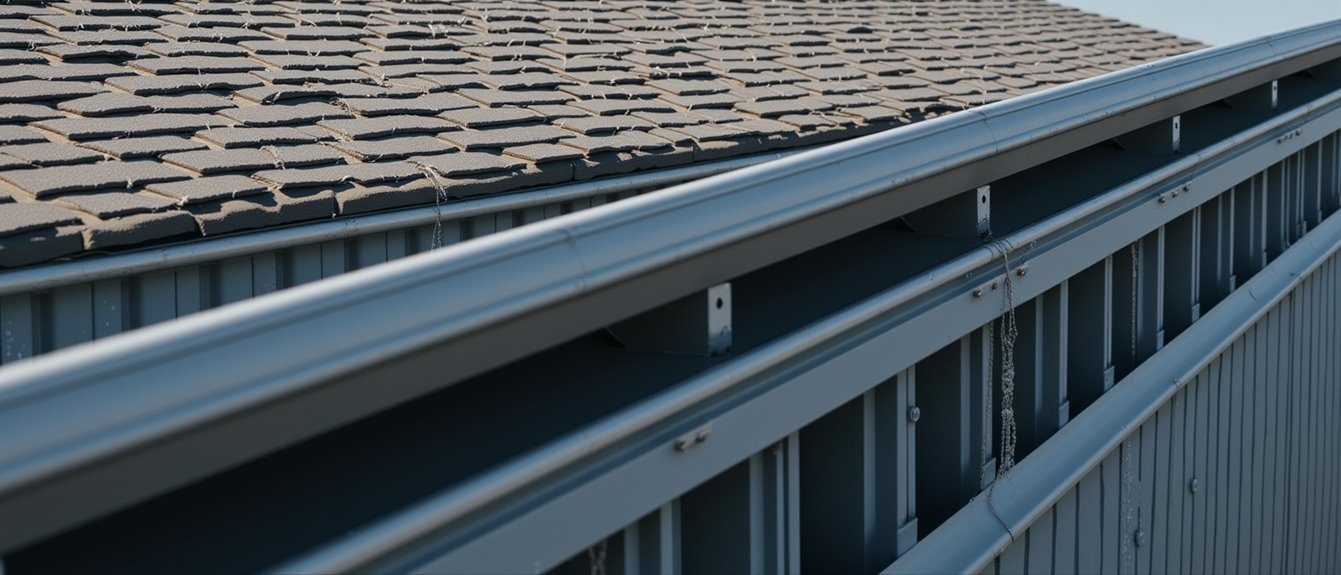
Summary: Steel buildings need corrosion-compatible, properly sized gutters such as K-style aluminum, half-round aluminum or copper, or engineered box gutters, matched to rainfall and galvanic compatibility. Correct sizing, a 1/4-inch per 10-foot slope, and regular maintenance ensure reliable long-term drainage.
For steel buildings you’ll want corrosion-compatible, high-capacity gutters: K-style aluminum for modern profile and runoff, half-round aluminum or copper where low-clog flow and aesthetics matter, and engineered box gutters for large roofs and heavy storms. Match material to galvanic compatibility with your steel, size gutters and downspouts to peak rainfall, set a 1/4-inch drop per 10 feet, and plan outlet placement and fasteners; keep maintenance and impact resistance in mind if you want detailed guidance.
Newport Beach Gutters provides expert gutter installation, repair, and cleaning for residential and commercial properties throughout Orange County, including steel building projects with specialized drainage requirements.
Highlights
- Use K-style aluminum gutters (5" or 6") for high capacity, rust resistance, and easy mounting on steel building eaves.
- Consider galvanized steel gutters where impact resistance and strength are priorities, matching corrosion protection to the building finish.
- Choose box gutters for large roof areas or heavy runoff, engineered and integrated to prevent overflow and visible hardware.
- Prefer half-round aluminum or copper for low-clog performance and aesthetics on architectural steel structures with lighter runoff.
- Plan downspout size, placement, and a 1/4" drop per 10' with corrosion-compatible fasteners to ensure reliable drainage.
How to Pick the Right Gutter for Your Steel Building
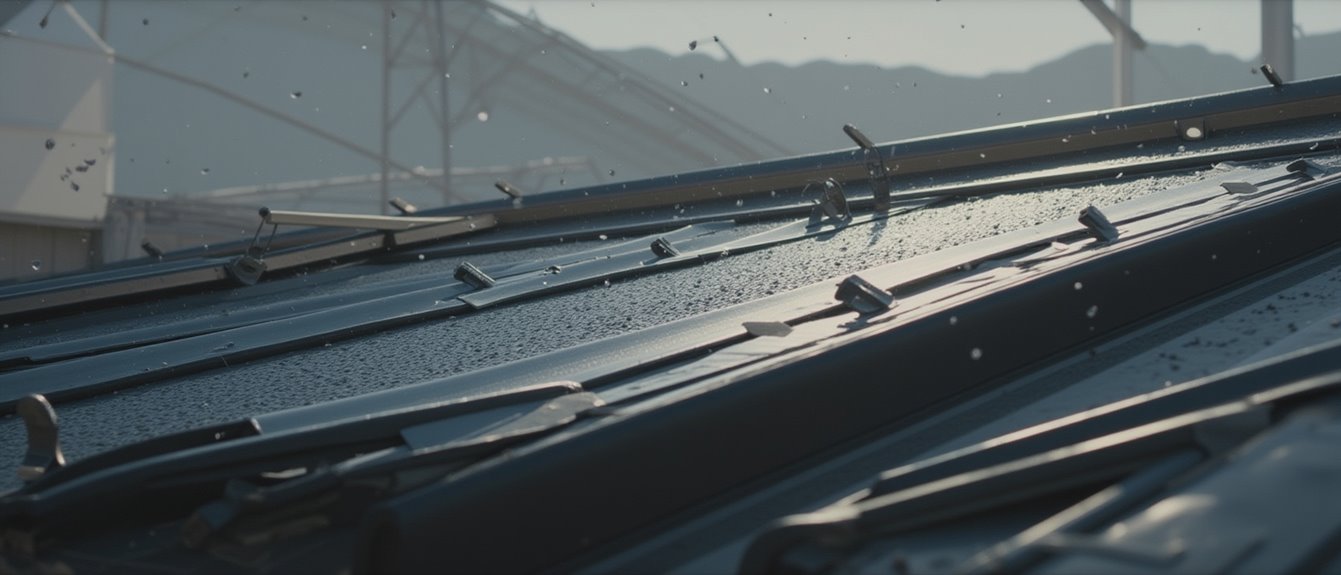
How do you choose the right gutter for a steel building? You assess material, capacity, and installation requirements against local climate and water management goals.
For steel structures, prioritize strength: steel gutters resist impact and high winds; aluminum offers rust resistance and lighter weight.
Select K-style when you need higher capacity and a modern profile. Size gutters and set a 1/4-inch drop per 10 feet to ensure proper drainage and prevent pooling.
Specify seamless systems to minimize leak points; they’re roll-formed to fit building lengths. Engage professional services for accurate pitch, alignment, and secure fastenings to the steel fascia.
Working with a trusted gutter contractor in Newport Beach ensures your steel building receives properly engineered drainage tailored to local rainfall patterns and building codes.
Plan for downspout placement and corrosion-compatible connections to maintain performance and longevity under expected rainfall loads. Additionally, consider custom sizing to accommodate specific water runoff needs based on your building's design.
Ready to get started? Call (949) 213-3332 to speak with a specialist about gutter sizing, materials, and installation for your steel building.
Quick Comparison: K-Style, Half-Round, Box Gutters
After you've matched material, capacity, and installation needs to your site's rainfall and building design, compare the three common profiles: K-style, half-round, and box gutters.
K-style gutters offer increased capacity and durability with a flat base and rounded corners, so they handle heavy rainfall on steel buildings. Pair with steel gutters or aluminum gutters for strength or corrosion resistance.
Half-round gutters use a semicircular profile for efficient water flow and easier cleaning. They suit diverse architectural styles, but typically hold less than K-style.
Box gutters are integrated into the roof for the highest capacity and a sleek appearance, ideal for large roofs and heavy storms.
For all types, prioritize proper sizing, plan for efficient water drainage, and evaluate maintenance needs relative to material and access. Additionally, consider custom-fit seamless gutters to ensure optimal protection and prevent foundation washouts.
For a deeper look at how gutter profiles compare across different structure types, the overview of gutter types for mobile homes highlights many of the same sizing and material trade-offs that apply to steel buildings.
K-Style Gutters: Pros, Cons, Best Uses
Because they combine increased capacity with a straightforward profile, K-style gutters are a practical choice for steel buildings where heavy runoff and long rooflines are common.
You’ll get higher water capacity from the flat-bottom, vertical-side profile, typically in 5" or 6" widths. Aluminum is a common choice for its rust resistance, lightweight handling, and adequate durability.
The molded shape adds aesthetic appeal while minimizing debris traps, reducing maintenance frequency. For effective water management, you must follow installation considerations: secure alignment, proper slope toward downspouts, and correct fastener spacing. Additionally, consider using seamless gutters for a clean appearance and reduced leaks.
Cons include susceptibility to deformation under heavy impact and potential clogging without screens.
Use K-Style gutters when you need capacity, curb appeal, and straightforward installation on long roof runs.
When to Choose Half-Round Gutters
Choose half-round gutters when you need a low-clog, low-maintenance solution that also enhances a building’s traditional appearance.
You’ll get half-round gutters with a semicircular profile that promotes efficient water flow and helps reduce debris accumulation, lowering maintenance needs on steel buildings with traditional designs. They’re offered in materials like aluminum or copper, giving versatility in durability and aesthetic appeal.
- Use them where leaves or debris are common, the smooth interior reduces clogs and simplifies upkeep.
- Specify proper sizing for heavy rainfall zones since half-round profiles hold less water than K-style alternatives.
- Choose them to match classical architecture on steel buildings when you want performance plus visual continuity without complex maintenance.
Box Gutters and Built-In Drainage for Large Steel Roofs
When managing runoff from expansive steel roofs, box gutters with built-in drainage give you the high-capacity, integrated solution needed to prevent overflow and reduce visible hardware.
You’ll find box gutters excel at efficient handling of significant water runoff; their geometry and sizing are engineered to match roof area and local storm intensity.
Because they’re often custom-integrated into the roof, they provide a seamless appearance and eliminate hanging gutters.
Select durable materials and precise fabrication to resist corrosion and deformation.
Pay attention to installation tolerances, slope, and outlet placement to avoid standing water and leaks.
Regular maintenance, debris clearing, seal inspection, and outlet testing, keeps the drainage system performing.
For large steel roofs, box gutters offer reliable, low-profile drainage when specified and maintained correctly.
If you want to understand how specific gutter materials hold up on metal structures, our guide on Galvalume rain gutters and why to choose them covers corrosion-resistant options that pair well with steel building construction.
Materials for Gutters on Steel Roofs (Aluminum, Galvanized, Copper)
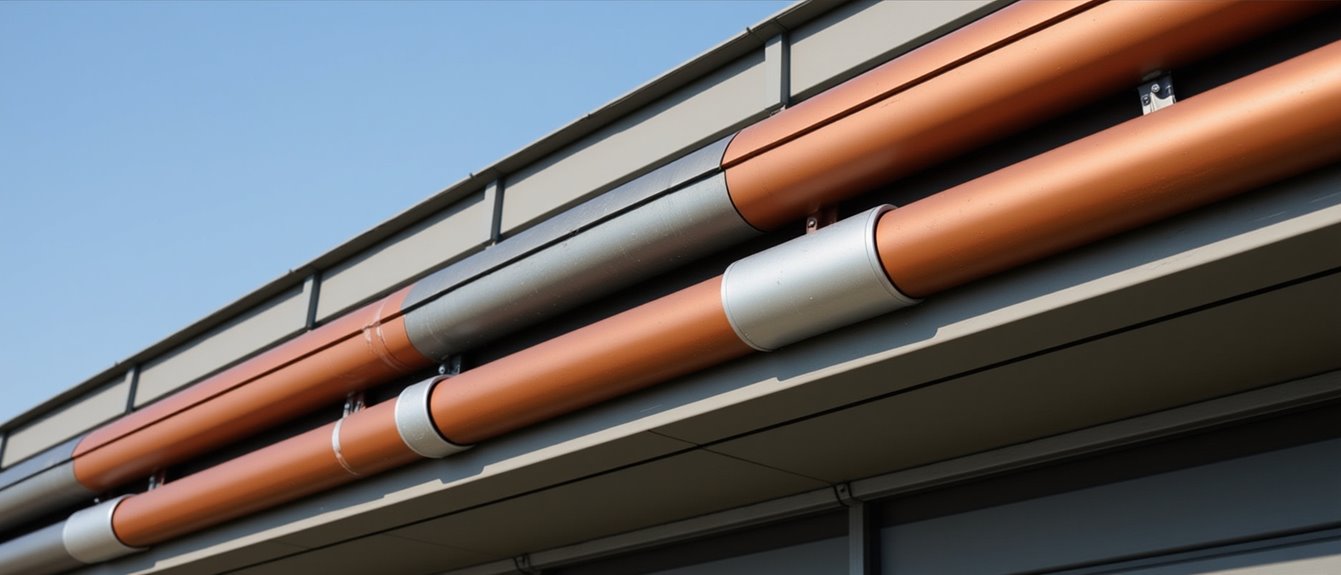
Although each material has trade-offs, aluminum, galvanized steel, and copper are the primary choices for gutters on steel roofs because they balance durability, corrosion resistance, thermal behavior, and maintenance needs.
You’ll weigh cost, lifespan, and compatibility with metal roofing when selecting. Consider:
- Aluminum: lightweight, rust-resistant, cost-effective, low maintenance requirements, typical lifespan ~20 years; works well as seamless gutters but has higher thermal expansion relative to steel.
- Galvanized steel: offers superior impact resistance and strength; zinc coating is rust-resistant and provides better thermal expansion compatibility with steel roofs; expect 20-30 years with inspections.
- Copper: highest durability and aesthetic value, develops patina, minimal maintenance, lifespan 50+ years; higher upfront cost but long-term performance.
| Material | Lifespan | Best For |
|---|---|---|
| Aluminum | About 20 years | Rust resistance, lightweight, low cost |
| Galvanized steel | 20 to 30 years | Impact resistance, strength |
| Copper | 50 plus years | Durability, aesthetics, minimal upkeep |
Sizing, Installation Essentials, and Maintenance Checklist
Because gutters must handle whatever your roof sheds, sizing, installation, and maintenance are nonnegotiable for steel buildings: use 5-6" K-style gutters as a baseline but size up for large roof areas or heavy local rainfall.
Mount with heavy-duty hardware, pitch at least 1/4" per 10' toward downspouts, and commit to a biannual inspection and cleaning regimen to prevent clogs, corrosion, and compromised hangers.
You should size by roof square footage and local rainfall patterns to ensure optimal drainage.
Installation essentials include professional alignment, secure heavy-duty mounting hardware, and continuous seams; seamless aluminum gutters offer corrosion resistance and fewer leak points.
Follow a maintenance checklist: seasonal inspections, biannual cleaning to prevent clogs, hanger and seam checks, and confirmation that downspouts divert water away. Additionally, preventive maintenance should be scheduled according to local rain patterns to further protect your investment.
Frequently Asked Questions
Can You Put Gutters on a Steel Building?
"Measure twice, cut once." Yes, you can install gutters on a steel building; choose durable, rust‑resistant materials, size and pitch them correctly, and have them professionally fitted and maintained to ensure effective drainage and long-term protection.
What Are the Best Gutters for a Metal Roof?
Seamless aluminum K‑style or box gutters are best for metal roofs; they'll resist rust, minimize leaks, handle high runoff, and integrate neatly. You should size and slope them correctly and have them professionally installed for optimal drainage.
Which Is Better, Half Round or K-Style Gutters?
If you prefer efficiency over charm, K-style is generally better: it holds more water, costs less, and integrates with metal roofs, while half-rounds flow debris better and suit classic aesthetics if you’ll pay more for upkeep.
Do You Need 6-Inch Gutters for a Metal Roof?
You don't always need 6-inch gutters for a metal roof; choose size based on roof area, pitch, local rainfall intensity, and debris load. For large roofs or heavy rain zones, 6-inch gutters reduce overflow and maintenance.