

Summary: Vinyl gutters cost less, install easily via DIY, and resist rust, making them ideal for mild coastal climates, rentals, and budget projects, while aluminum costs more upfront but lasts longer and handles harsh weather better. Choose vinyl for affordability and ease, or aluminum for long-term durability.
You’ll choose vinyl gutters when upfront cost, easy DIY installation, and low-weight, rust-resistant performance in humid or mild coastal areas matter more than decades-long durability. Vinyl runs about $3, $7 per linear foot, snaps together for faster labor, and needs only routine debris clearing and fastener checks. It’s prone to cracking or sagging in extreme cold or heavy snow, so expect shorter lives and occasional section swaps. Keep going to see installation tips, climate caveats, and care steps.
Highlights
- Lower upfront cost at about $3, $7 per linear foot makes vinyl more budget-friendly than aluminum.
- Lightweight, snap-together components simplify DIY installation and reduce labor expenses.
- Rust-resistant material performs well in humid and mild coastal climates without corrosion concerns.
- Requires less frequent immediate maintenance and is easy to replace damaged sections when needed.
- Flexible enough to avoid dents from minor impacts, offering aesthetic resilience in everyday conditions.
Should You Choose Vinyl Gutters? A Quick Decision Guide

Wondering if vinyl gutters are the right fit for your home? You’ll find vinyl gutters cost-effective at $3, $7 per linear foot, so they’re attractive if you’re budgeting.
Their lightweight design enables straightforward DIY installation via snap-together components, cutting labor costs. Vinyl is naturally rust-resistant, so it holds up in humid climates without corrosion.
Be realistic: vinyl has a shorter lifespan (10-20 years) and can crack or sag under extreme weather conditions, which increases chances of replacement.
Color options are more limited than aluminum, so match expectations to your home’s style.
Routine maintenance is simple, clear debris and check fasteners, but plan for eventual replacement if you face severe weather or want longer-term durability. Additionally, regular preventive maintenance helps ensure your gutters remain functional and effective over time.
Homeowners searching for a trusted gutter company in Newport Beach will find that getting a professional assessment early saves time and money regardless of which material you choose.
Vinyl Gutters vs. Aluminum: Cost and Long-Term Value
You’ve seen that vinyl gutters are cheap and easy to install, but cost isn’t just the sticker price, it’s lifecycle cost.
You’ll pay roughly $3, $7 per linear foot for vinyl gutters versus $7, $12 for aluminum, so initial installation and DIY labor favor vinyl.
For cost-effective decisions, factor in lifespan: vinyl lasts about 10-20 years; aluminum endures 20-50 years. That gap drives long-term value differences, more frequent vinyl replacement raises total ownership cost.
Vinyl is rust-resistant and low-maintenance but is more prone to cracking and sagging, reducing durability in harsh conditions.
Aluminum requires professional installation more often but demands less maintenance and boosts curb appeal and resale value. Additionally, custom-fit seamless gutters are often recommended for enhanced protection against runoff.
Weigh upfront savings against projected replacement and upkeep to choose wisely.
| Feature | Vinyl | Aluminum |
|---|---|---|
| Cost per linear foot | $3, $7 | $7, $12 |
| Lifespan | 10-20 years | 20-50 years |
| Installation | DIY, snap-together | Often professional |
| Rust resistance | Yes | Yes |
| Cold weather performance | Can crack or become brittle | Handles better |
| Maintenance | Low, but sections replaced | Less frequent, more durable |
How Vinyl Performs in Humid, Coastal, and Cold Climates
Because vinyl resists rust and corrosion, it’s a practical choice for humid and mild coastal settings where moisture is constant. However, its performance varies with temperature and load: in cold climates, vinyl can become brittle and crack, and under heavy rain or snow, it may sag or deform.
You’ll appreciate vinyl gutters in coastal climates for their resistance to rust and corrosion and lightweight design, which eases handling. In humid areas, you’ll need regular maintenance to prevent algae and keep drainage systems flowing.
In cold climates, expect a shorter effective lifespan and the risk that vinyl will brittle and crack during extreme freezes. For heavy rainfall or snow loads, consider reinforcement or alternative materials to avoid sagging and deformation. Additionally, gutter repair services can help maintain your system's integrity over time.
- Relief knowing rust won’t ruin your gutters
- Frustration if cracks appear after a hard freeze
- Confidence from easy, lightweight handling
- Vigilance for maintenance tasks
Installing Vinyl Gutters: DIY Tips, Limitations, and Tools
Installing vinyl gutters is a realistic weekend project for many homeowners, thanks to their snap-together design and lightweight panels that make handling and alignment straightforward.
You’ll find the snap-together method and the fact they’re lightweight and easy to handle make DIY installation accessible; essential tools for installing include a measuring tape, level, saw, drill, and rivets or screws.
Expect an average cost of $3 to $7 per linear foot, budget-friendly but time-consuming. Multiple seams mean increased risks of leaks over time, so seal joints carefully and check pitch frequently.
Know the limitations of vinyl gutters: they can become brittle in extreme cold and warp from prolonged sun exposure. If you lack time or want fewer seams, consider professional help. Additionally, precision installation ensures that your gutters function effectively and prevent structural damage.
When you are ready for expert guidance or a free estimate, reach out to Newport Beach Gutters or call (949) 213-3332 to speak with a local specialist about your vinyl or aluminum gutter project.
Noise, Flexibility, and Impact Resistance: What to Expect
Although vinyl gutters stay remarkably quiet during a downpour, they also bring practical advantages in flexibility and impact resistance that matter long-term. You’ll notice lower noise and muted sound compared with aluminum gutters, so rain is less intrusive inside your home.
Vinyl gutters’ flexibility lets them handle temperature changes without cracking or warping in moderate climates, preserving durability. Because they’re lightweight, you can install or repair them more easily, which reduces labor and risk.
- Relief: quieter nights when storms pass.
- Confidence: materials that flex instead of fracture.
- Ease: lighter components that you can manage yourself.
- Pride: customization that matches your home’s look.
Expect better impact resistance than aluminum, and long-term performance when you prioritize practical choices. Additionally, vinyl gutters are resistant to corrosion, making them a suitable option for various weather conditions.
If you are weighing vinyl against other long-lasting materials, learning about the benefits cedar gutters bring to a home can help round out your comparison before you commit to a final choice.
Best Use Cases: Rentals, Short-Term Homes, and Budget Projects
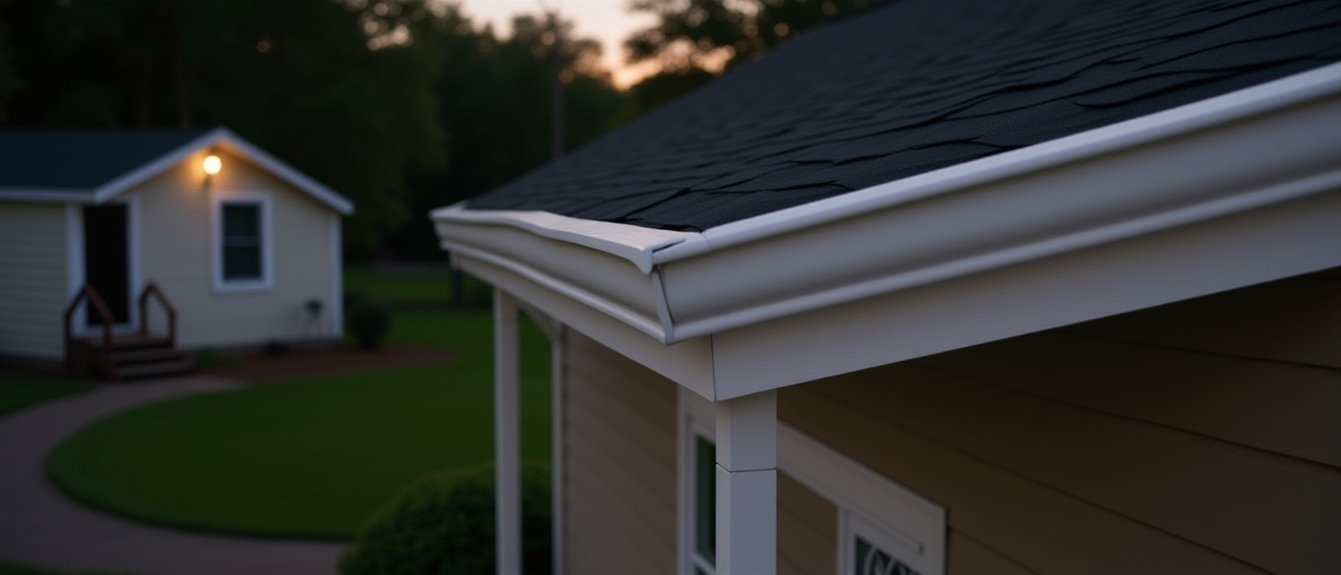
When you're outfitting a rental, short-term home, or tight-budget project, vinyl gutters deliver the most cost-effective balance of price, durability, and ease of maintenance.
You’ll appreciate vinyl gutters for budget projects because installation costs run just $3, $7 per linear foot, keeping upfront expenses low. Their lightweight design and easy DIY installation mean you can fit them without hiring pros, cutting labor costs further.
For rental properties and short-term homes, the snap-together installation lets you make quick repairs or replace sections between tenants. Vinyl’s rust-resistant composition suits humid climates common in many rentals.
With an average lifespan of 10-20 years, vinyl offers practical longevity for owners planning to move or flip properties, delivering predictable performance at a modest price.
Care, Repair, and When to Replace Vinyl Gutters
Because vinyl gutters can become brittle and warp after years of sun and cold exposure, you should inspect them at least twice a year for cracks, sagging, and loose seams so small problems don't become leaks or structural issues.
Focus inspections after storms and during seasonal change; cleaning twice yearly prevents clogs that accelerate wear and tear.
Minor seam leaks often require section replacement rather than patching, so budget for occasional repair or to replace sections.
In extreme conditions expect a 10-20 year life; severe cold or prolonged sun can shorten that considerably.
Replace gutters showing multiple cracks, significant warping, or recurring leaks to avoid water damage.
- You’ll feel relieved after thorough maintenance.
- Don’t ignore creeping sagging.
- Act before small cracks spread.
- Protect your home’s value.
Frequently Asked Questions
Are Vinyl Downspouts Better Than Aluminum?
Absolutely, they’re insanely budget-friendly and DIY-friendly, but you’ll trade long-term toughness. You’ll save upfront with rust-resistant, lightweight vinyl that’s easy to install, though it can crack or sag sooner than durable aluminum, affecting lifespan and value.
How Long Do Vinyl Downspouts Last?
They'll last about 10 to 20 years; you’ll get nearer 10 in harsh climates and towards 20 with regular cleaning and inspections. You’ll avoid rust, but expect more cracking, warping, and eventual replacement than aluminum.
What Is the Best Material for Rain Gutters?
The best material depends on priorities: aluminum balances cost, durability, and customization for most homes, while steel suits heavy-duty needs, copper offers longevity and aesthetics, and vinyl’s affordability fits tight budgets with easier DIY installation.
Are Vinyl Rain Gutters Any Good?
Yes, vinyl gutters perform well for budget-conscious homeowners: they're lightweight, rust-resistant, quiet in storms, easy to DIY, and low-cost per linear foot, though they need replacement sooner and offer fewer aesthetic/customization options than aluminum.