
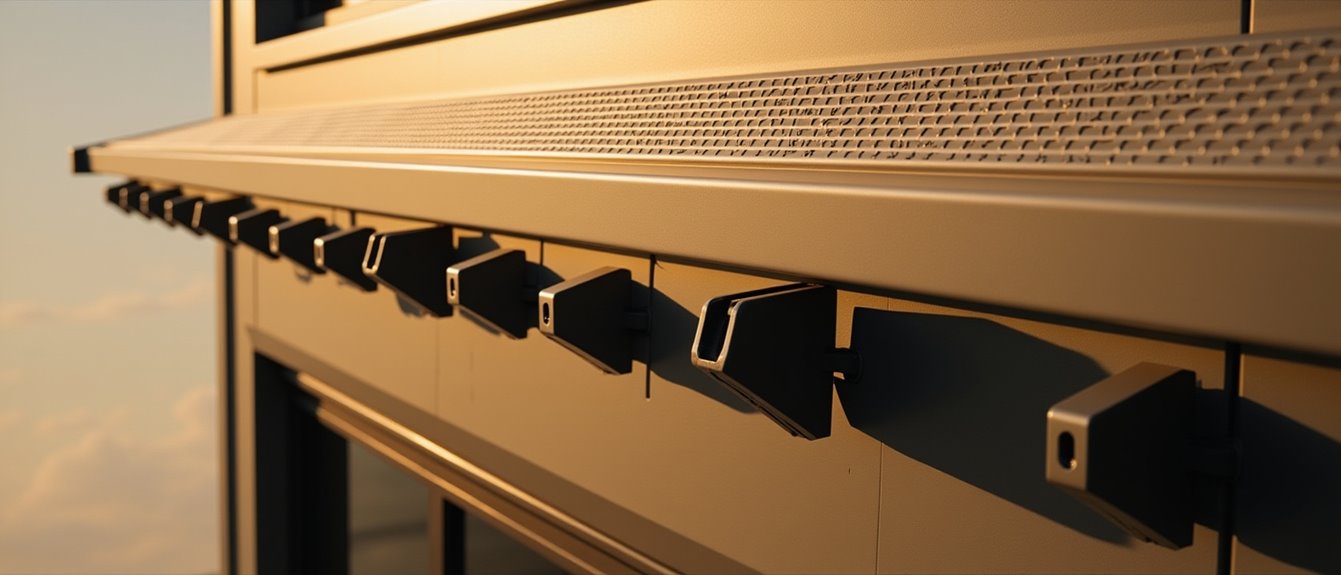
Summary: Commercial rain gutters need heavy-duty, corrosion-resistant materials in 6-8 inch seamless sizing, matched downspouts, expansion joints, overflow protection, and accessible maintenance features to handle heavy runoff reliably. Specifying these seven elements upfront reduces leaks, structural failure, and long-term maintenance costs.
You need commercial gutters that handle heavy runoff, resist corrosion, and allow thermal movement while keeping maintenance safe and simple. Choose heavy-duty aluminum or galvanized steel (or copper for premium longevity) in 6-8" sizes, seamless where possible, with matched downspouts and spaced outlets to limit runs. Use robust hangers, expansion joints every ~150', overflow provisions, and inspection/access points with debris management. Keep these seven priorities and you’ll be set, continue on to get implementation details.
Highlights
- Use heavy-duty, corrosion-resistant materials (galvanized steel, aluminum, or copper) sized for commercial loads.
- Provide 6-8" (or larger) seamless gutters, fabricated on-site to eliminate leak-prone seams.
- Match downspouts to capacity (4" round or 3x4 rectangular) and space them to limit runs to ~40'.
- Include overflow protection, expansion joints every ~150', and drainage zones for large roofs.
- Design maintenance access: fall-protection anchors, inspection ports, gutter guards, and a twice-yearly cleaning schedule.
Quick Checklist: 3 Must-Have Commercial Gutter Features
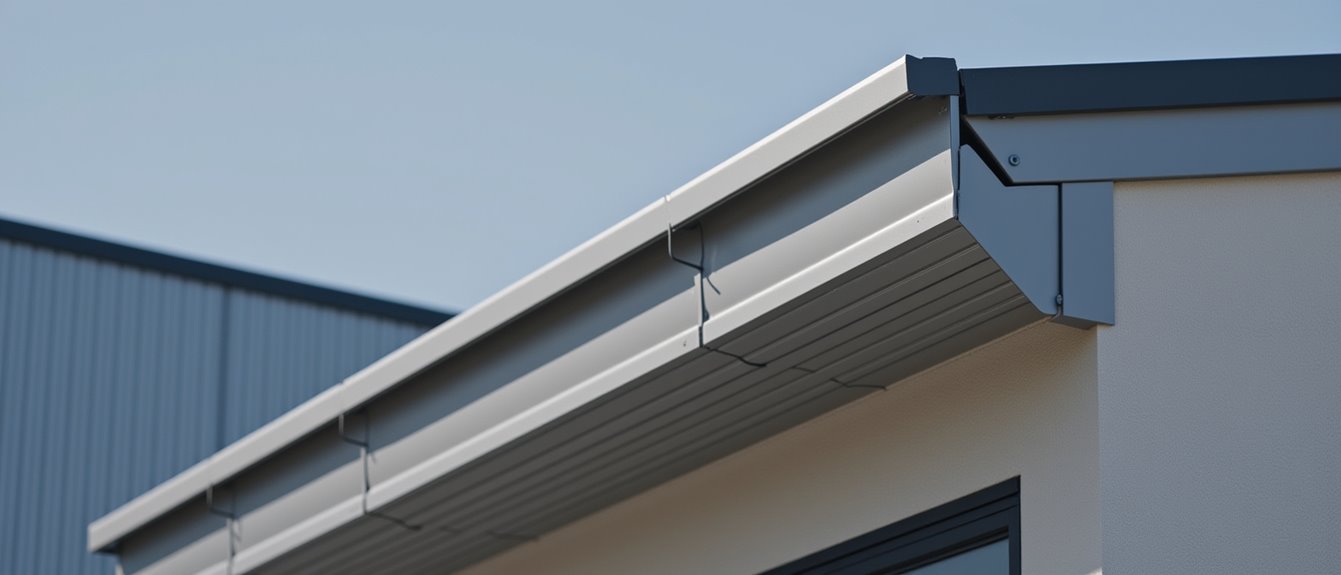
When specifying commercial gutters, prioritize three features that directly reduce failure risk and maintenance time: heavy-duty, corrosion-resistant materials (galvanized steel or aluminum) sized 6-8 inches to handle high runoff, and seamless, on-site fabrication to eliminate leak points.
You’ll insist on durability through heavy-duty materials and proven gutter materials that resist corrosion and mechanical wear. Match sizing to anticipated roof area and rainfall intensity for effective water management without undersizing drains.
Require seamless design to cut leak points and lower installation costs over the system lifecycle. Specify overflow protection, secondary drains or scuppers, to prevent roof or facade damage during extreme events. Additionally, consider custom hangers to enhance the structural integrity of the system.
Finally, design maintenance access with inspection points and safe routes so cleaning and repairs are efficient, reducing downtime and lifecycle expense in commercial gutter systems.
Gutter Sizing & Downspout Placement for Commercial Gutters
You’ve specified heavy-duty, seamless gutters and overflow protection, now size and place them so the system actually handles peak runoff. For commercial buildings you’ll typically start at 6" gutter sizing; larger roofs may need 7", 8" to manage increased water runoff based on drainage area and rainfall intensity calculations.
Match downspouts to capacity, 4" round or 3x4 rectangular, and space them so no run exceeds ~40' without discharge. Install expansion joints every 150' to accommodate thermal expansion and protect long runs.
Divide large roofs into drainage zones and include overflow provisions for extreme events. Additionally, consider custom-fit seamless gutters to ensure optimal protection against water damage.
- Calculate required gutter sizing from drainage area × rainfall intensity for efficient drainage.
- Locate downspouts for balanced flow and accessibility.
- Plan installation with expansion joints and overflow provisions.
Commercial Gutter Materials & Gauge: Aluminum, Steel, Copper
Selecting the right material and gauge for commercial gutters determines system longevity, load capacity, and maintenance frequency, so prioritize properties like corrosion resistance, tensile strength, and fastener retention.
You’ll pick aluminum when you need a lightweight, rust-resistant, cost-effective solution that’s easy to install and available in multiple finishes; it reduces maintenance but offers lower tensile strength than steel.
Choose steel for maximum durability and superior performance in severe weather conditions; follow gauge specifications, 26 gauge minimum, 24 gauge recommended where snow or heavy debris occur, and ensure a quality protective coating to prevent rust.
Select copper for premium longevity and minimal maintenance, accepting higher upfront cost and patina development.
Gauge selection directly affects durability, fastener reliability, and long-term maintenance. Additionally, using commercial-grade sealants enhances the overall durability of your gutter system, ensuring lasting performance.
Commercial Gutter Profiles: Box Gutters vs K-Style Explained
Two common commercial gutter profiles, box and K-style, serve different load and installation demands, so you should match profile choice to rainfall intensity, roof design, and maintenance capability. Box gutters provide superior water handling capacity for larger buildings and heavy storms; they're often integrated into roofing and fabricated from heavier-gauge, durable materials. K-style gutters offer a slimmer footprint, attach to fascia, and suit lighter commercial runs where access and simpler maintenance requirements matter.
- Capacity and application: box gutters excel for larger buildings and complex drainage systems; K-style gutters fit modest flows.
- Installation considerations: box gutters need roof integration; K-style gutters are fascia-mounted and may need added supports.
- Material options: both use aluminum, galvanized steel, or copper, choose gauge for duty and longevity. Additionally, consider custom sizing to ensure optimal performance based on specific building needs.
Fastening, Hangers & Load Support for Long Runs
Long runs demand a rigorously engineered fastening and hanger strategy to prevent sagging, warping, and flow disruptions under full loads.
You’ll space fastening and hangers at 18-24 inches on center to distribute water loads and maintain structural integrity across commercial gutters. For runs over 40 feet, include thermal expansion joints to avoid warping and preserve flow paths.
Specify heavy-duty hangers and thicker gauge materials, 24-gauge steel where applicable, to increase fastener reliability and load-bearing capacity. Design load support for combined water, debris, and ice weights so hangers don’t deform or pull free.
Anchor points should tie into sound substrate and use corrosion-resistant fasteners matched to gauge materials. This disciplined approach ensures predictable water management, long-term performance, and minimized maintenance on commercial projects. Additionally, preventive maintenance can be scheduled according to local rain patterns to further enhance gutter performance.
Handle Thermal Movement: Expansion Joints & Seals
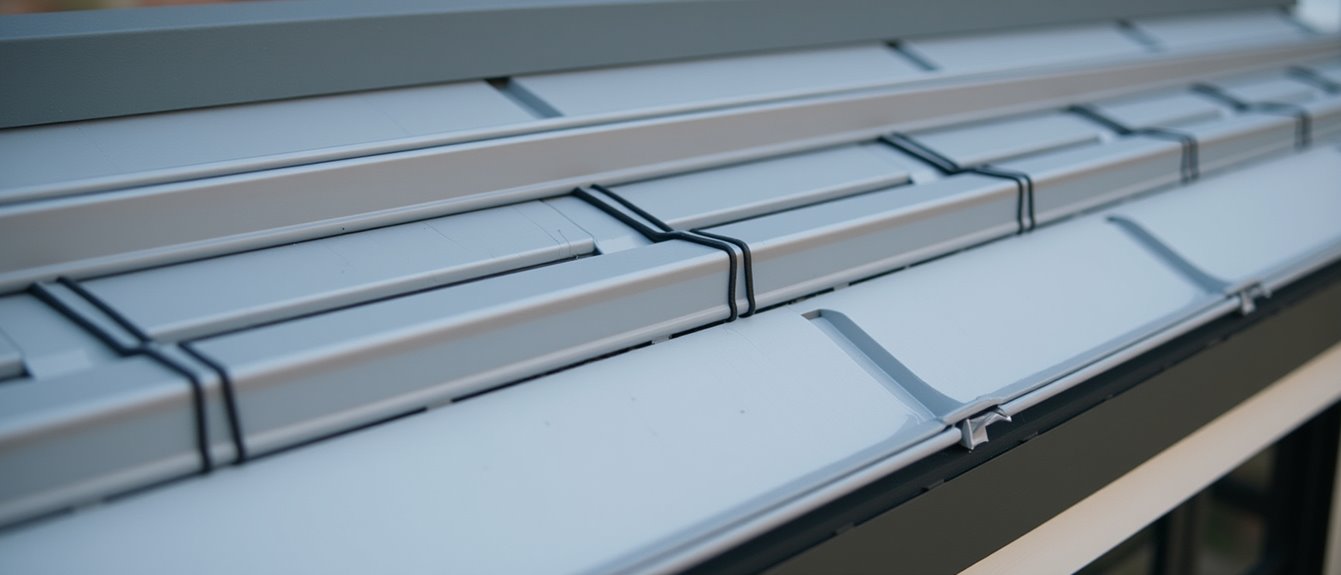
Because temperature swings make commercial gutters expand and contract, you must incorporate thermal expansion joints and compatible seals to prevent buckling, seam failure, and leaks.
You’ll design gutter systems with joint spacing for long runs (install joints for runs over 40 feet) and account for approximately 1/8" movement per 10°F.
Match materials, aluminum vs. steel, to expected thermal movement and select seals that maintain seal integrity during cycles.
- Calculate joint spacing and movement allowances during installation to comply with building codes and avoid water damage.
- Specify compatible expansion joints and gasket profiles for materials used, ensuring proper sealing under load and thermal cycling.
- Document installation details for inspection, emphasizing materials, proper sealing, and adherence to code requirements.
Maintenance Access & Debris-Management Systems
After accounting for thermal movement and proper jointing, you’ll want to ensure the system stays serviceable and clear: design built-in access points, designated roof paths, and fall‑protection anchors so maintenance crews can inspect and clean safely and efficiently. You’ll specify maintenance access, inspection points, and safety features to reduce downtime and costly repairs. Use debris-management systems, gutter guards and mesh screens, to limit buildup and preserve effective water flow. Establish a cleaning schedule and routine maintenance (minimum twice yearly) for commercial properties to prevent blockages. The table below illustrates common provisions and outcomes.
| Component | Purpose | Outcome |
|---|---|---|
| Access hatch | Safe entry | Faster inspections |
| Roof path | Stability | Reduced slips |
| Anchor points | Fall protection | Compliance |
| Gutter guards | Debris control | Fewer cleanings |
| Inspection ports | Visual check | Early repairs |
Frequently Asked Questions
Do Gutter Systems Require Building-Permit Approvals or Inspections?
Yes, you’ll often need permits and inspections for gutter installations, especially on commercial properties; local codes dictate requirements, so consult your municipality, submit plans when required, and schedule inspections to verify compliance and proper drainage.
How Do Warranties Differ Between Commercial Gutter Manufacturers?
They vary by coverage, duration, transferability, and exclusions; you’ll get limited or lifetime options, pro-rated or non-prorated terms, workmanship versus material distinctions, and different claim processes, read specifics, check structural load and finish limitations carefully.
Can Gutters Be Integrated With Rooftop Solar Installations?
Yes, you can absolutely integrate gutters with rooftop solar; you'll coordinate mounting, flashing, and load paths so panels, rails, and guttering share water shedding and structural duties without leaks, and you'll ensure compliant attachment, clearances, and maintenance access.
What Are the Fire-Resistance Ratings for Various Gutter Materials?
Metal gutters (steel/aluminum) typically resist fire, noncombustible per ASTM standards; copper's noncombustible too. PVC and vinyl are combustible with low fire ratings; fiberglass varies. Check local codes and manufacturer fire-test data for specifics.
How Do Gutters Affect Insurance Liability and Premium Calculations?
Like a dam, gutters influence liability and premiums by directing water risk away from structures; you’ll lower claims if they’re maintained, properly sized, and durable, so insurers’ll reduce rates based on condition, maintenance records, and risk mitigation.