
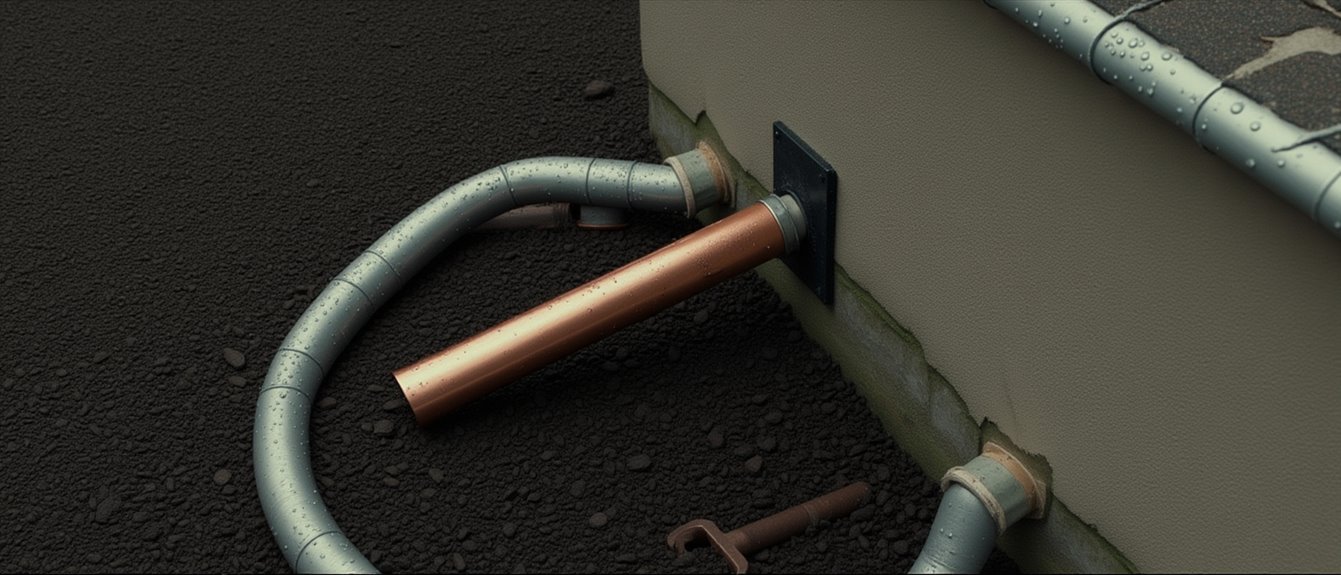
Summary: Underground drainage for gutters uses buried 3 1/2 or 4 inch pipes, debris filters, and bubbler pot outlets to carry roof runoff away from your foundation, preventing erosion and flooding. Proper sizing, slope, and regular maintenance ensure the system works reliably for years.
Underground drainage for gutters routes your roof runoff through buried 3½, 4" pipes and debris filters so water is carried away from your foundation, preventing erosion, basement flooding, and structural damage. You connect downspouts into a vertical stub with a filter, run sloped PVC or corrugated pipe to a bubbler pot outlet, and backfill for stability. You’ll need periodic filter checks, cleanouts, and proper slope for flow, continue to the guide for sizing, installation, and maintenance details.
Highlights
- Underground drainage for gutters routes roof runoff through buried pipes away from foundations to prevent basement flooding and soil erosion.
- Systems use 3", 4" PVC or corrugated pipe with a slope to ensure efficient, gravity-driven water flow.
- Downspouts feed into debris filters and cleanouts to block leaves and allow easy maintenance.
- Outlets use bubbler pots or pop-up emitters to discharge water discreetly without surface pooling.
- Proper installation and watertight joints reduce foundation stress, minimize repairs, and extend system longevity.
What Underground Drainage Is: And Why It Protects Your Foundation
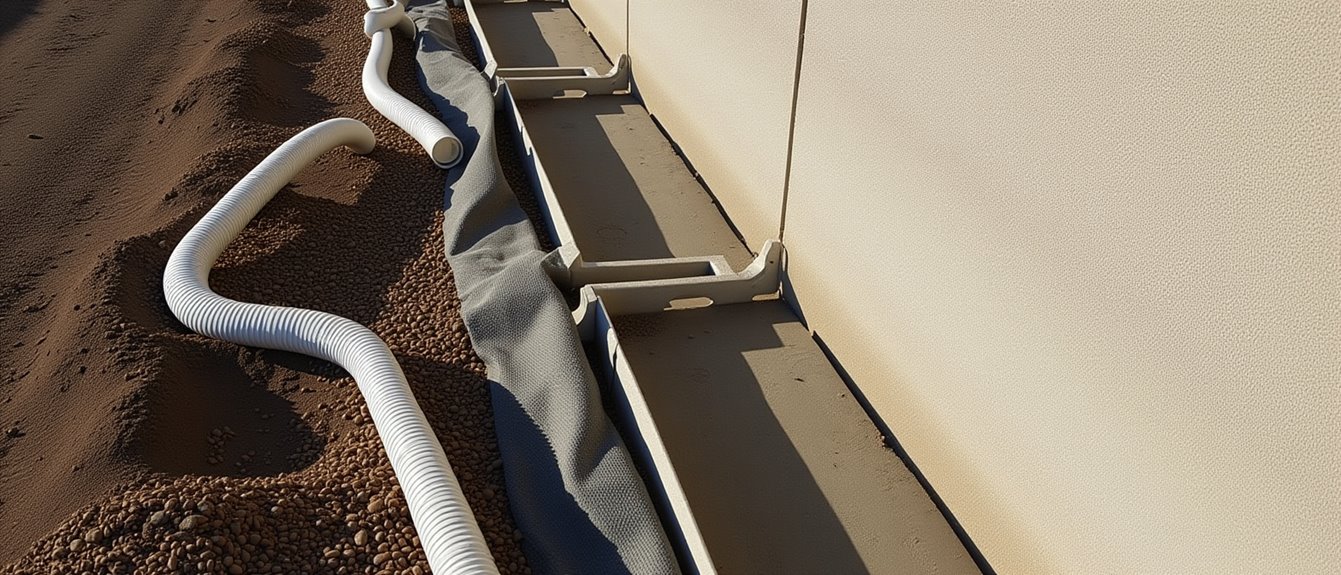
Because roof runoff concentrated at downspouts can saturate soil and undermine footings, underground drainage routes that water away from your foundation and into a safe discharge point.
You’ll use 4-inch PVC pipes to convey water runoff from rooflines into a bubbler pot, dry well, or approved outlet, removing standing flow that causes water damage and soil erosion. Properly designed systems eliminate visible downspouts, reduce basement and crawlspace flooding risk, and protect landscaping from washouts.
You’ll specify debris filters and ice guards at collection points to prevent clogs and freezing failures, minimizing maintenance. Installed to grade and tied into existing site drainage, underground drainage will properly manage roof water and materially lower foundation stress, cracking, and costly structural repairs. Additionally, seamless aluminum runs help prevent foundation washouts, ensuring a long-lasting solution for your property.
How Buried Downspout Systems Work (Step‑By‑Step)
Now that you know why redirecting roof runoff protects foundations, here’s how a buried downspout system actually moves water underground step by step.
You connect the gutter downspout to a short vertical stub that feeds into a debris filter; the filter traps leaves and twigs so only water enters the underground line.
From there a 4-inch PVC pipe runs in a sloped trench away from the foundation, maintaining continuous gravity drainage with no uphill sections.
At the outlet you set a bubbler pot with a green pop-up lid to release excess water into landscaping while minimizing visibility.
You backfill and compact soil, then inspect and clean the debris filter periodically to prevent clogs and protect foundation and landscape drainage.
Choosing System Size: 3½" Vs 4" and Pipe Length Options
Choose the right pipe diameter and length to match your roof size, rainfall intensity, and existing downspouts, 3½-inch systems handle most standard homes, while 4-inch systems provide higher flow capacity for large roofs or heavy-rain regions.
You’ll pick 3½-inch underground drainage for typical residential loads; choose 4-inch where calculated water flow rates exceed the smaller pipe’s capacity or where local storms are intense.
TORRENTIAL RAIN™ pipe length options (19-38 feet) let you configure customizable drainage runs that terminate away from the foundation.
Match pipe diameter to the downspout size to preserve optimal drainage efficiency and minimize clogs. Proper sizing prevents water pooling and foundation damage; undersizing risks overflow, oversizing wastes materials and space. Additionally, ensuring tight connections helps prevent leaks and directs rainwater effectively.
Common Components: Debris Filters, Bubbler Pots, PVC & Corrugated Pipe
Effective underground drainage relies on a few key components you’ll want to understand: debris filters to stop leaves and twigs at the downspout, bubbler pots with pop-up lids to discharge excess water without pooling, and the choice between rigid PVC and flexible corrugated pipe for conveyance.
You’ll fit debris filters at each downspout to ensure only water enters underground drains, reducing maintenance and preventing clogs.
Bubbler pots with green pop-up lids let you control where water exits into the landscaping, placed at least 10 inches deep to avoid frost and surface pooling.
Use 4-inch PVC pipe or solid pipe runs for reliable water flows; incorporate corrugated pipe where flexibility and transport ease matter, always sloping pipe slightly to manage roof water runoff. Additionally, ensuring proper water flow is crucial in preventing costly water damage.
DIY vs. Pro Install: Time, Tools, and Cost Considerations
While a determined DIYer can save on labor by digging trenches and installing pipe themselves, you should weigh time, tools, and skill: expect several hours to a few days for a typical run, basic tools (shovel, level, PVC saw) and possibly a trencher, and some plumbing know‑how to avoid poor slopes or leaks.
You can buy underground downspout kits for about $45.95 and tackle a DIY installation if your skill level includes basic plumbing and trenching.
Professionals handle complex layouts faster; professional installations typically finish in hours to a day and bring specialized equipment.
Cost considerations favor DIY for small runs but expect $500, $1,500+ for contractors.
Consider long-term maintenance, warranties, and how well your drainage systems will really eliminate those annoying downspouts and manage water drains.
Siting and Slope Requirements for Reliable Underground Drainage
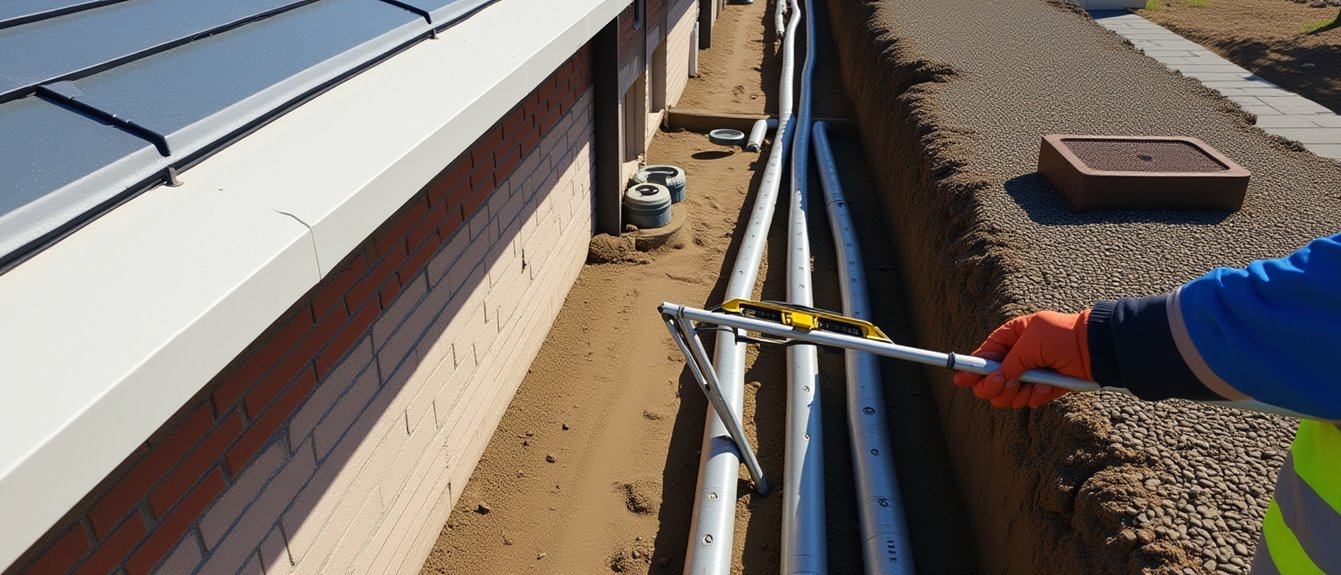
Because water follows grade, sit your underground drain so its outlet is at least 10 feet from the foundation and maintain a continuous downhill run with no uphill sections; aim for a minimum slope of 1% (1 inch per 10 feet) to keep flow self‑scouring and prevent pooling.
You’ll evaluate site topography, pipe material and run length to ensure consistent water flow and minimise clogging risk.
Follow local regulations for siting and slope, obtain permits if required, and document elevations before install.
Use laser or water level checks during installation and establish accessible cleanouts for inspection.
After heavy rain, perform monitoring to verify effective drainage and detect silt or roots early.
Proper design integrates water management with landscape grading for long‑term performance.
Winter Performance: Preventing Freezing and Ice Buildup
If you live in a cold climate, plan your underground gutter drainage to resist freezing and ice buildup by combining insulated design features with correct installation and routine checks.
Specify underground systems with grate and an ice guard to intercept surface ice and maintain water flow; the ice guard channels water below the frost line and helps prevent freezing.
Install components at a minimum 10-inch depth so soil thermal mass will maintain temperature around the bubbler pot and piping.
Use a universal debris filter so only water enters the system; the debris filter removes leaves and grit that would form clogs caused by ice.
Choose a solid lid design to block snow penetration.
Monitor for early ice buildup and verify flow paths to preserve system integrity.
Maintenance & Troubleshooting: Cleanouts, Clogs, and Fixes
When you maintain underground gutter drains, check cleanouts and debris filters on a scheduled basis so leaves and grit don't form clogs that cause yard pooling or gutter overflow.
You should map cleanouts at intervals and at turns to make inspection and access predictable. Perform visual inspection after storms; look for reduced water runoff, slow drainage, or surface pooling as signs of blockages.
Remove debris from the debris filter and flush the underground drainage line with a hose; use a mechanical auger only at cleanout points to avoid pipe damage.
Address clogs promptly, neglected blockages can cause foundation damage and costly repairs.
Record maintenance actions and frequencies to spot recurring clog locations and optimize ongoing maintenance of the gutter system.
Buying Guide: Kits, Upgrades, Discounts, and Bulk Options
Start by matching kit size and components to your gutter flow and soil conditions so you get the correct pipe diameter (3", 3½", or 4") and all required fittings for a watertight run. Choose kits that include solid pipe lengths matching your water runoff needs; the TORRENTIAL RAIN™ Premium PRO Kit supplies 19-38 ft. for effective foundation protection. Look for leaf filters and cleanout access in upgrade kits to prevent clogs and simplify maintenance. Compare discounts (up to 45%) and free shipping offers, and evaluate bulk options, 12 kits for $299.80 can lower per-unit cost for contractors. Prioritize watertight joints at the downspout connection and durable materials for long-term underground drainage performance.
| Feature | Benefit | Note |
|---|---|---|
| Pipe size | Matches flow | 3", 3½", 4" |
| Leaf filters | Prevent clogs | Improves uptime |
| Bulk options | Lowers cost | Useful for pros |
Frequently Asked Questions
Are Underground Gutter Drains Worth It?
Yes, you’ll typically reduce foundation risk by up to 70% with underground gutter drains. They’re technical, cost-effective, and durable; you’ll install filters and ice guards to protect systems, lowering long-term repair and maintenance expenses.
How Much Does It Cost to Install Underground Drainage From Gutters?
You’ll typically pay $1,000, $3,000 for professional underground drainage from gutters; DIY kits can cost around $45.95, while materials like 4" PVC add $2, $5 per linear foot depending on complexity and labor.
What Is the Problem With Underground Downspouts?
They’re both lifesavers and liabilities: you’ll prevent foundation damage but risk clogs, backups, erosion, and concealed leaks. You’ll need regular inspection, proper grading, accessible cleanouts, and code-compliant installation to avoid costly failures.
Is Burying Your Downspouts a Good Idea?
Yes, burying downspouts is generally a good idea because you’ll reduce foundation and erosion risk, improve aesthetics, and streamline runoff. You’ll need proper pipe sizing, grading, debris filters, and periodic inspections to prevent clogs and backups.