
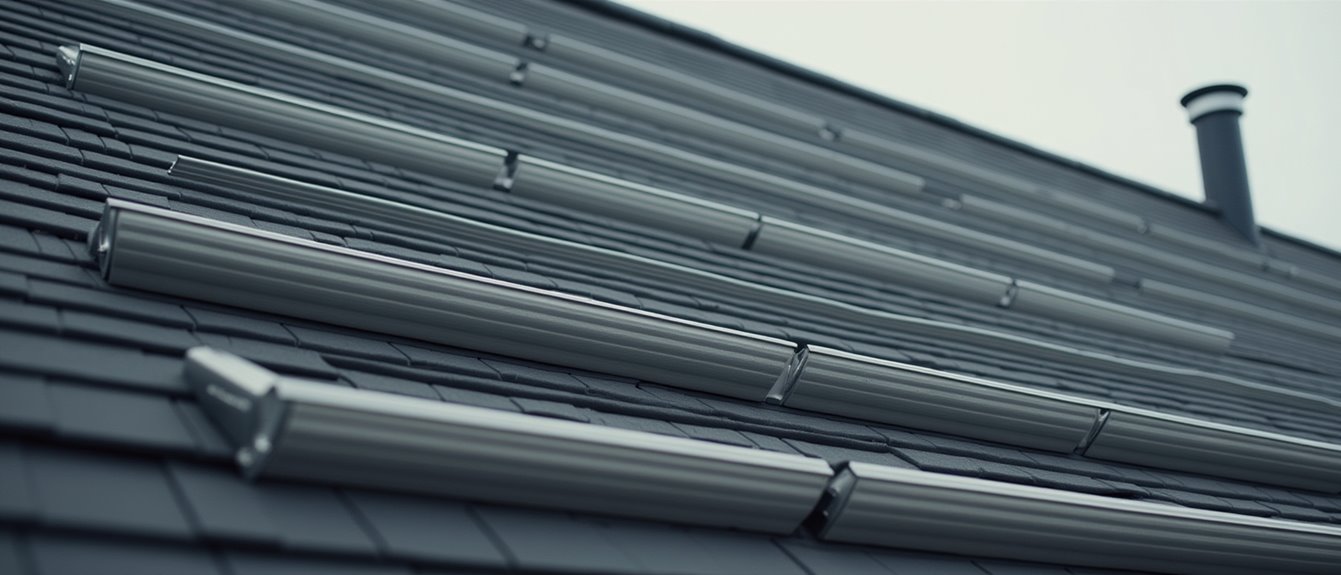
Summary: Steel is the most durable gutter material for metal roofs and harsh climates, with options ranging from 26-gauge galvanized K-style for value to stainless steel for corrosion resistance. Choose the right profile, use proper installation with welded corners and correct slope, and schedule regular maintenance for a 20 to 80 year lifespan.
If you want durable gutters for a metal roof or harsh climate, choose steel: it’s stronger and less prone to damage than aluminum or vinyl. Prioritize 26‑gauge galvanized K‑style for value, seamless stainless for top corrosion resistance, box‑style for heavy rainfall, and half‑round stainless for historic looks. Use welded corners, stainless hangers, 24-36" bracket spacing and ~1" slope per 10 ft. Expect 20-80 years with proper care, and keep going to see full specs, costs, and maintenance tips.
Highlights
- Prioritize 26‑gauge galvanized or stainless steel for superior dent resistance and 20-50 year lifespan.
- Choose seamless K‑style for capacity or half‑round for historic aesthetics and fewer leak points.
- Match gutter size to roof area and local rainfall; larger downspouts for heavy precipitation.
- Use welded end caps, stainless hangers, and 24-36″ bracket spacing with ~1″ slope per 10′ for reliable drainage.
- Expect $5, $15+/ft installed; select strong warranties and schedule annual cleaning and inspections for longevity.
Who This Guide Helps : How We Ranked Steel Gutters
This guide helps homeowners and builders decide when steel gutters are the right choice by focusing on measurable performance: strength, longevity, and climate suitability.
You’ll see who benefits most, owners in regions with harsh weather and professionals specifying materials for long-term roofing systems.
We ranked options using objective criteria: corrosion resistance, lifespan (typically 20-40 years), gauge and dent resistance, and overall performance in varied climates.
Emphasis on 26-gauge construction reflects durability under impact and thermal stress.
You’ll also learn why professional installation matters: proper attachment, pitch, and integration with flashing maximize effectiveness and prevent premature failure. Additionally, choosing custom-fit seamless gutters can enhance protection against runoff and other environmental factors.
This section gives you clear, actionable metrics so you can evaluate steel gutters against project needs and conditions.
Why Steel Gutters Beat Aluminum and Vinyl for Metal Roofs
Having established the metrics that matter for long-term performance, it's useful to compare materials head-to-head for metal-roofed homes.
You’ll find steel gutters deliver superior strength and durability, 26-gauge steel resists denting and impact far better than aluminum or vinyl. Their corrosion-resistant coatings extend lifespan to 20-40 years, making them more cost-effective over time versus vinyl’s 10-20 years and cracking risk in extreme temperatures.
Steel’s thermal expansion matches metal roofing, so you’ll avoid mismatched components and leak points common with aluminum or vinyl systems. With professional installation, steel gutters integrate cleanly for optimal drainage and long-term performance. Additionally, they provide protection from water damage to roofs, siding, and foundations, ensuring a comprehensive approach to home maintenance.
If you want low maintenance, predictable longevity, and robust protection for metal roofing, steel is the practical choice.
How to Choose the Right Steel Gutter Profile, Size, and Color
Looking for the right steel gutter profile, size, and color starts with matching function to your roof and style: choose K‑style if you need maximum capacity and debris handling, or pick half‑round for a cleaner, historic look.
You’ll want seamless steel gutters to minimize leaks and failure points; combine that with correct gutter size based on roof square footage and local rainfall patterns. Insist on professional installation so slope and downspout placement ensure effective drainage and water damage prevention.
Consider color selection to boost curb appeal and integrate with trim or siding. Key decisions to review before buying:
- Profile: K-style vs. half‑round gutters for capacity vs. aesthetics
- Size: calculate by roof area and rainfall
- Seamless construction to reduce joints
- Finish: custom color for curb appeal
Additionally, custom sizing options are available to ensure an ideal fit for your specific needs.
26‑Gauge Galvanized K‑Style : Best Value
Because you want reliable performance without overspending, 26‑gauge galvanized K‑style gutters deliver the best value for most homeowners: they combine strong, dent‑resistant steel with a corrosion‑resistant coating, K‑style geometry that maximizes water flow and debris handling, and thermal compatibility with metal roofs so you won’t see the expansion‑related problems common in mismatched systems.
You’ll appreciate the balance of gauge galvanized construction and protective coating that gives real durability and corrosion resistance without the premium price of specialty metals. The K-style gutters’ flat bottoms and straight sides optimize water flow efficiency and reduce clogs, while steel’s predictable thermal expansion pairs well with metal roofing.
In addition, regular gutter cleaning ensures that these gutters maintain their performance and longevity, preventing costly water damage. That combination yields clear cost-effectiveness and long-term value for practical, maintenance-conscious choices.
Stainless Steel Seamless Gutters : Best Corrosion Resistance
While stainless steel costs more up front, its chromium-rich alloy gives you unmatched corrosion resistance and a service life of 30 to 50 years, making it the best choice where salt, coastal air, or severe weather accelerate rust in other metals.
You get seamless gutters that reduce joints, cut leak risk, and require low maintenance while delivering long-term value as a durable investment. They’re custom-fit to your roofline, optimizing water flow and drainage efficiency without aesthetic compromise.
- Highly resistant stainless steel surface prevents rust and preserves finish
- Seamless gutters minimize seams for fewer leaks and easier upkeep
- Custom fit installation ensures consistent water flow and peak drainage efficiency
- Sleek, modern aesthetic appeal enhances curb presence while staying practical
- Additionally, seamless gutters are custom-formed on site, which reduces leaks and enhances the overall appearance.
Painted Flamingo Steel Gutters : Best Color Match & Curb Appeal
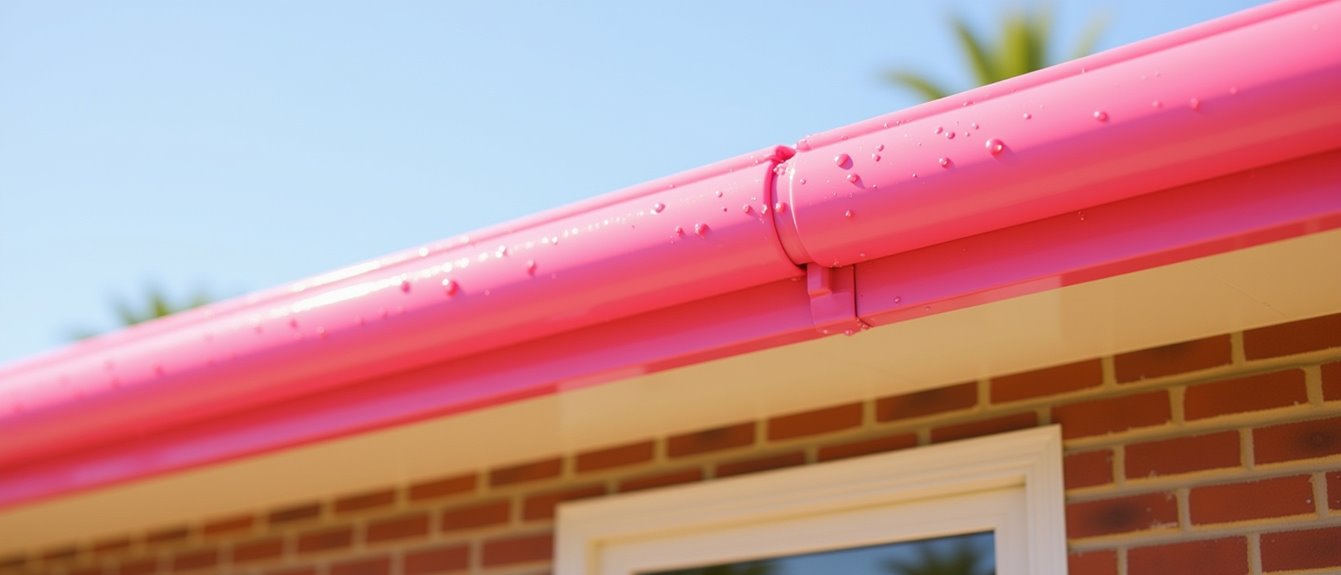
Stainless steel gives you unmatched longevity, but if matching your home’s aesthetic matters as much as performance, painted Flamingo steel gutters offer the best of both worlds. You get painted flamingo steel gutters that combine color matching and curb appeal with 26-gauge durability and superior strength. A corrosion resistance coating stands up to varied weather conditions while a seamless design reduces leaks and preserves visual appeal. They’re maintenance friendly: the finish resists stains and debris, simplifying upkeep. Choose colors to complement trim or make a statement, and rely on the steel’s structural integrity for long service life.
| Feature | Benefit |
|---|---|
| Color matching | Enhanced curb appeal |
| Durability | Resists dents |
| Corrosion resistance | Longer life |
| Maintenance friendly | Easier upkeep |
Box‑Style Heavy‑Duty Steel Gutters : Best for High Rainfall
Box-style heavy-duty steel gutters handle large storms without flinching: their rectangular, deep profile moves far more water than standard K-style or half-round gutters, so you won't worry about overflow during heavy rains.
You’ll get superior drainage efficiency and foundation protection from 26-gauge steel that boosts durability and resists denting.
These systems minimize debris accumulation and lower maintenance requirements thanks to simpler internal geometry.
Consider custom-made runs to achieve seamless integration with your roofline and meet specific architectural needs.
- Deep rectangular shape maximizes water capacity for high rainfall.
- 26-gauge steel enhances durability against impact and corrosion.
- Fewer sharp corners reduce debris accumulation and clogging.
- Custom-made options ensure seamless integration with architectural needs.
Half‑Round Stainless Steel Gutters : Best for Historic Homes
Because their elegant semicircular profile mirrors the lines of traditional architecture, half-round stainless steel gutters are the go-to choice when you want to preserve a historic home's visual integrity while improving drainage.
You get a classic, unobtrusive look that matches period detailing while benefiting from modern performance. Fabricated in stainless steel, these gutters are durable and offer superior rust resistance, giving a long lifespan of 40-80 years with routine upkeep.
Their rounded form minimizes debris accumulation and handles high rain volumes, supporting effective water management. Seamless construction further reduces leak points, so water is directed away reliably.
For best results, use professional installation to ensure proper integration with existing roofing and to maximize longevity and function.
Steel Gutter Installation Essentials: Hardware, Bracket Spacing, Slope
When you install steel gutters correctly, the right hardware, bracket spacing, and slope make the difference between a system that lasts decades and one that sags, leaks, or fails in heavy weather.
You’ll choose heavy-duty stainless steel hangers and welded end caps to maximize corrosion resistance and durability.
Set bracket spacing every 24-36 inches to preserve structural integrity under snow and debris loads.
Aim for roughly 1 inch of slope per 10 feet so water drainage routes efficiently to downspouts.
For best results, consider professional installation for accurate slope calculations and consistent spacing.
- Use stainless steel hardware for long-term durability and corrosion resistance.
- Weld corners and end caps to strengthen joints.
- Space brackets 24-36 inches apart.
- Slope ~1" per 10' for optimal water drainage.
Maintenance, Seasonal Checks, Warranties, and Cost Expectations
Plan on an annual inspection and a couple targeted seasonal checks to keep steel gutters performing their best: look for corrosion spots, tighten or replace loose stainless hangers, and examine seams and welded end caps for gaps or fatigue.
Before winter, you should also secure snow guards and test heating cables to prevent ice dams. You’ll schedule routine maintenance and targeted seasonal checks to preserve optimal performance and prevent costly repairs.
Choose durable gutters with comprehensive warranties that offer long-term protection against extreme weather conditions and impact. Expect installation costs of roughly $5, $15 per linear foot, higher for seamless custom fabrication.
Investing in quality steel rain gutters reduces future maintenance and repair bills and delivers reliable performance in harsh climates.
Frequently Asked Questions
What Are the Most Durable Gutters?
Steel gutters are the most durable; you’ll want 26-gauge galvanized or seamless steel with corrosion-resistant coating. They resist dents, suit metal roofs, handle heavy snow, and last decades if you regularly inspect and maintain them.
What Is the Best Gutter System for Consumer Reports?
Consumer Reports favors 26-gauge galvanized seamless steel gutters for durability, corrosion-resistant coatings, and leak prevention; you should choose those, install professionally, and perform regular inspections to maximize their 20-40 year lifespan and performance.
What Are the Best Gutters for Metal Roofs?
The best gutters for metal roofs are 26‑gauge seamless steel K‑style systems; they resist corrosion, handle high flow, and reduce leaks. You should hire pros for precise slope, brackets, and regular inspections to maximize lifespan.
How Long Should Steel Gutters Last?
You should expect steel gutters to last about 20 to 40 years, depending on material and care; with galvanized or stainless steel, 26-gauge construction, regular cleaning, inspections, and heavy-duty hangers, they'll perform optimally for decades.