
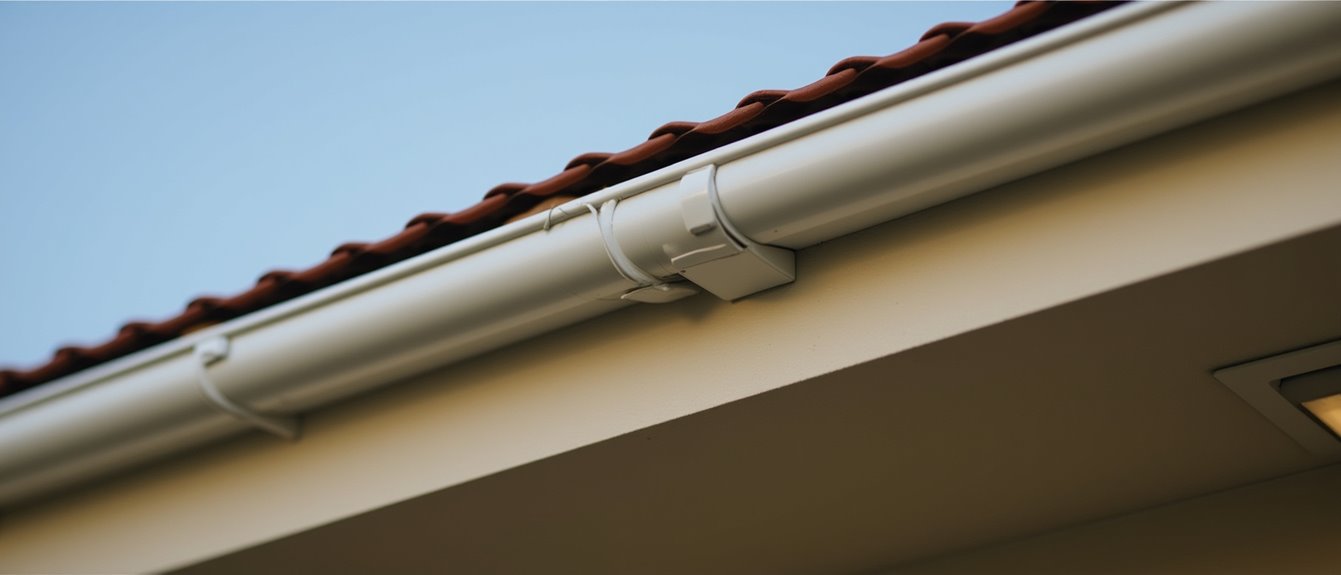
Summary: K-style gutters feature a flat back and decorative front that boost water capacity and curb appeal, available in 5 or 6 inch sizes and materials like aluminum, copper, vinyl, and steel. Proper sizing, slope, installation, and regular maintenance keep them draining efficiently and protect your roof and foundation for decades.
K-style gutters are the molded, crown‑molding-profile channels you’ll see on many homes; they pair a flat back and bottom with a decorative front to increase capacity and curb appeal. You’ll get higher water flow than round styles, with common 5" and 6" sizes for typical or larger roofs. Materials range from affordable aluminum to long‑lasting copper, each with tradeoffs in cost and maintenance. Keep them sloped and cleaned, and you’ll prevent damage, continue for installation, sizing, and care tips.
Highlights
- K-style gutters are roof channels with a flat back and bottom and a decorative, crown-molding-like front profile.
- Their shaped front increases internal capacity compared with round gutters, handling heavier rainfall effectively.
- Common sizes are 5-inch for typical homes and 6-inch for larger or steep-roofed houses.
- Materials include aluminum, copper, vinyl, and steel, balancing cost, durability, and maintenance needs.
- They’re popular for improved curb appeal, higher water capacity, and long-term protection of roofs and foundations.
What K‑Style Gutters Are and How They Work

Think of K-style gutters as a practical, decorative channel that moves roof runoff away from your home: their flat back and bottom with a molded front, resembling crown molding, gives them a "K" profile when viewed from the side and improves curb appeal while increasing capacity.
You’ll find K-style gutters common on residential homes because their decorative front blends with trim while boosting water capacity compared with round gutters. That extra capacity helps you manage heavy rainfall more reliably.
Materials range from aluminum to copper and vinyl, with aluminum popular for being lightweight and rust-resistant.
Their shape promotes effective drainage, and manufacturers design them for seamless installation to reduce leaks and overflow.
You’ll get a durable, attractive system that channels water efficiently.
K‑Style Capacity: Shapes, Sizes, Drainage
Now that you know what K‑style gutters look like and why homeowners favor them, let’s look at how their shape and sizes affect capacity and drainage.
You’ll find K-style gutters use a flat back and bottom to increase capacity, channeling water efficiently away from your roof and foundation. Proper residential installation matters: correct slope, secure hangers, and matching sizes prevent overflow during heavy rainfall. Additionally, seamless aluminum runs are a popular choice for enhancing durability and reducing leaks.
A 5-inch K-style holds about 1.2 gallons per foot, while larger profiles boost flow.
- Shape: flat back/bottom increases internal volume and promotes predictable drainage.
- Sizes: common 5" for standard homes, 6" for larger or steep-roofed residences.
- Capacity: higher than rounded gutters, reduces risk of backup.
- Installation: right sizing and slope ensure effective water removal.
Choosing 5″ Vs 6″ K‑Style Gutters
Which size should you choose: 5-inch or 6-inch K‑style gutters?
You’ll typically pick 5-inch K-style gutters for standard residential roofs; they’re common and handle moderate rainfall at about 1.2 gallons per foot.
If you have a larger home, steep roof, or frequent heavy rain, choose 6-inch sections for greater water capacity and reduced overflow risk.
Proper sizing matters to protect your foundation and reduce maintenance, so get a professional inspection to match gutter size to roof area and local storm patterns. An expert can also provide preventive maintenance to ensure your gutters function optimally year-round.
Keep installation considerations in mind: 6-inch gutters weigh more and need closer support spacing and precise placement.
Choose based on runoff needs, access for maintenance, and the installer’s recommendations.
Materials for K‑Style Gutters: Pros & Cons
Materials make a big difference in how K‑style gutters perform, so you’ll want to weigh costs, durability, and local climate before deciding.
You’ll choose from common materials for K-style gutters, each has clear pros & cons tied to maintenance, strength, and installation complexity.
- Aluminum: lightweight, rust-resistant, affordable; easy to install and maintain, best if you want a practical, low-maintenance option.
- Copper: extremely durable and corrosion-resistant; develops patina and looks premium, but costs more and often needs pro installation.
- Vinyl: inexpensive and rust-proof; DIY-friendly but can crack in extreme heat or cold.
- Steel: strong for heavy rain or snow; highly durable if properly coated, but requires rust protection and occasional upkeep.
Additionally, choosing trusted materials is essential for ensuring long-lasting performance and durability in your gutter system.
Material Cost, Lifespan, and Best Climates
Cost and climate will shape the gutter you pick, so weigh price, expected lifespan, and local weather before deciding.
When considering material cost, aluminum is typically the most affordable at about $3, $6 per linear foot; copper runs $15, $25 per foot for long-term appeal.
Lifespan varies: vinyl lasts roughly 10-20 years, aluminum 20-30 years with care, and copper can exceed 50 years.
For best climates, K-style gutters handle heavy rainfall well due to higher capacity; rust-resistant materials like aluminum and copper suit humid areas. Additionally, consider gutter repair services to address any issues that may arise from wear and tear.
Account for maintenance costs, regular cleanings average $100, $250, to avoid clogs in tree-rich neighborhoods.
In snowy regions, you might prioritize strength; elsewhere, balance cost and durability.
K‑Style vs. Half‑Round and Box Gutters

When you're choosing gutters, consider how K-style, half-round, and box profiles differ in shape, capacity, and installation so you pick the best fit for your home and climate.
K-style gutters offer a flat back and decorative front that complements residential roofing, provide greater capacity than half-round gutters of the same width, and generally simplify installation and water management. Additionally, K-style gutters can be customized for custom sizing to suit specific drainage needs.
Half-round gutters suit traditional aesthetics but can protrude and need more careful placement to prevent overflow.
Box gutters prioritize efficiency in commercial settings.
- Capacity: K-style holds more water than half-round gutters, aiding heavy rainfall.
- Aesthetic: K-style’s decorative front blends with modern roofs; half-round is classic.
- Installation: K-style fits flush to fascia; half-round needs precision.
- Use case: box gutters for commercial, K-style for residential functionality and aesthetic.
K‑Style Installation: Correct Attachment Methods
Because proper attachment determines performance, you should mount K‑style gutters with a consistent 1/4 inch drop per 10 feet and hangers spaced every 24 inches (reduce to 16 inches in heavy‑snow areas), fastening each section to the hangers with screws so the run stays stable and drains without sagging. When you install K-Style, measure the roofline precisely to cut lengths and position outlets. Use gutter hangers designed for a flat back and bottom to keep profiles true. After securing sections, run water to confirm proper water drainage and seal joints. Follow local codes and use corrosion‑resistant fasteners. Table summarizes spacing, slope, and check:
| Item | Spec | Purpose |
|---|---|---|
| Hangers | spaced 24 inches apart | Support |
| Slope | 1/4" per 10' | Drainage |
| Check | Water test | Leak proof |
Common K‑Style Installation Mistakes to Avoid
Now that you’ve secured K‑style sections with the correct slope, hanger spacing, and fasteners, watch for common installation mistakes that undo that work. You’ll want to recognize issues early to protect your gutter system and avoid water damage.
- Improper alignment: misaligned K-style gutters let water spill over edges and shorten system life.
- Incorrect slope: too little slope causes standing water; too much causes rapid runoff and stress.
- Poor downspouts placement: wrong locations or too few downspouts create overflow and foundation risk.
- Insufficient fasteners or DIY errors: sagging or detached sections often follow inadequate fastening and can void warranties.
If you’re unsure, hire a professional installation to ensure system performance and longevity.
Maintenance, Clog Prevention, Lifespan, and Value
Although K‑style gutters are durable, you’ll want to maintain them at least twice a year, more often if trees surround your home, to prevent clogs, standing water, and premature wear.
Inspect corners and downspouts where debris accumulates, and clear leaves after storms to support clog prevention. Consider gutter guards to reduce cleaning frequency; they’re especially useful in heavy rain and near dense foliage.
Material choice affects lifespan: aluminum K-style gutters resist rust, are lightweight, and often last toward the upper end of the typical 20-50 year range when cared for properly.
Regular maintenance preserves drainage efficiency, prevents water damage, and protects roofing and foundations. That protection enhances your home’s resale value, making K-style gutters a cost-effective, long-term investment.
Frequently Asked Questions
What Are Common Problems With K-Style Gutters?
You’ll face clogging, especially in tree-rich areas, plus overflow from poor slope or installation, sagging and leaks from inadequate fasteners, rust in uncoated steel, and cracking in vinyl during extreme weather without proper maintenance.
Which Is Better, Half Round or K-Style Gutters?
Like night and day, it depends: you'll choose K-style for capacity, easy installation, modern looks, and durability; pick half-round if you want historic charm and easier cleaning. Consider roof pitch, budget, and maintenance needs.
How Long Do K-Style Gutters Typically Last?
K-style gutters typically last 15 to 50 years depending on material and care; you’ll get about 20-30 years with aluminum, 15-25 with vinyl, and over 50 with copper, and regular maintenance will extend their life.
Are Seamless K-Style Gutters Worth It?
Yes, they’re worth it if you want reduced leaks, lower maintenance, and a cleaner look; you’ll pay more upfront, but durable materials and fewer seams typically save you time and money over the long term.