

Summary: Half round gutters are semicircular channels that move water more efficiently and clog less than boxy profiles, though they cost 20 to 40 percent more upfront. Choosing the right material, size, and installation setup delivers lower maintenance and a strong long term return.
Half‑round gutters are semicircular channels that move rainwater off your roof more smoothly than boxy profiles. Their rounded interior reduces friction and debris snagging, so water flows faster and clogs less often. They come in aluminum, copper, and galvalume, in sizes typically 4-7 inches, and can be seamless to cut leaks. They cost more up front but need less upkeep and boost curb appeal, and if you want specifics on sizing, installation, and add‑ons, keep going.
Highlights
- Half-round gutters are semicircular channels that efficiently collect and channel roof runoff away from the structure.
- Their smooth, rounded interior promotes faster water flow and reduces debris buildup and clogging.
- They come in materials like aluminum, copper, and galvalume, with sizes typically 4-7 inches in diameter.
- Proper function requires correct pitch (about 1/4 inch per 10 feet), bracket spacing, and downspouts every 30-40 feet.
- Seamless or well-sealed half-round systems resist leaks, last longer, and often require less maintenance than K-style gutters.
What Are Half‑Round Gutters and How Their Shape Improves Water Flow
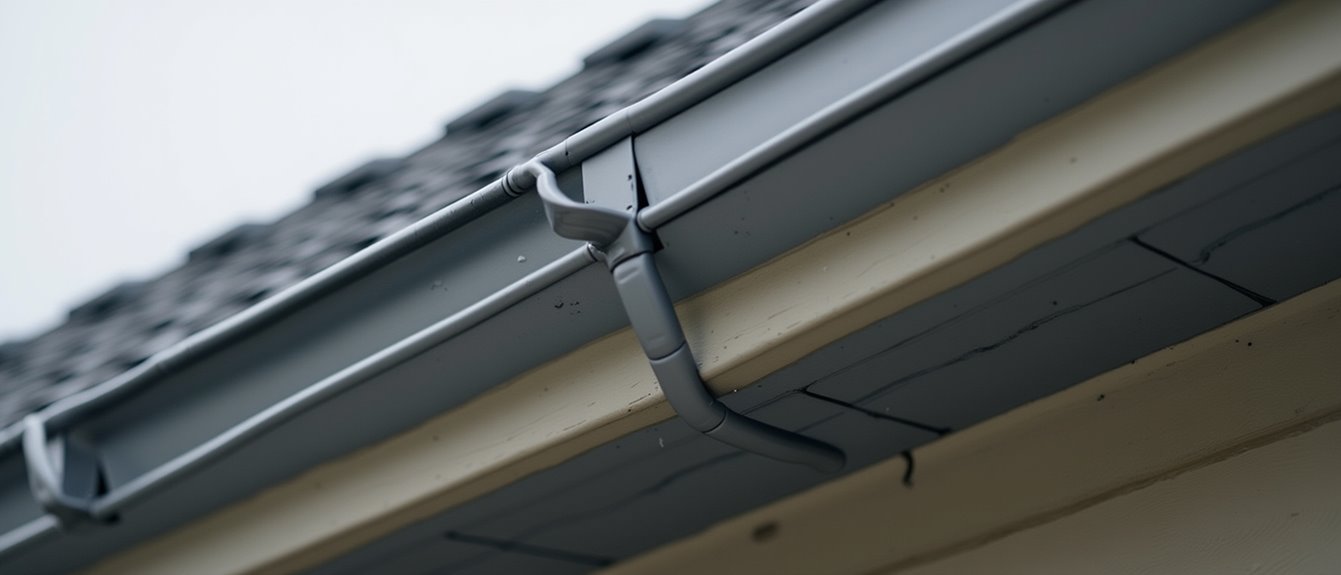
Half‑round gutters have a simple semicircular profile that channels rain the way water naturally wants to move, which makes them especially effective at getting runoff off your roof and away from the foundation.
As a homeowner, you’ll notice Half Round Gutters use their smooth, rounded interior and larger top opening to promote efficient water flow and faster drainage during heavy storms.
That design reduces friction and limits debris buildup, so clogs are less common and maintenance is simpler. Because water moves freely, you’re also less likely to get ice dams in winter. Additionally, these gutters can be customized with seamless gutters to ensure a perfect fit and minimize leaks.
Beyond function, the gutters add aesthetic value to your home while supporting reliable drainage.
Choose them if you want practical performance with low upkeep and clean lines.
Half‑Round Materials, Sizes, and Finishes
Having looked at how the shape improves flow, you’ll want to pick the right material, size, and finish to match your roof and budget.
Half-round gutters come in materials like aluminum, copper, and galvalume, each offering different durability and aesthetic qualities. Aluminum is lightweight, affordable, and low-maintenance; copper costs more but can last up to a century with proper maintenance and develops a distinctive patina.
Standard sizes generally range from 4 to 7 inches in diameter, so choose based on roof area and expected water flow during storms. Finishes include painted, anodized, or natural options to coordinate with your home.
The smooth half-round profile reduces debris buildup, easing cleaning and improving long-term performance. Additionally, seamless aluminum runs are often recommended to prevent foundation washouts and enhance durability.
| Material | Durability | Notes |
|---|---|---|
| Aluminum | Low maintenance | Lightweight and affordable |
| Copper | Up to a century | Develops distinctive patina |
| Galvalume | Durable | Alternative metal option |
| Sizes | 4 to 7 inches | Choose by roof area |
Half‑Round vs K‑Style and Seamless: Performance & Cost
While both styles keep water moving away from your roof, the choice between a semicircular profile and a K-style profile comes down to how they handle flow, debris, and cost.
You’ll notice key design differences: Half-round gutters use a rounded channel that promotes smoother water management and effective drainage, while K-style offers higher capacity but more edges that trap debris.
That gives half-round better clog resistance and lower maintenance requirements. Seamless gutters in either profile remove joints that cause leaks, boosting performance and durability.
In a straight cost comparison, half-round typically runs 20-40% higher than K-style because of materials and installation, but you’ll often save on upkeep and enjoy more reliable water management over time. Additionally, gutter repair services can enhance the longevity and efficiency of your half-round gutters by addressing any potential issues promptly.
Cost, Lifespan, and ROI: What to Expect Long‑Term With Half‑Round Gutters
Durability matters when you’re weighing upfront cost against long‑term value: half‑round gutters usually run 20-40% higher than K‑style because of thicker materials and premium profiles, but they typically last 20-40 years (and up to a century for copper) and cut down on repairs and maintenance, giving you a strong ROI through lower lifetime costs and added curb appeal. You’ll pay more initially, but the investment buys durability and better water flow, which reduces clogging and repair costs. For homeowners, lower maintenance frequency and enhanced curb appeal can boost resale value and offset higher cost. Additionally, custom sizing options and material choices can further optimize performance and longevity in various climates. Consider material choice and local conditions to estimate lifespan and ROI; well‑maintained systems maximize long‑term savings.
Installation: Brackets, Pitch, and Downspout Layout for Half‑Round Systems
Installation of half‑round gutters hinges on correct bracket placement, precise pitch, and thoughtful downspout layout to keep water moving and prevent sagging.
When you install, use specialized brackets or hangers designed for half-round gutters and space them to support the curved profile so the system stays secure and maintains alignment.
Set pitch at about 1/4 inch per 10 feet to promote consistent water flow and avoid pooling.
Plan downspouts every 30-40 feet and position them where runoff is concentrated to optimize drainage and reduce overflow risks.
Connect seamlessly to existing gutter systems, checking that alignment and slope remain true along the run.
Proper attachment and layout during installation preserve performance and extend the life of the system. Additionally, regular gutter cleaning is essential to ensure that blockages do not compromise the efficiency of your half-round gutters.
Maintenance, Winter Problems, and Cleaning Best Practices
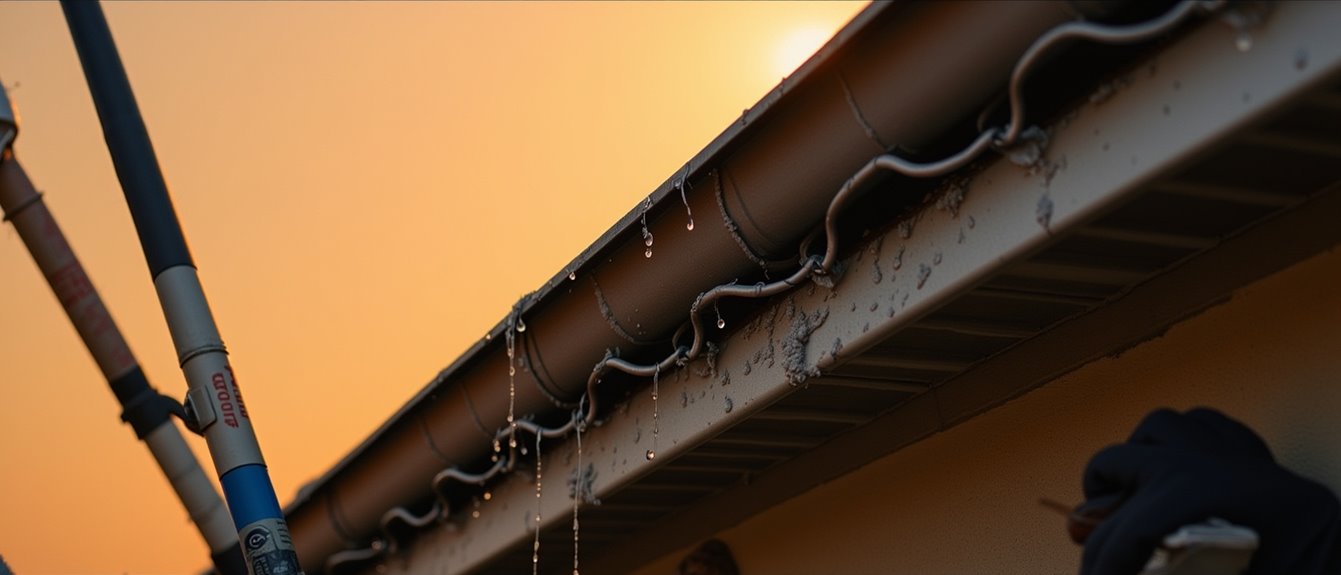
Because half‑round gutters shed water more efficiently than box profiles, you’ll still need regular upkeep to keep them performing through fall leaves and winter freezes.
You should follow simple maintenance: inspect for rust, loose brackets, and joint leaks before cold weather and clear debris at least twice a year.
The smooth curve and self-cleaning properties reduce debris accumulation and help water flow, but you can’t ignore buildup that causes ice dams.
Cleaning best practices include removing leaves by hand or with a soft scoop, flushing downspouts with a hose, and checking pitch and fasteners.
To address winter problems, consider protective measures like leaf guards and heating cables to prevent ice and restore unobstructed flow.
Regular checks keep performance reliable.
Gutter Add‑Ons: Leaf Guards, Snow Guards, Heating Cables, and Extensions
Good upkeep makes add‑ons much more effective, so once you keep half‑round gutters clear and fasteners tight, consider accessories that reduce future work and winter risks.
Leaf guards cut debris accumulation and lower maintenance needs while improving water flow, especially under heavy foliage.
Snow guards reduce sudden snow slides that can bend gutters or jam downspouts, protecting system performance in winter.
Heating cables melt ice to prevent ice dams and keep water flowing during freezes.
Gutter extensions send discharged water 3-4 feet from the foundation, preventing basement flooding and soil erosion.
Combining these options boosts overall performance and longevity.
Match choices to your climate and inspect add‑ons regularly so they continue reducing maintenance needs and protecting the foundation.
Frequently Asked Questions
What Are the Pros and Cons of Half Round Gutters?
You get smoother water flow, easier maintenance, classic curb appeal, and long-lasting materials, but you’ll pay 20-40% more, face trickier installation, potential integration issues with complex roofs, and concealed minor damage risks.
Which Is Better, Half Round or K-Style Gutters?
Half round gutters are better if you want lower maintenance, cleaner flow, and nicer aesthetics; K-style are better if you need greater capacity and lower upfront cost. Choose based on rainfall, budget, and maintenance tolerance.
What Is the Purpose of a Half Round Gutter?
They protect your foundation, channel water away, prevent erosion; they reduce clogs with smooth flow, lower maintenance with self-cleaning shape, resist corrosion with durable materials, and enhance curb appeal while managing heavy rainfall effectively.
Why Are Half-Round Gutters More Expensive?
They cost more because you’re paying for thicker, premium materials (copper/aluminum), specialized brackets and installation, fewer seams that reduce leaks, greater durability and lifespan, and improved aesthetics that boost property value.