
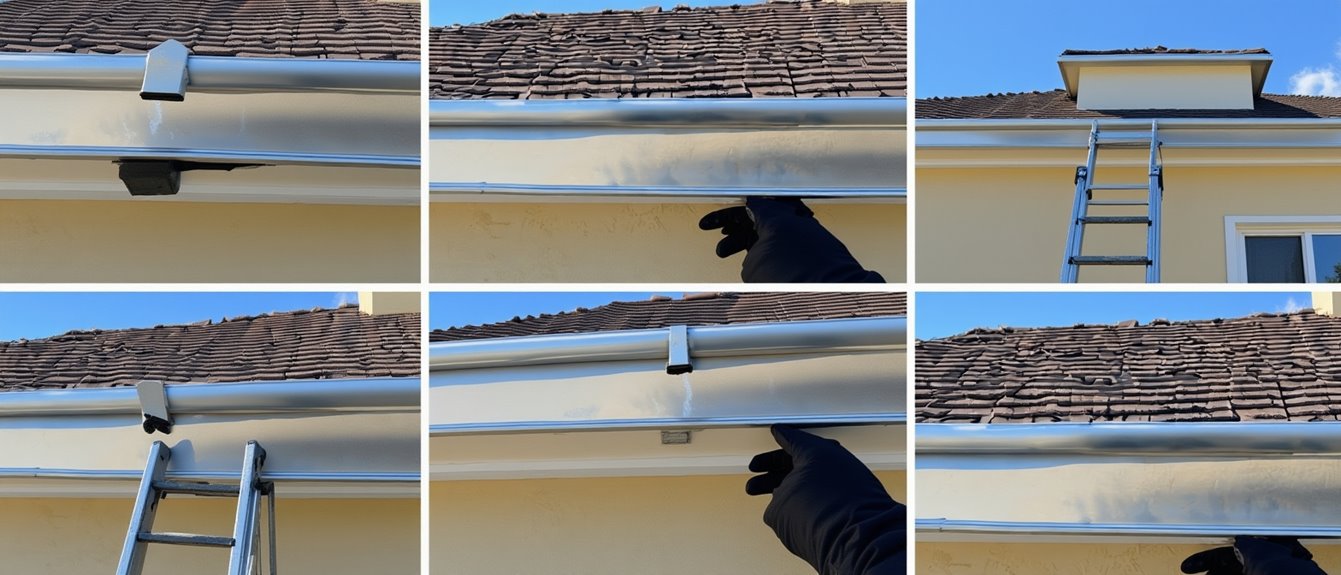
Summary: This guide explains five quick gutter repairs you can do yourself: clearing clogs, patching leaks, re-securing sagging sections, treating rust, and freeing blocked outlets. Most fixes take under two hours, but call a local gutter pro for persistent leaks, major sagging, or foundation pooling.
You can handle five quick gutter repairs yourself: clear clogs and downspouts with a ladder, trowel, hose, and snake; patch small leaks with roofing cement or silicone after cleaning; re-secure sagging runs using new brackets or anchors; remove minor rust and touch with rust inhibitor; and free stubborn outlet blockages. Each fix usually takes under a couple hours and prevents bigger damage. Keep safety gear on, and scroll down to learn step-by-step how to do each.
Highlights
- Clear debris from gutters and downspouts to stop overflow and improve water flow quickly.
- Patch small leaks with roofing cement or silicone sealant after cleaning and drying the area.
- Flush gutters with a hose and use a plumber’s snake to dislodge stubborn downspout clogs.
- Re-secure sagging gutters by tightening or replacing brackets and adding corrosion-resistant anchors.
- Call a local gutter pro for persistent leaks, major sagging, or water pooling near the foundation.
Spot 5 Common Gutter Problems: Signs, Severity, and Quick Triage

When you inspect your gutters, focus on five common issues, clogs, sagging, leaks, rust, and overflow, because spotting them early saves time and money.
You’ll look for clogs from debris like leaves and twigs that cause overflow during rain and risk water intrusion; a quick cleaning and repair service can triage this.
Sagging gutters show as drooping or separation from the roof line and demand gutter repair to restore alignment and prevent more damage.
Check for leaks and holes at seams and joints; even small drips suggest urgent gutter repairs to prevent water intrusion and to prevent water damage.
Rust and corrosion weaken channels and often signal replacement.
Regular preventive maintenance can also help avoid these common issues and extend the lifespan of your gutters.
Learn these common signs to prioritize fixes efficiently.
Fix Clogged Gutters and Downspouts Fast (Tools, Time, Step-by-Step)
Grab a sturdy ladder and the basics, trowel, garden hose, gloves, and a plumber’s snake, and plan on 1-2 hours to clear a typical clog. You’ll protect your home by tackling clogged gutters and downspouts promptly: debris causes overflow that can damage roofs and foundations. Work top-down: remove visible debris by hand or trowel, flush each run with the hose, then feed the snake into stubborn downspout blockages. Inspect seams and outlets as you go to confirm water flow. Do this twice a year, fall and spring, to prevent water issues. These tools and steps keep repairs done efficiently and extend gutter life as part of routine home maintenance. Additionally, regular maintenance protects against potential water damage that could affect your home's structure.
| Step | Action |
|---|---|
| 1 | Set ladder safely |
| 2 | Remove debris |
| 3 | Flush with hose |
| 4 | Snake downspouts |
| 5 | Verify flow |
Patch Small Leaks and Holes Quickly: Materials, Temporary vs Permanent Fixes
Although small leaks and pinholes might seem minor, patching them quickly keeps them from turning into major water damage. You can stop most leaks with roofing cement, silicone sealant, or a small piece of metal flashing.
When you inspect and find small leaks, clean the area first, remove debris and dry thoroughly, then decide between temporary fixes and permanent fixes. Temporary fixes like waterproof tape or duct tape buy time but aren’t long-term solutions.
For lasting gutter repair, apply roofing cement or silicone sealant, or fasten a metal flashing patch and rivet or seal edges. Patch holes promptly during routine inspection and cleaning to extend gutter life and avoid costly roof or foundation repairs. Repairing gutters now prevents bigger problems later, and remember that licensed and insured services ensure the work is done safely and effectively.
Re-Secure Sagging Gutters in One Visit: Anchors, Brackets, and Safety Tips
If you spot a sagging gutter, you can often fix it in a single visit by adding anchors or replacing brackets to restore proper pitch and support.
You’ll assess fasteners, realign the run, and install corrosion-resistant anchors or new brackets so downspouts drain correctly.
Professional technicians bring the right tools and materials, but you can do simple fixes yourself if you follow safety tips and use a sturdy ladder and gloves.
Regular inspections every 20 years, or sooner after storms, catch early issues and help prevent costly repairs. Additionally, ensure your gutters are made of corrosion-resistant materials to enhance durability and performance.
Also clear clogs to relieve water weight that causes sagging gutters.
- Use quality anchors and brackets for lasting gutter repair.
- Follow safety tips: stable ladder, eye protection, gloves.
- Schedule regular inspections and clear clogs to avoid bigger problems.
When to Call a Local Gutter Pro: What to Expect and Ballpark Costs
You've handled minor fixes, but some signs mean you should call a local gutter pro: persistent sagging, visible cracks or leaks, or water pooling by your foundation that suggests drainage failure. When those signs include water near your home, get a professional assessment. Expect a full inspection of gutters, downspouts, and drainage to find clogs, leaks, or structural issues. Many pros provide free estimates so you can compare quotes. Ballpark costs run about $4, $30 per linear foot depending on material and damage; minor quick repairs may finish in one to three days. Severe corrosion or chronic failures could mean gutter replacement. Hire someone who documents findings, outlines solutions, and explains how repairs prevent further water damage. Additionally, make sure to inquire about custom sizing options to ensure your downspouts effectively manage local rainfall.
| Item | What to expect |
|---|---|
| Inspection | Full inspection |
| Cost | Ballpark costs |
| Estimate | Free estimates |
| Repair time | Quick repairs |
| Outcome | Prevent water damage |
Frequently Asked Questions
How Much Should It Cost to Repair a Gutter?
You should expect to pay about $4, $30 per linear foot for repairs, with minor fixes on the low end and section replacements higher; full replacements often total $1,000, $3,000, plus extras like guards or downspout work.
How Much Do Gutter Repairs Usually Cost?
They typically cost you about $150, $500 for standard repairs, or $4, $30 per linear foot. Expect higher bills for full replacements, extra downspouts, roof fixes, or added guards, which can raise upfront costs.
How Long Does It Take to Fix a Gutter?
It usually takes you one to three hours to fix a gutter; minor sealing or tightening can be under an hour, while section replacements or downpipe work may need several hours to a full day, depending on access and complexity.
Who Can Fix My Gutters Near Me?
Local licensed gutter contractors, handyman services, and roofers can fix your gutters; you’ll find them on platforms like Thumbtack or Airtasker. Check reviews, confirm insurance, and get a free estimate so you’re confident in their workmanship.