
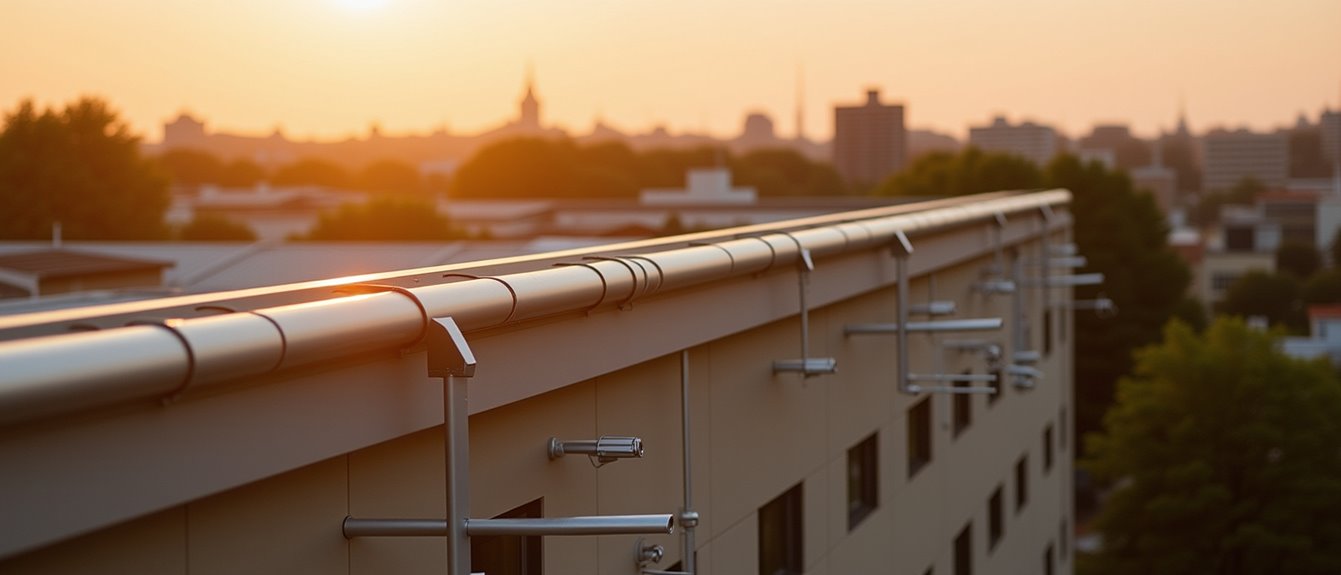
Summary: Commercial gutters protect building foundations and structures by directing stormwater away, and proper sizing, materials, installation, and maintenance reduce leaks, erosion, and long-term repair costs. Choosing durable materials, correct capacity, and routine upkeep maximizes protection, asset value, and return on investment.
You’ll protect your building by directing heavy runoff away from foundations, reducing erosion, basement flooding, and hydrostatic pressure that causes structural damage. Well‑sized gutters and downspouts keep water off exterior finishes and landscaping, limiting rot and costly repairs. Durable materials like aluminum or copper and seamless or box designs cut leaks and maintenance. Routine cleaning, inspections, and guards prevent clogs and prolong service life, improving asset value and lowering lifecycle costs, continue for practical sizing, installation, and maintenance guidance.
Highlights
- Protect building foundations by directing rainwater away, preventing erosion and costly structural repairs.
- Prevent interior water damage and mold by efficiently channeling runoff away from roofs and walls.
- Reduce hydrostatic pressure around foundations with properly sized gutters and downspouts.
- Minimize leaks and maintenance with seamless or correctly installed box gutters and secure hanger spacing.
- Extend asset life and lower long-term costs through regular maintenance, guards, and timely inspections.
Why Commercial Gutters Matter for Building Protection

Because rainwater concentrated around a building accelerates foundation erosion and interior damage, commercial gutters are essential for directing runoff away from structures and preventing costly repairs.
You rely on commercial gutters to provide efficient drainage that mitigates water damage and preserves structural integrity. Properly sized systems handle high flow rates, reducing hydrostatic pressure at foundations and lowering maintenance costs tied to foundation and interior remediation.
Regular debris removal and inspections prevent clogs that cause overflow, leaks, and accelerated deterioration.
By implementing effective gutter systems, you protect exterior finishes, landscaping, and subterranean elements, which supports the longevity of your property and sustains market value. Prioritizing building protection through routine maintenance and correct system capacity is a cost-effective strategy to prevent costly repairs. Additionally, utilizing custom-fit seamless gutters ensures optimal protection and efficiency for your commercial property.
Commercial Gutters: Types and Materials That Perform Best
Now that you know how proper sizing and maintenance protect a building, you should consider which gutter types and materials will deliver that performance for your project.
For large commercial gutters, seamless gutters formed on-site minimize joints and leaks, optimizing water management and reducing maintenance. Sectional gutters are cost-effective and simplify installation services but introduce seams that can require more frequent attention.
Box gutters, integrated into the roof, handle high volumes discreetly and lower upkeep when correctly detailed.
Material choice affects lifecycle and budget: aluminum gutters offer durability and affordability, lightweight, rust-resistant, and widely used, while copper gutters demand higher upfront cost yet yield exceptional longevity and aesthetic value via patina. Additionally, professional services ensure that the installation is done correctly to maximize efficiency and durability.
Specify system type, material, and professional installation services to balance performance, cost, and maintenance.
Sizing Commercial Gutters: Capacity, Downspouts, and Climate Factors
When sizing commercial gutters, you’ll match gutter dimensions and downspout capacity to roof area and local rainfall intensity to prevent overflow and foundation pooling.
You’ll select six- to eight-inch gutters for increased capacity versus residential systems, then calculate required downspouts: for example, 3" downspouts handle ~4,400 sq ft, 4.5" handle ~8,400 sq ft, delivering effective drainage.
Assess climate factors, design for peak rainfall intensities in your region to avoid overflow and ensuing structural damage.
Use custom fabrication to fit roof geometry and optimize flow, minimizing bends and constrictions.
Prioritize spacing and sizing of downspouts for balanced load distribution and reliable water management.
Proper sizing directly reduces risks of foundation pooling and long-term damage. Additionally, ensure that downspouts are installed with tight connections to prevent leaks and direct rainwater away from walls.
| Item | Spec |
|---|---|
| Gutter width | 6 to 8 inches |
| 3 inch downspout | Handles about 4,400 sq ft |
| 4.5 inch downspout | Handles about 8,400 sq ft |
| Design factor | Peak regional rainfall intensity |
Installation Steps to Stop Leaks and Protect Foundations
Start by surveying your building and roof geometry to determine gutter slope, continuous lengths, and downspout locations that will move design flows away from foundations without creating low spots that trap water.
You’ll size gutter runs to maintain positive water flow, select seamless profiles to eliminate joint leak points, and locate downspouts to disperse runoff beyond the foundation line.
During installation, secure hangers at specified spacing, verify uniform slope, and confirm downspout capacity matches roof area and regional rainfall.
Inspect connections, transitions, and sealants to prevent leaks and early deterioration. Additionally, utilizing durable materials ensures long-lasting performance against coastal conditions.
Consider substrate anchoring to avoid structural issues under load.
Finalize with documentation of as-built flow paths and a maintenance plan so you can monitor performance and protect the foundation long term.
Maintain Commercial Gutters: Cleaning, Inspections, and Repairs
Having installed gutters to direct runoff away from the foundation, you must maintain them with a routine program of cleaning, inspection, and timely repairs to preserve performance and prevent structural damage.
For commercial gutters, establish regular maintenance with inspections at least twice yearly and after storms. Cleaning removes debris and leaves to maintain flow and prevent water damage and clogs.
During inspections, check seams, hangers, downspouts, and junctions for leaks and structural wear; document findings and schedule repairs promptly to avoid costly repairs.
Consider gutter guards to reduce debris accumulation and labor while improving efficiency. Use a checklist and trained personnel or qualified contractors for safety and consistency.
Consistent cleaning, inspections, and repairs extend system life and protect property integrity and curb appeal. Additionally, thorough debris removal paired with water flush ensures that downspouts remain clear and functional.
Commercial Gutters ROI: Cost, Value, and Long-Term Savings

Because poorly managed runoff silently accelerates structural deterioration, investing in professionally designed and installed commercial gutters delivers measurable ROI through reduced maintenance, fewer repairs, and longer service life.
You’ll see a cost-effective solution: efficient gutters sized to site conditions reduce water damage and the risk of erosion-related foundation failures, cutting potential structural repairs and associated downtime.
Using durable materials like aluminum or steel extends lifecycle costs and lowers replacement frequency. Routine maintenance further maximizes savings by preventing debris buildup that causes blockages and leaks.
Improved drainage preserves exterior finishes and landscaping, which supports higher property value and can influence sale price.
Quantify ROI by comparing installation and upkeep costs against avoided repair bills, reduced insurance claims, and long-term savings from extended asset life.
Choose the Right Contractor: Questions to Ask and What to Expect
How do you pick a contractor who’ll deliver a durable, code-compliant commercial gutter system?
Ask about contractor experience with commercial gutters: which materials and designs they specialize in and documented expertise on similar buildings.
Review their gutter installation process, they should evaluate building layout, specify slope, and account for local climate to optimize water flow.
Request references or case studies from completed projects to verify reliability and workmanship.
Require a detailed, itemized estimate with labor, materials, timelines, warranties and estimate transparency to avoid surprises.
Confirm they provide maintenance services and scheduled inspections to sustain performance and extend lifespan.
Expect technical plans, compliance documentation, and clear communication; choose the contractor whose answers are specific, measurable, and verifiable.
Frequently Asked Questions
What Is the Difference Between Commercial Gutters and Residential Gutters?
Rain or shine, you’ll see commercial gutters are larger, stronger, and custom-built to handle high flow. You’ll choose steel or copper, fewer downspouts, and professional installation; residential systems favor smaller sizes and simpler materials.
Do Commercial Buildings Need Gutters?
Yes, you need commercial gutters to divert large stormwater volumes, protect foundations and roofing, and prevent leaks or structural damage; you’ll require correctly sized, custom systems and scheduled maintenance to ensure reliable performance.
What Are the Benefits of Gutters?
They prevent water damage, control erosion, and protect foundations; you’ll reduce maintenance, mold, and structural repair costs, improve drainage capacity for heavy rainfall, and extend building lifespan through reliable water management and fewer long-term failures.
Can Mice Come Through Gutters?
Yes, mice can enter gutters through openings as small as a quarter inch. You should maintain clean, inspected gutters, install guards, and seal gaps to prevent nesting, rodent access, and subsequent building infestations.