
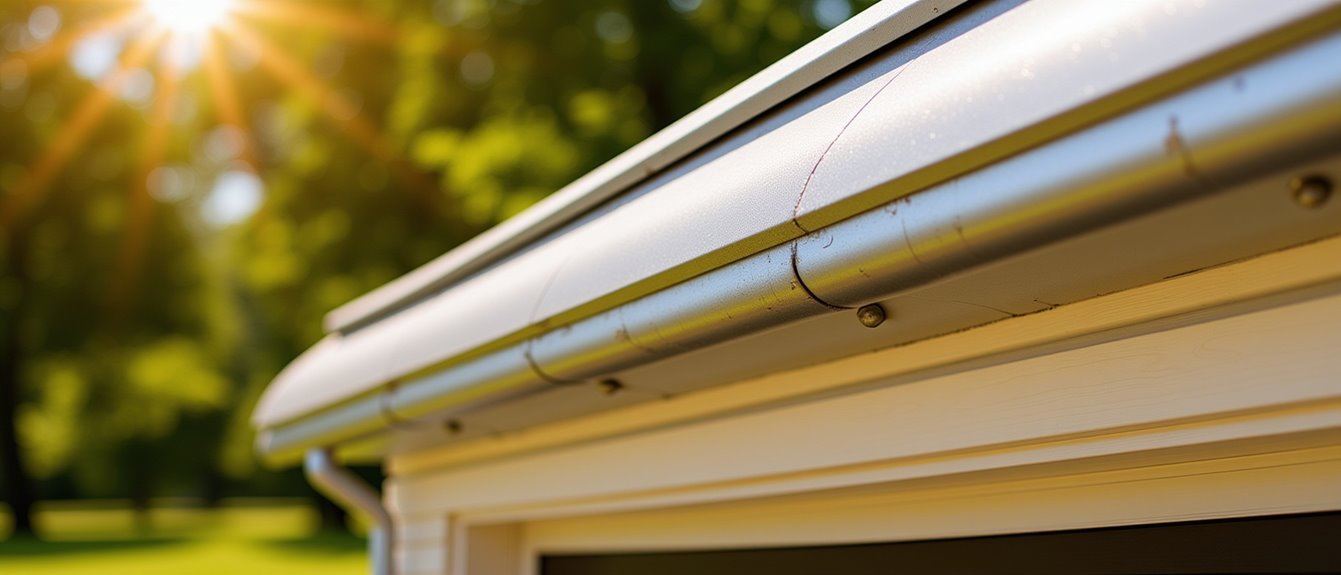
Summary: Zinc gutters last around 50 years, resist corrosion and mold through a self-forming patina, and require minimal upkeep, making them a durable, low-maintenance, eco-friendly choice despite higher upfront costs than vinyl or aluminum. For homeowners prioritizing longevity and sustainability over initial price, zinc is a practical long-term investment.
Choose zinc gutters and you’ll get decades of low‑maintenance performance: they commonly last around 50 years, resist corrosion with a self‑forming patina, and hide minor scratches while deterring moss and mildew. Upfront costs are higher than vinyl or aluminum, but labor and lifetime repairs are usually lower, and options include seamless runs and various finishes to match your home. Zinc is recyclable and has lower embodied carbon, and if you keep going you’ll find guidance on costs, styles, and installers.
Highlights
- Exceptional durability: zinc gutters commonly last ~50 years, reducing replacement frequency and long-term costs.
- Low maintenance: self-forming patina resists corrosion, moss, mildew, and hides minor scratches.
- Strong environmental profile: zinc is 100% recyclable with lower embodied carbon than many alternatives.
- Aesthetic versatility: available in various styles, colors, and finishes, developing an attractive natural patina over time.
- Reliable performance and warranty support: professional installation plus manufacturer guarantees deliver effective rainwater management and peace of mind.
Is Zinc a Smart Long-Term Gutter Choice?

If you’re thinking long term, zinc gutters are a smart choice because they’re built to last, often 50 years or more, so you’ll avoid the frequent replacements common with aluminum systems.
You’ll get a material that develops a protective patina, hiding flaws and boosting corrosion resistance, so you rarely need to replace sections and you’ll cut lifetime costs.
Consider pros and cons: upfront cost is higher than vinyl, but durability, recyclability, and low upkeep tip the balance toward zinc.
As one of several gutter materials, zinc stands out when you want to protect your home with minimal intervention.
If sustainability, longevity, and reliable water management matter to you, zinc gutters are a practical, long-term investment. Additionally, seamless aluminum runs can be a complementary option for those seeking optimal protection alongside durable materials.
Zinc Gutters vs. Copper, Aluminum, and Vinyl: Lifespan and Cost Trade-Offs
Compare three common alternatives to zinc, copper, aluminum, and vinyl, by weighing how long they last against what they cost up front and over time.
You’ll see that zinc gutters deliver about a 50-year lifespan, making them a long-term value for most homes.
Copper gutters often outlast zinc but cost significantly more and carry higher theft risk.
Aluminum gutters are lightweight and corrosion-resistant with roughly a 20-year lifespan, so you'll likely replace them sooner and recover less resale value.
Vinyl gutters are cheapest initially but have the shortest lifespan and may raise lifetime costs due to more frequent replacement.
- Zinc gutters: ~50+ years, moderate to high upfront cost, low replacement frequency
- Copper gutters: longest lifespan, highest upfront cost, theft risk
- Aluminum gutters: ~20 years, lower upfront cost, lower resale value
- Vinyl gutters: shortest lifespan, lowest initial cost, higher long-term replacement expense
Additionally, zinc gutters are designed for coastal conditions, ensuring they withstand heavy rain and wind for optimal performance.
How Zinc’s Patina Protects Gutters and Cuts Maintenance
Having weighed lifespan and cost among gutter materials, it helps to look at what actually keeps zinc gutters working so long: a self-forming patina. You’ll see a thin zinc-carbonate layer develop that blocks corrosion and environmental damage, so the metal ages rather than degrades. That protective skin hides minor scratches and surface flaws, preserving appearance without refinishing.
Because the patina resists moss and mildew, you’ll spend less time on upkeep; routine inspections replace frequent cleaning. Reduced maintenance also lowers the chance of clogged runs and water damage, extending the gutters’ effective lifespan toward fifty years. Additionally, choosing high-quality materials ensures durability and performance that matches zinc's longevity.
In short, zinc’s patina is an active shield, minimizing corrosion, cutting maintenance demands, and delivering durable, low-effort performance over decades.
Cost: Installation, Labor, and Lifetime Value of Zinc Gutters
While zinc gutters cost more up front than vinyl or basic aluminum, they deliver value over decades because they rarely need replacement and demand less maintenance.
You’ll typically see installation costs from $4,500 to $12,500 for a 2,500 sq. ft. home, with most homeowners paying $4,500, $7,500. Labor varies $1, $7 per linear foot; seamless installations usually run $4, $7 per foot.
- For a 150-foot seamless zinc gutter, expect $6,000, $7,500 total (materials + labor).
- Regional labor rates and home design affect final cost.
- Durability minimizes repair and replacement expenses over a 50+ year lifetime.
- The lifetime value often outweighs higher initial installation and labor outlays.
Styles, Colors, and Seamless Construction Options for Zinc Gutters
Zinc gutters come in a range of styles and colors that let you match them to your home's architecture and taste: choose K‑Style for a decorative, dimensional look or Half‑Round for classic, efficient drainage, and pick from factory-applied finishes or pre-weathered tones through suppliers like EuroGutterUSA to coordinate with siding, roofing, or trim. You’ll find zinc gutters in different colors and finishes that suit historic and modern homes. Opting for seamless gutters increases strength and durability, reducing leak risk versus crimped joints. Expect a natural patina over time that conceals minor surface flaws and deepens curb appeal. Additionally, custom sizing options ensure that your gutters fit perfectly, enhancing both functionality and aesthetics. Below is a quick comparison to help you decide.
| Feature | Benefit |
|---|---|
| K‑Style vs Half‑Round | Aesthetic vs drainage efficiency |
| Seamless gutters | Fewer leaks, stronger joints |
| Finishes/different colors | Match exterior; develops patina over time |
Environmental Benefits: Recyclability, Mold Resistance, and Embodied Carbon

Beyond looks and construction, you should also consider how gutter material affects the environment and nearby plant life.
Zinc gutters score well on environmental impact and sustainable building practices: they're 100% recyclable, cutting landfill waste and supporting circular material use.
Zinc's fungistatic nature provides strong mold resistance, so you won't encourage mildew or fungal growth near vegetation. Its natural chemistry doesn't irritate plant growth, protecting nearby ecosystems.
Zinc's lower embodied carbon versus many alternatives and its long service life reduce replacement frequency and cumulative resource use. Additionally, regular gutter cleaning ensures that their efficiency is maintained, further enhancing their environmental benefits.
- Recyclability: fully recyclable, lowers waste.
- Mold resistance: inhibits mold, mildew, fungus.
- Embodied carbon: comparatively low, greener choice.
- Durability: fewer replacements, reduced environmental impact.
How Climate and Site Affect Zinc Gutters (Coastal, Cold, Urban)
Because your climate and site conditions shape both performance and upkeep, it's important to consider how coastal, cold, and urban settings affect zinc gutters.
In coastal areas, salt spray can cause surface stains, so you'll schedule more frequent maintenance to preserve appearance even though zinc's patina improves resistance over time.
In cold climates, zinc gutters hold up well to freeze-thaw cycles, but you should plan for heated systems or careful ice management to avoid dams.
In urban environments, increased debris and pollutants make clogging more likely, yet zinc gutters' low-maintenance profile and customizable color options help them stay functional and match your home's look.
Choosing Zinc Suppliers and Installers: What to Require and Ask
Want to know the right questions to ask when hiring for zinc gutters? Start by vetting zinc suppliers like Kobett Metals or EuroGutterUSA for product options and color choices.
Confirm seamless construction is available to improve strength and longevity. Ask about the warranty period, reputable teams often offer 20 years.
Check contractor experience specifically with zinc installations and request references.
- Which zinc suppliers do you use and can I see material samples?
- Do you fabricate on-site or provide seamless construction?
- What’s the warranty period and what does it cover?
- Can you provide references illustrating contractor experience and quality of work?
You’ll make a confident choice when you verify materials, installation methods, guarantees, and past performance.
Frequently Asked Questions
Are Zinc Gutters Good?
Yes, you’ll find zinc gutters excellent: they last decades, form a protective patina, resist mold, and weld seamlessly to reduce leaks. You’ll pay more upfront, but you’ll gain durability, sustainability, and lower long‑term costs.
Are Zincalume Gutters Better Than Stainless Steel?
You might worry about durability, but yes, you’ll often find Zincalume better than stainless steel for gutters: it resists corrosion with a protective patina, is lighter, cheaper, recyclable, and easier to install while delivering long-term performance.
What Is the Best Material for House Gutters?
The best material depends on your priorities: zinc for longevity and low maintenance, aluminum for affordability and light weight, and copper for premium appearance and durability; choose based on budget, aesthetics, and expected lifespan.
What Are the Disadvantages of Zinc Roofing?
Zinc roofing has higher upfront costs, can stain in coastal areas, needs skilled installers for soldering, may develop a patina some dislike, and still requires occasional maintenance to control moss, mildew, and aesthetic changes.