
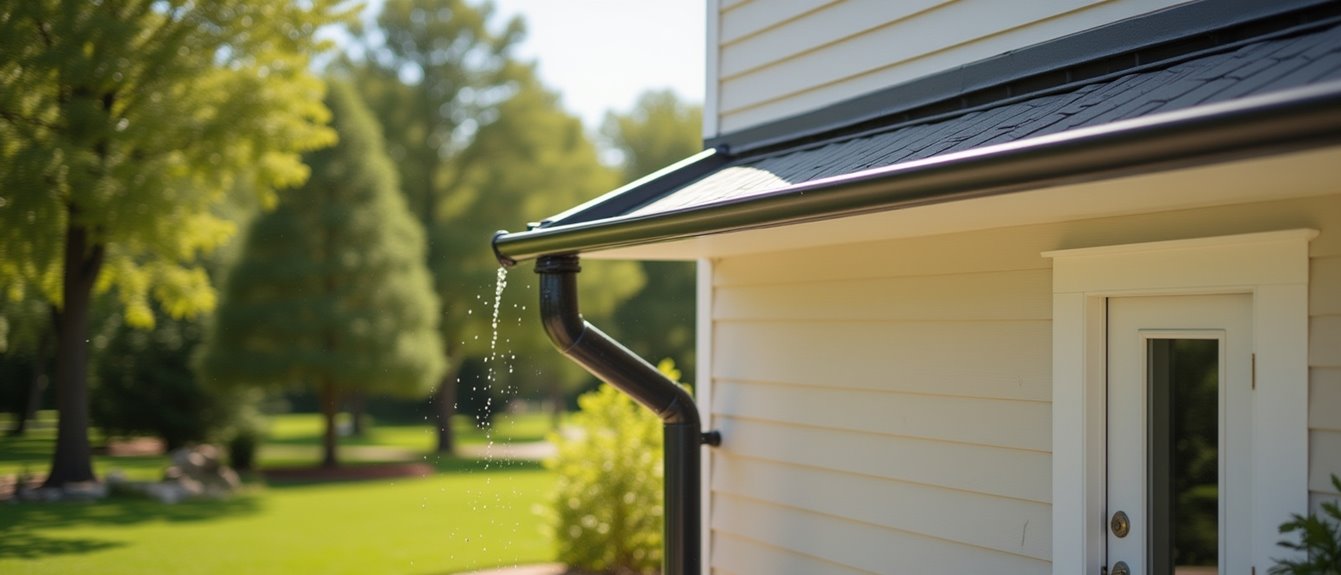
Summary: 5 inch rain gutters offer a cost effective, lightweight drainage solution for homes under about 5,520 sq ft in moderate rainfall areas, holding 1.2 gallons per foot. Clean them twice yearly and upsize to 6 inch gutters if your roof area, rainfall, or clogging issues exceed this capacity.
You’ll get reliable, cost‑effective roof drainage with 5‑inch gutters: they hold about 1.2 gallons per foot, handle moderate storms (≈2 in/hr), and need fewer downspouts (every 30-35 ft) on typical roofs. They’re lighter, use less material, are easier and cheaper to install or DIY, and require simpler maintenance and fewer repairs. They suit homes under ~5,520 sq ft and moderate climates, keep them clean twice yearly, and keep going to learn when upsizing makes sense.
Highlights
- Efficiently handles moderate rainfall, holding about 1.2 gallons per foot and managing up to 2 inches per hour.
- Suitable for most standard homes with roof areas under 5,520 sq ft, requiring fewer downspouts.
- More cost-effective than larger systems, with material costs $3, $25 per foot and lower labor if DIY.
- Lighter and easier to install and maintain, reducing installation time and simplifying cleaning twice yearly.
- Seamless designs minimize leak risks while standard outlets and proper pitch improve debris flow and drainage.
Are 5-Inch Gutters Right for Your Home?
Wondering whether 5-inch gutters will meet your home's needs? You’ll find 5-inch gutters cost-effective and lightweight, often the correct gutter size for smaller properties.
If your roof area is under about 5,520 sq ft and local rainfall is moderate, this gutter system provides proper drainage by channeling water flow away from the home’s foundation. They hold roughly 1.2 gallons per foot, so they manage typical runoff without excess expense.
You’ll want to avoid larger homes or regions with heavy storms, since insufficient capacity can lead to overflow and structural damage. Custom sizing ensures that your gutters can effectively handle the specific drainage needs of your home.
Installation is straightforward for DIYers, but regular maintenance is essential because clogging increases risk to your foundation and overall performance.
Performance in Moderate Rain: Capacity & Downspout Needs
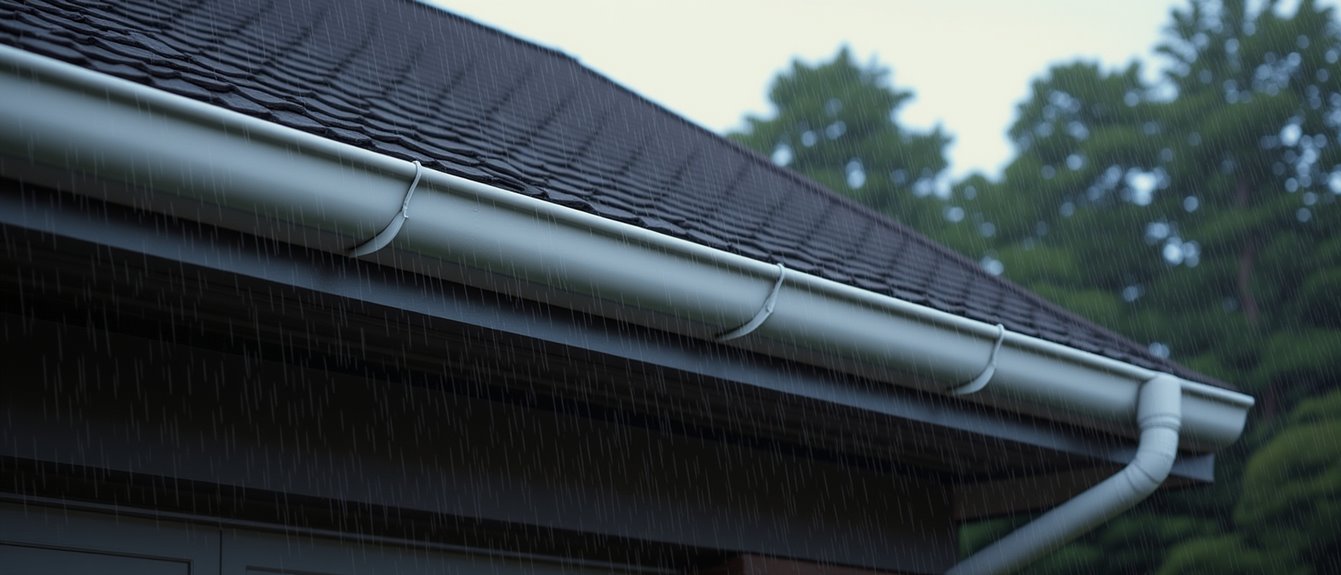
In moderate rain, 5-inch gutters perform efficiently, holding about 1.2 gallons per foot and handling rainfall rates up to roughly 2 inches per hour when installed and maintained correctly.
You’ll rely on that water capacity to move rainwater away from vulnerable areas, but effective drainage depends on layout and downspouts. Use downspouts every 30-35 feet so the gutter system stays properly sized for roof runoff and minimizes clogging risks.
The standard ~2-3/4-inch outlet reduces debris backup in typical storms, though it can strain in heavier events. Inspecting and clearing channels keeps flow rates within capacity and extends performance.
For moderate rainfall and roofs within recommended runoff limits, 5-inch gutters give a technically sound, low-maintenance solution. Additionally, custom-fit seamless gutters are essential for optimal protection and efficiency in your drainage system.
Which Homes and Roofs Suit 5-Inch Gutters
Although 5-inch gutters won't suit every roof, they work best on smaller residential homes, typically those with adjusted roof areas under about 5,520 square feet, where rainfall is light to moderate and budget or DIY installation matters. You should choose 5-inch gutters for homes and roofs with standard roof pitch and moderate watershed; they're lightweight, easier to install, and often require fewer downspouts. For larger roofs or heavy rainfall, you'll face overflow issues without upsizing or additional downspouts. Prioritize size for your home and proper maintenance to preserve performance. Assess roof pitch, local rainfall, and complexity of roof lines before selecting 5-inch gutters to ensure reliable runoff management and reduced long-term risk. Additionally, gutter repair services can help maintain the effectiveness of your system.
| Suitability | Emotion | Action |
|---|---|---|
| Small roofs | Relief | Inspect pitch |
| Moderate rainfall | Confidence | Maintain gutters |
| Simple roofs | Control | Plan downspouts |
How 5-Inch Gutters Save You Money
Save money upfront and over time by choosing 5-inch gutters: they use less material and typically cost between $3 and $25 per foot, making purchase and installation cheaper than larger systems.
You’ll benefit from cost-effective installation and lower material costs because the smaller cross-section requires less aluminum or vinyl. That reduces initial outlay and supports a budget-friendly option for whole-house runs.
Their lightweight profile is DIY-friendly, so you can cut labor expenses if you have skills. In regions with moderate rainfall, 5-inch gutters handle runoff effectively, lowering overflow risk and consequential water damage repairs.
Because they’re easier to access and clean, you’ll see reduced maintenance frequency and lower long-term maintenance costs compared with oversized, clog-prone systems. Additionally, seamless gutters provide a clean appearance and further minimize the risk of leaks.
Install 5-Inch Gutters Yourself: Tools, Time, and Risks
Now that you know 5-inch gutters cut material and labor costs, you can consider doing the installation yourself. You’ll need basic tools: level, measuring tape, saw, drill and brackets; those tools make DIY installation feasible for a competent homeowner.
Expect installation time from a few hours to a full day based on run length and roof complexity. Set proper pitch, about 1/4 inch per 10 feet, to ensure effective drainage and avoid standing water.
Be mindful of safety hazards when working from ladders and roofs; take precautions or hire help for high or steep jobs. Improper sealing or alignment risks leaks and water damage, so verify connections and fasteners. Consider scheduling preventive maintenance to keep performance optimal after installation.
Cleaning & Longevity: How Often You’ll Need to Maintain Them
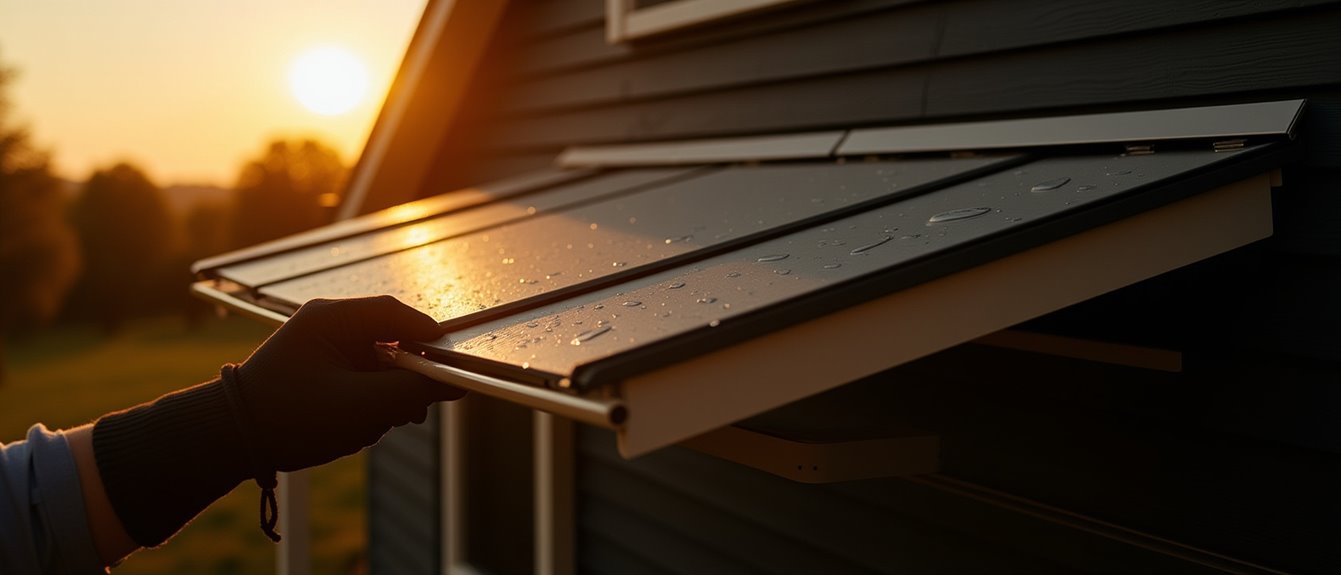
Because debris builds up quickly and standing water accelerates corrosion, you should clean 5-inch gutters at least twice a year, more often (three to four times) if your property is heavily wooded, to prevent clogs, overflow and related water damage. You’ll inspect after heavy rainfall for signs of clogging such as pooling or overflow; immediate cleaning reduces risk of structural water damage and extends lifespan. Maintenance frequency depends on trees, roof pitch, and local climate. Longevity factors include material, timely cleaning, and professional help for complex roofs. Hire pros when debris is excessive or access is hazardous to maximize lifespan and performance.
| Task | Interval | Trigger |
|---|---|---|
| Cleaning | 2-4×/yr | After storms |
| Inspection | Twice/yr | Signs of clogging |
| Professional service | As needed | Complex roofs |
Quick Checklist: When to Upsize to 6-Inch Gutters
If your roof area, rainfall patterns, or maintenance demands push system capacity, it’s time to consider upsizing to 6-inch gutters. Use this checklist to decide: measure your roof area, exceed 5,520 adjusted square feet, and larger gutters are warranted.
In heavy rainfall regions (Seattle, New Orleans), 6-inch gutters handle ~50% more water than 5-inch gutters, reducing overflow risk.
Check roof pitch: steep slopes increase runoff velocity and favor 6-inch systems.
Monitor clogging and maintenance: frequent blockages or excessive cleaning indicate inadequate right gutter size; larger downspout openings in 6-inch gutters cut maintenance.
Finally, evaluate your home’s drainage performance, persistent water pooling near the foundation signals you should upgrade for improved protection and system capacity.
Frequently Asked Questions
What Looks Better, 5 or 6-Inch Gutters?
Like a tailored suit, you’ll prefer 5-inch gutters on smaller homes for streamlined proportions and easier installation; you’ll choose 6-inch for larger roofs requiring greater capacity, prioritizing function over subtle aesthetics and durability.
How Much Rain Can 5 Inch Gutters Handle?
About 1.2 gallons per foot; that lets a 5-inch gutter handle runoff from roofs up to roughly 5,520 square feet under moderate rain, though you’ll need downspouts every 30-35 feet and consider heavy-storm limits.
What Is the Best Size Gutter for a House?
You’ll usually choose 5-inch gutters for typical homes, but larger roofs or heavy rainfall need 6-inch. Calculate roof area and local peak rainfall, and consult a pro so you’ll avoid overflow and structural damage.
What Is the Cost Difference Between 5 and 6 Gutters?
You’ll typically pay about $0.50 to $1.00 more per linear foot for 6-inch gutters versus 5-inch, plus higher installation costs due to added weight and extra brackets, raising overall project expenses noticeably on larger roofs.