
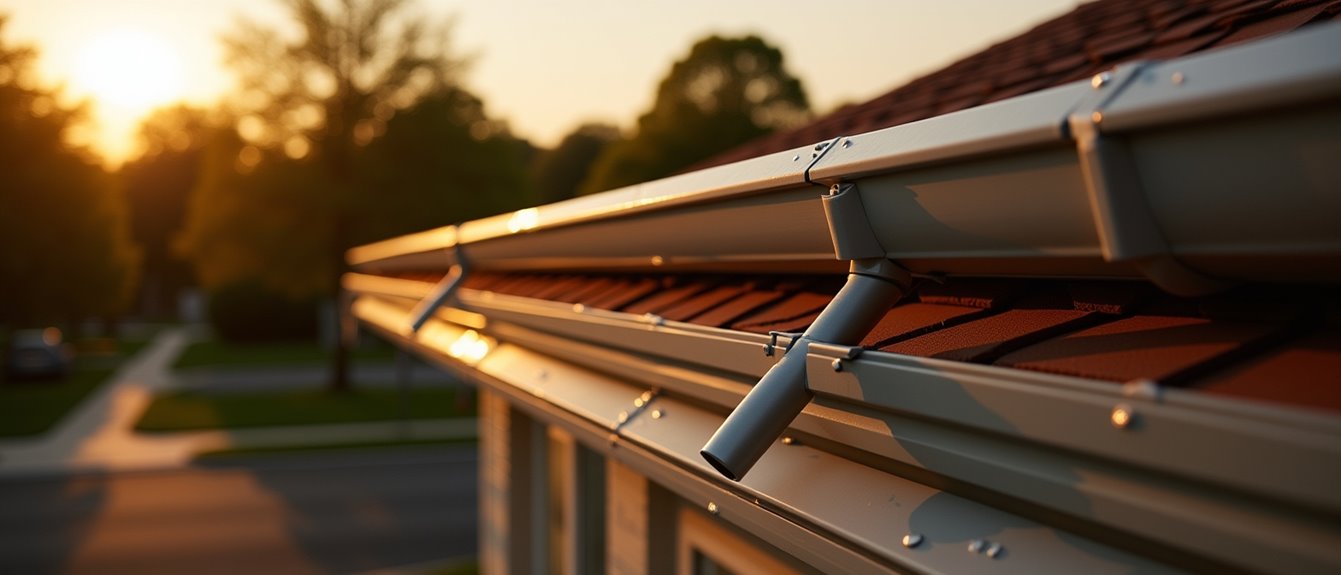
Summary: Gutters channel roof runoff away from your home to prevent foundation damage, mold, siding rot, and soil erosion, with proper pitch and downspout placement ensuring effective drainage. Regular maintenance, extensions, and gutter guards preserve performance and help avoid costly structural repairs over time.
You need gutters to control roof runoff and direct water away from your foundation, preventing cracks, mold, and costly structural damage. They protect siding and fascia from constant moisture and reduce soil erosion around landscaping and grading. Properly pitched gutters with adequate downspouts ensure gravity-driven drainage and limit pooling and ice dams. Regular maintenance and upgrades like extensions or guards preserve performance. Keep going to learn specific signs, costs, and practical fixes for your situation.
Highlights
- Gutters channel roof runoff away from the foundation, preventing water intrusion and structural damage.
- They protect siding, fascia, and soffits from water stains, rot, and mold growth.
- Properly routed downspouts reduce soil erosion and preserve landscaping and grading.
- Well-maintained gutters prevent basement and crawlspace flooding and related indoor air quality issues.
- Gutters control runoff volume and direction, minimizing ice-dam risk and prolonging roof lifespan.
Why Gutters Matter for Foundation, Siding, and Landscaping
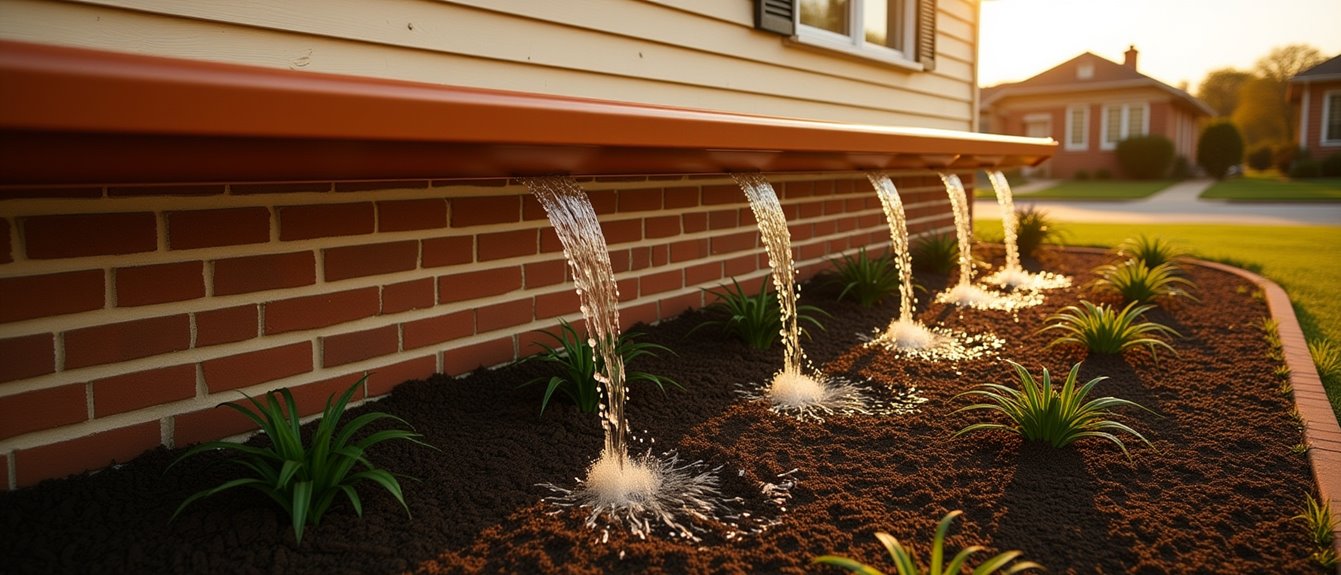
Because an inch of rain on an average roof can produce roughly 1,900 gallons of runoff, you need gutters to control where that water goes; properly installed gutters channel runoff away from foundations, preventing pooling that causes cracks and structural damage, and they keep siding and fascia dry to reduce mold, mildew, and rot.
You’ll rely on gutters to redirect roof water so it won’t saturate soil near the foundation or runoff into landscaping beds, which prevents soil erosion and preserves grading.
By limiting moisture contact with siding and foundation walls, gutters reduce the risk of mold growth in basements and crawl spaces and help maintain indoor air quality. Gutter repair services are essential to ensure your system functions effectively and maintains these protective benefits.
Properly designed systems manage flow volume and discharge distance to protect structure and landscape.
Do You Need Gutters? Quick Decision Checklist
Wondering whether your home needs gutters? Use this checklist to decide quickly and technically.
Assess roof pitch: steep roofs funnel more runoff, so gutters are usually necessary to manage water and prevent foundation stress.
Check soil type: clay-rich soils retain moisture, increasing pooling and risk of water damage, install gutters.
Consider local climate: moderate to heavy rainfall regions require gutters to divert water from the structure.
Inspect foundation: basements or crawl spaces demand gutters to reduce moisture intrusion.
Evaluate roof overhang: minimal overhangs make gutters necessary to protect siding and foundation from concentrated discharge.
If multiple items apply, plan for professional installation to ensure correct slope, secure attachment, and effective long-term protection, especially from seamless aluminum runs that prevent foundation washouts.
How Gutters Work: Runoff, Downspouts, and Pitch
When rain hits your roof it becomes runoff that gutters must capture and control, channeling large volumes into downspouts so water’s expelled well away from the foundation.
Your gutter system intercepts that runoff, an inch of rain can yield roughly 1,900 gallons on an average roof, so correct conveyance is critical.
You position downspouts to discharge at least 6 feet from the foundation to reduce soil saturation and potential water damage.
Proper pitch is essential: gutters must slope toward downspouts to maintain gravity-driven drainage and avoid pooling.
Regular maintenance prevents clogs and preserves flow capacity; inspect for debris, correct sagging, and verify outlet seals.
A well-designed, maintained system minimizes erosion, protects the foundation, and controls roof runoff predictably. Additionally, smart drainage solutions ensure that water is routed effectively to avoid common issues like flooding and foundation damage.
When You Really Need Gutters (Topography, Soil, Roof Factors)
Having covered how gutters move roof runoff, you now need to decide whether a system is necessary for your site and structure.
If your home sits at a slope base, in a low-lying valley, or on clay-rich soil, a gutter system is essential to control heavy rain runoff and prevent water from pooling near foundations.
Evaluate roof design: large surface areas or steep pitches increase runoff volume and velocity, raising erosion and foundation damage risks.
Proper drainage requires matching downspout capacity and placement to predicted water flow and local building codes, which sometimes mandate gutters. Preventive maintenance is also crucial to ensure that your gutter system functions effectively throughout the year.
Assess soil conditions and topography together; when saturation or pooling is likely, homes benefit from gutters to redirect flow, limit erosion, and protect the foundation.
When You Can Skip Gutters (Climate, Overhangs, Drainage)
Because not every site demands a gutter system, you can skip gutters where climate, roof design, and soil let water disperse safely without added collection.
If you live in a dry climate with minimal rainfall, the risk of rainwater causing damage or water pooling near the foundation is low, so a gutter may be unnecessary.
Extensive roof overhangs that project runoff well beyond the building footprint reduce splashback and erosion, complementing natural drainage.
Sites on steep slopes or with sandy, well-draining soil absorb and transport runoff away from the soil around the structure, limiting saturation.
Check local codes: whether a gutter is necessary depends on regulation and documented drainage performance.
Evaluate rainfall intensity, roof geometry, and soil infiltration before omitting gutters. Additionally, understanding the importance of proper drainage can help ensure your home remains protected from potential water damage.
Common Gutter Problems and the Costs of Ignoring Them
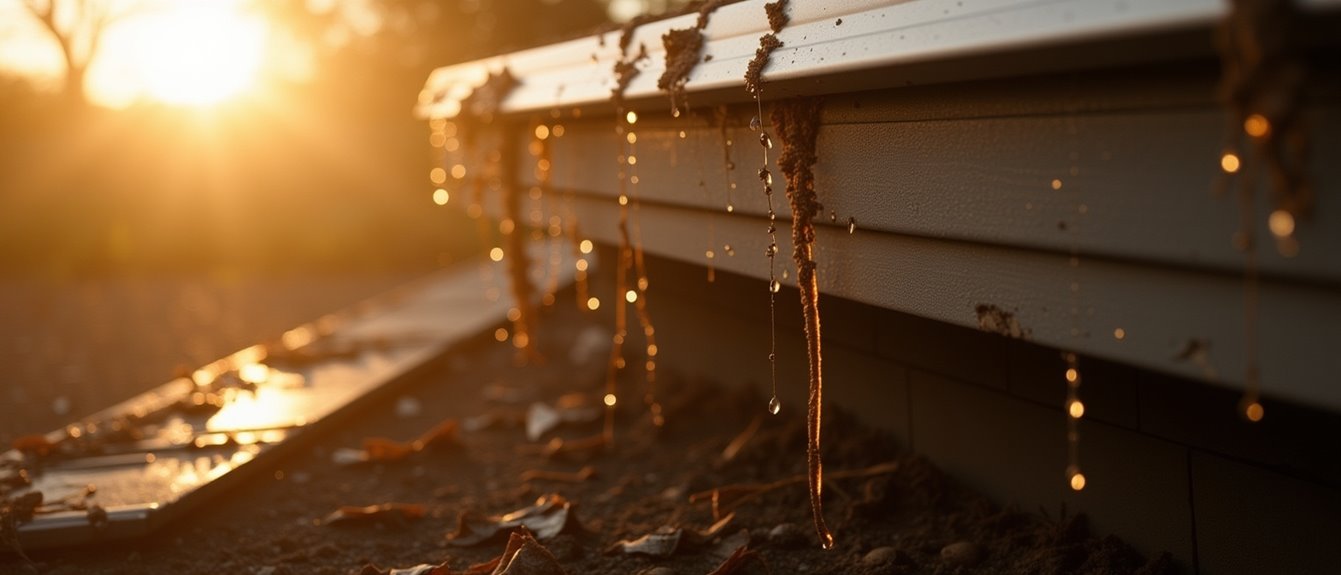
If you ignore gutter problems, small issues quickly compound into costly repairs and health risks.
Clogged gutters from debris force overflow, directing water toward the foundation and triggering structure repairs that often run $2,000, $10,000.
Leaks and moisture intrusion encourage mold growth in basements and crawl spaces; remediation typically costs $500, $6,000.
Improper slope causes pooling and ice dams, risking roof damage and $1,000, $3,000 repairs.
Neglected gutters also attract pests, increasing extermination costs and related repairs by $200, $1,500.
Regular maintenance and routine gutter cleaning reduce these risks, extend service life by up to 50%, and avoid major replacement expenses of $1,000, $3,000.
Address gutter problems promptly to protect structural integrity and minimize long-term expenditures.
Best Upgrades: Downspouts, Extensions, and Gutter Guards
When you upgrade downspouts, add extensions, and install gutter guards, you directly improve water management and reduce maintenance needs. You’ll protect roofline and foundation by increasing drainage capacity with larger downspouts, which prevent overflow during heavy storms and reduce water damage risk. Extensions direct runoff farther from the foundation to prevent pooling and basement or crawl space flooding. Gutter guards minimize debris buildup, cutting maintenance frequency and preserving flow. Below is a quick comparison to guide choices.
| Component | Primary Benefit | Key Outcome |
|---|---|---|
| Downspouts | Increase drainage | Prevent overflow |
| Extensions | Redirect runoff | Protect foundation |
| Gutter guards | Reduce debris buildup | Lower maintenance |
| Combined | Integrated system | Improved water management |
Gutter Maintenance Checklist and How to Choose Replacement Materials/Providers
Now that you’ve upgraded downspouts, extensions, and guards, keep the system performing with a focused maintenance checklist and smart material choices.
You should schedule gutter maintenance twice yearly, prioritizing cleaning gutters after fall and spring storms to prevent clogs, leaks, overflow, and water damage.
Consider gutter guards to reduce maintenance needs. Evaluate replacement materials by longevity and cost: aluminum and galvanized steel ≈20 years; copper ≈50 years.
For professional gutter installation, get at least three quotes and vet reliable providers via warranties and customer reviews. Also assess roof pitch, regional rainfall, and soil type to match capacity and anchoring.
Follow this checklist to protect structure and minimize long-term repair costs:
- Inspect and clear debris.
- Check seams and fasteners.
- Test downspout flow.
- Document and schedule repairs.
Frequently Asked Questions
Is It Bad to Not Have Gutters on Your House?
Yes, it’s risky. Without gutters, rain concentrates at your foundation, saturates basements, erodes landscaping, and stresses roofing materials; you’ll face mold, structural repairs, and costly maintenance unless you channel runoff away reliably.
How Long Can a Roof Go Without Gutters?
Short-term, your roof can go months to a few years without gutters, but you’ll risk accelerated wear, foundation saturation, landscaping erosion, and mold. Install gutters proactively in moderate-to-heavy rain zones to avoid costly structural repairs.
What to Use Instead of Gutters on a House?
Think of a rain chain as a silver ribbon: you can use rain chains, ground gutters, French drains, swales, widened overhangs, or engineered grading to channel runoff. You’ll choose based on site slope, soil, and rainfall.
Why Do New Builds Not Have Gutters?
New builds often omit gutters because you’re using long overhangs, engineered grading, swales, and regional code allowances; builders cut initial costs assuming low rainfall or homeowner-installed systems later, so gutters aren’t always specified initially.