
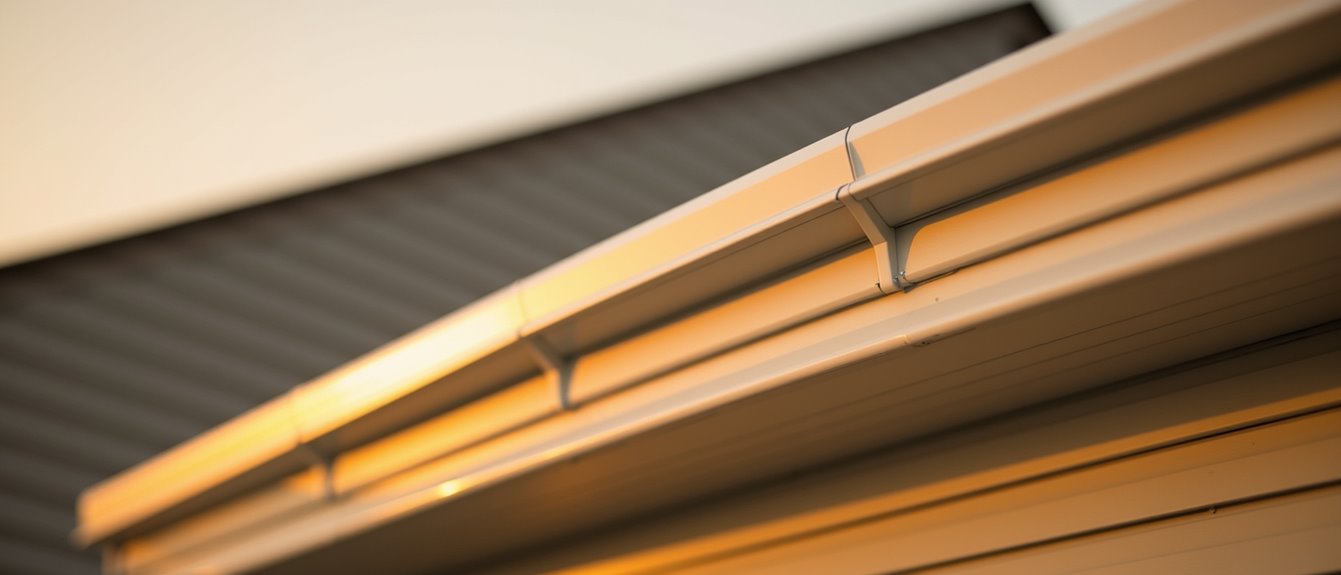
Summary: K style gutters are the most popular residential choice because their flat back and crown molding front increase water capacity, reduce overflow, and allow easier installation across materials like aluminum, copper, vinyl, and steel. Choosing the right size, slope, and maintenance schedule keeps them working well for decades.
K‑style gutters are the most common residential choice; you’ll see them on about four out of five U.S. homes. They have a flat back that sits against your fascia and a decorative front that looks like crown molding, which increases capacity over rounded gutters and reduces overflow. You can get them in aluminum, vinyl, steel, or copper and in 5", 6" sizes (larger for commercial). They’re easy to install and maintain, and if you keep going you’ll learn how to pick, install, and care for them.
Highlights
- K-style gutters have a flat back and bottom with a decorative front that resembles crown molding for enhanced curb appeal.
- Their angled profile increases water capacity compared with half-round gutters, reducing overflow during heavy rain.
- Common materials include aluminum, copper, vinyl, and steel, with seamless options to minimize leaks.
- Most U.S. homes choose K-style gutters for a balance of functionality, easier installation, and attractive appearance.
- Proper sizing, correct 1/4-inch per 10-foot pitch, and twice-yearly maintenance maximize performance and longevity.
What Are K‑Style Gutters and How They Work
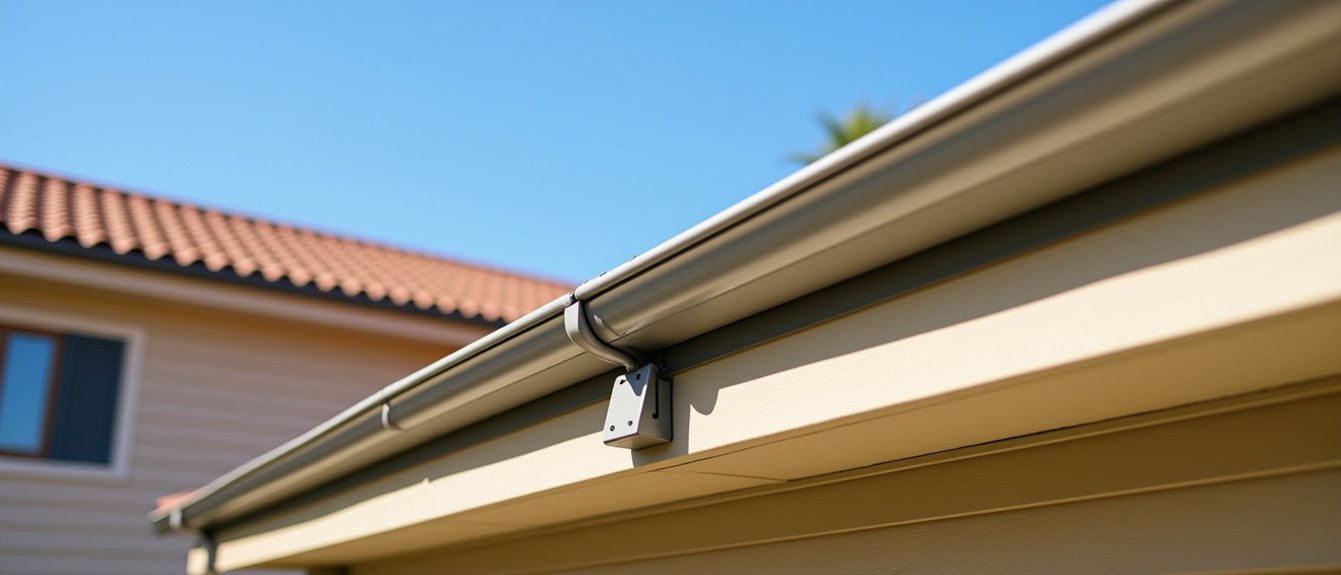
Think of K‑style gutters as a practical, attractive channel that runs along your roofline to guide rainwater away from your home.
You’ll notice K-style gutters have a flat back and bottom that sit against the fascia board, with a decorative front that mimics crown molding. That profile isn’t just aesthetic: it increases capacity compared with rounded gutters, so you’ll handle more water and reduce overflow during heavy rainfall.
Many installers offer them as a seamless gutter option, minimizing leaks at joints. The benefits of K-style include efficient water management, compatibility with common rooflines, and a curb appeal boost that’s why about 80% of U.S. homes choose them. You’ll get function and looks in one system. Additionally, custom-fit seamless gutters provide optimal protection against potential water damage.
Materials, Sizes, Capacity, and Lifespan of K‑Style Gutters
Now that you know how K‑style gutters work along a roofline, it helps to look at what they're made of and how size affects performance and longevity.
K-style gutters come in common materials like aluminum (lightweight, rust-resistant), copper (durable, elegant), vinyl (affordable), and steel (strong in harsh weather).
Standard sizes are 5" and 6", while 7" and 8" suit commercial needs; choosing the right size boosts capacity and reduces overflow during heavy rain.
Lifespan depends on material: aluminum often lasts 20-30 years, copper can exceed 50 with care.
Seamless options reduce leaks and maintenance.
Proper sizing, a slight slope at installation, and regular care will help prevent water damage and ensure efficient drainage. Additionally, custom sizing ensures that your gutters can handle local rainfall effectively.
| Material | Lifespan | Trait |
|---|---|---|
| Aluminum | 20 to 30 years | Lightweight, rust resistant |
| Copper | Over 50 years | Durable, elegant |
| Vinyl | 10 to 20 years | Affordable |
| Steel | About 20 years | Strong in harsh weather |
Advantages and Disadvantages of K‑Style Gutters
Because they combine capacity, curb appeal, and installation ease, K‑style gutters are a practical choice for many homeowners, but they also come with trade-offs you should weigh.
You’ll appreciate that K-style gutters hold more water than rounded types, reducing overflow during storms, and their crown-molding look boosts curb appeal on residential homes. They come in aluminum, copper, vinyl, and steel, so you can match budget and climate.
Installation is simpler thanks to a flat back that fastens securely, and seamless gutters are an option to cut leaks. Additionally, professional services ensure proper installation and maintenance for optimal performance.
On the downside, you’ll need regular maintenance, typically twice a year, to prevent clogging, and heavier materials can dent or corrode over time if not chosen carefully.
K‑Style vs. Half‑Round Gutters: Capacity, Cost, and Appearance
Capacity, cost, and appearance are the key factors that help you choose between K‑style and half‑round gutters.
You’ll find K-style gutters generally offer greater capacity because their flat bottom and profile hold more water, so they work better in heavy rainfall. Cost favors K-style gutters too; common materials like aluminum or vinyl make them more affordable than half-round gutters.
Appearance is subjective: K-style gutters mimic crown molding and suit many architectural styles, while half-round gutters provide a traditional, elegant look.
Gutter installation is easier with K-style’s flat back, reducing brackets and labor.
Consider pros and cons: K-style often needs less frequent cleaning and lower upfront cost, while half-round gutters score on classic aesthetics despite higher cost and trickier installation. Additionally, regular gutter cleaning is essential to maintain their effectiveness and prevent costly water damage.
How to Choose the Right K‑Style Gutters for Your Home
Want gutters that handle your roof and weather without breaking the bank? Start by matching K-style gutters to your roof size and pitch: 5-inch works for most homes, 6-inch for large roofs or heavy rain, and 7-8-inch for commercial or extensive roofs.
Consider material options: aluminum is lightweight and rust-resistant, copper looks premium but costs more, galvanized steel resists snow and ice, and vinyl suits milder climates.
Ensure proper sizing to avoid overflow and factor local climate when choosing materials.
Hire a roofing company to assess drainage, recommend the right profile, and get them installed correctly.
Choose products that are easy to install if you want faster work and lower labor costs.
Basic Installation, Maintenance Schedule, and Common Problems
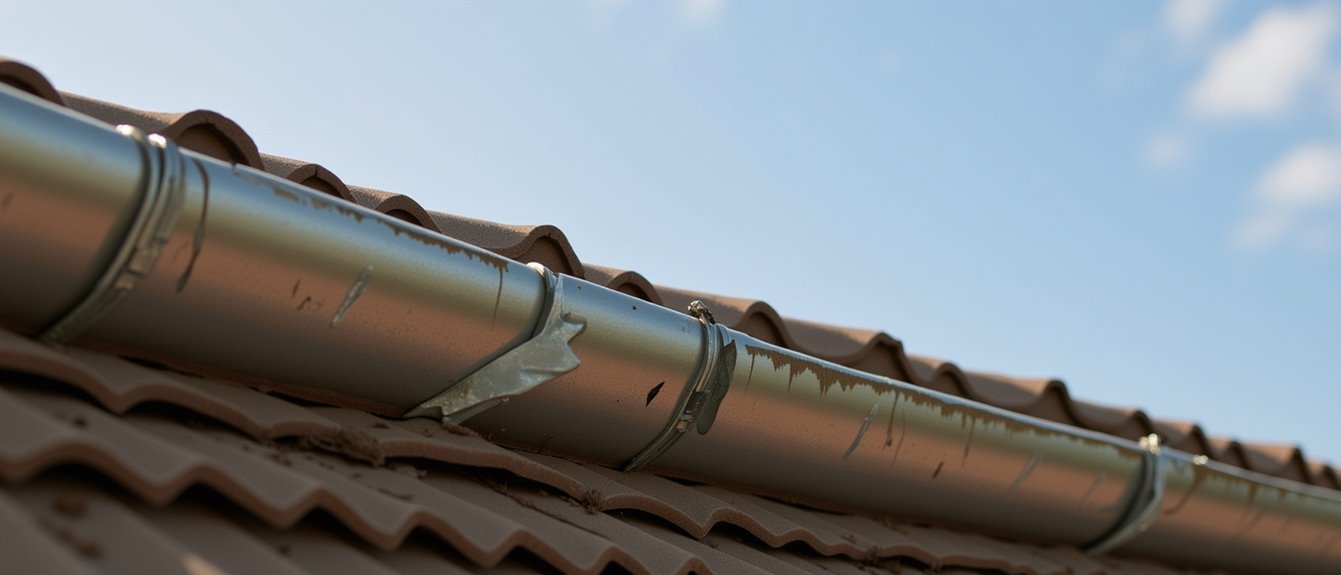
When you install K‑style gutters, position them with a 1/4-inch slope for every 10 feet and space hangers about 24 inches apart (reduce to 16 inches in heavy-snow areas) so water flows steadily and the system stays secure.
You’ll see K-style gutters made to hold more water than simpler profiles, and when properly installed they mean fewer leaks. Gutter repair services help ensure that any issues are promptly addressed, maintaining the longevity of your system.
Follow an Installing Gutters checklist and a maintenance schedule: inspect twice a year, clear debris, and check corners and downspouts.
Watch for rust on steel or cracks in vinyl to catch common problems early.
- Ladder, gloves, and sealant ready.
- Hangers spaced and slope confirmed.
- Leaves removed from corners and outlets.
- Rust or cracks patched promptly.
Frequently Asked Questions
What Are Common Problems With K-Style Gutters?
Like a clogged throat, K-style gutters commonly trap debris, causing overflow. You’ll face blockages, sagging from too-few hangers, leaks, rusted steel or cracked vinyl, and improper sizing/installation that leads to overflow and foundation risk.
How Long Do K-Style Gutters Typically Last?
They typically last 10 to 30 years depending on material and care; aluminum often endures 20-30 years, vinyl 10-20, galvanized about 20, and copper can exceed 50 years if you maintain and install them properly.
What Is the Most Common Style of Gutters?
K‑style gutters are the most common, used on about 80% of U.S. homes. You’ll choose them for their higher water capacity, seamless options that reduce leaks, and affordable material choices like aluminum, copper, or vinyl.
Are Half-Round Gutters More Expensive Than K-Style?
Yes, you’ll usually pay more for half-round gutters; their curved design and pricier materials and installation raise costs. K-style is typically cheaper per linear foot, though material and regional variations can affect pricing.