
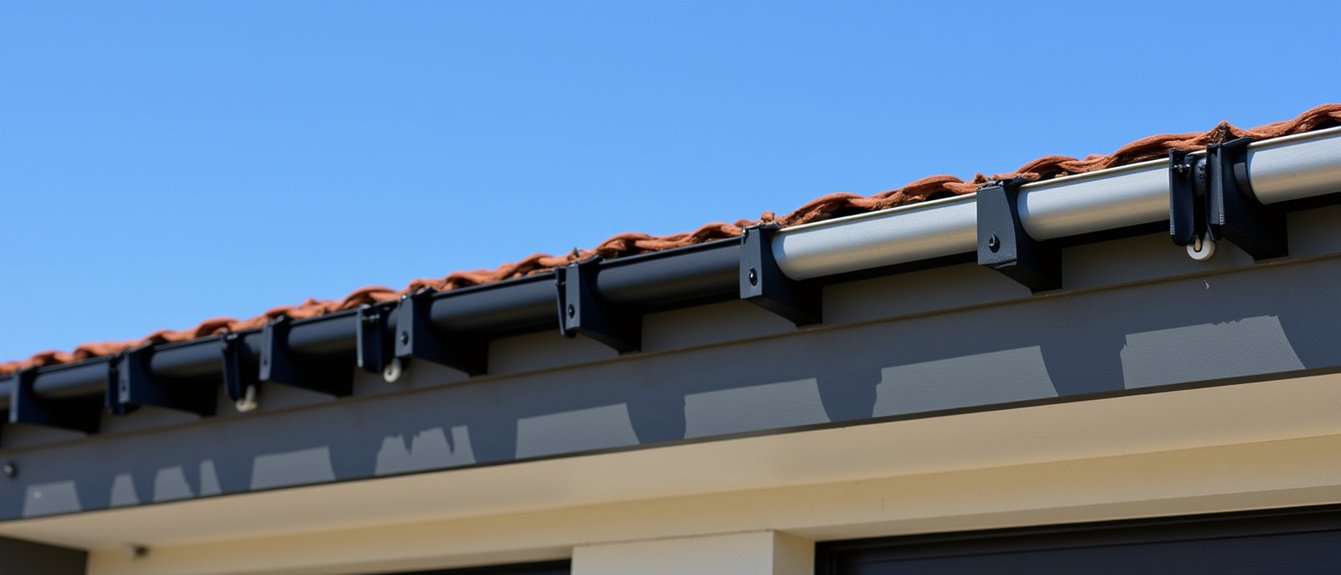
Summary: This guide compares six gutter types for home renovation: K-style, half-round, box-style, aluminum, copper/zinc, and vinyl/steel, covering costs, lifespan, and best uses. Choose based on roof size, home style, budget, and storm load to ensure effective water management and long-term durability.
For your renovation, you’ll want six gutter types to match roof size, style, budget and storm load: K‑style for a clean, efficient standard; half‑round for historic or decorative homes; box gutters for large roofs and heavy runoff; aluminum for a lightweight, rust‑resistant, low‑cost option; copper or zinc for exceptional longevity and patina; and vinyl or steel as budget alternatives with trade‑offs in durability. Keep these choices in mind, and you’ll find detailed options and pros‑cons ahead.
Highlights
- Choose K-style gutters for a finished, crown-molding look and efficient runoff in 5" or 6" profiles.
- Use half-round gutters to preserve historic aesthetics and reduce debris buildup with easier cleaning.
- Install box-style gutters for large roofs or heavy storms needing about 50% more capacity.
- Select aluminum gutters for a lightweight, rust-resistant, cost-effective solution available in many colors.
- Opt for copper or zinc when you want exceptional longevity, low maintenance, and a premium aesthetic.
K‑Style Gutters: Best for Most Renovations
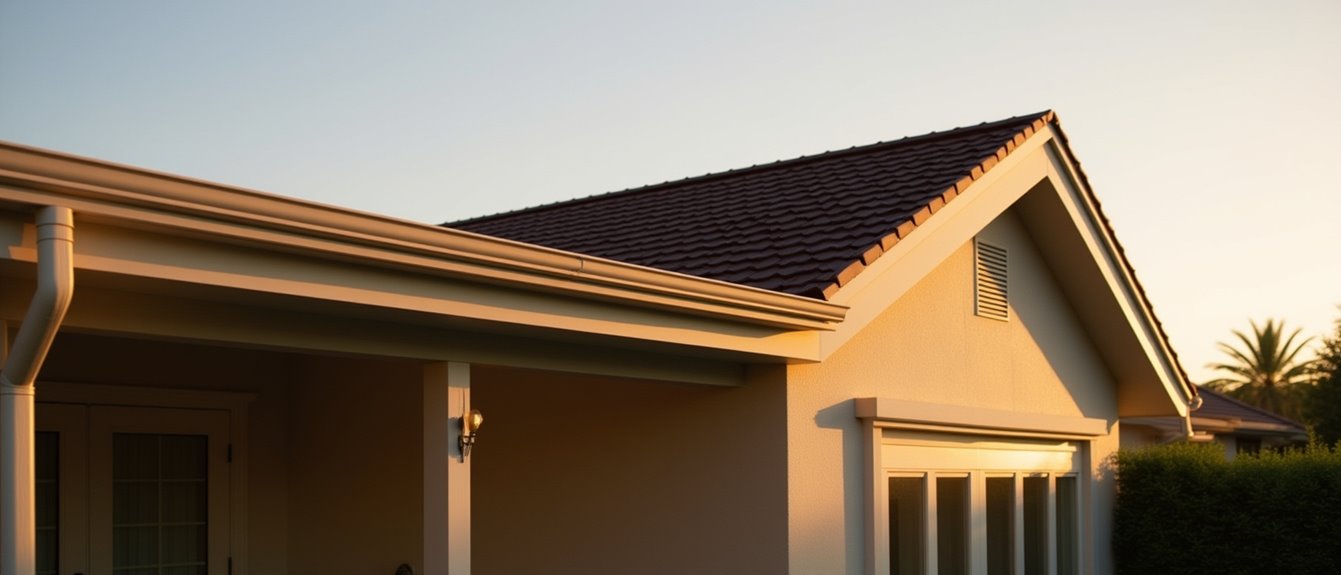
When you’re renovating, K‑style gutters give you a clean, finished look while handling runoff efficiently; their crown‑molding profile suits most home styles and boosts curb appeal without sacrificing performance. You’ll choose K-style gutters because they combine an aesthetic finish with practical capacity: 5-inch and 6-inch profiles handle more water runoff than rounded types thanks to their rigid shape. Made from aluminum, they’re durable and offer rust resistance, lasting up to about 25 years with minimal upkeep. Installation is straightforward, they attach to the fascia without extra brackets, so you’ll save time and preserve clean lines. Their versatility means they fit varied roof designs and neighborhood styles, making them a smart, long-lasting component of any home renovation. Additionally, seamless aluminum runs help prevent foundation washouts, ensuring your home remains protected during heavy rains.
Half‑Round Gutters: Ideal for Historic or Decorative Homes
Because their semicircular profile mirrors traditional architecture, half‑round gutters are the go‑to choice if you’re restoring a historic home or aiming for a decorative finish.
You’ll find half-round gutters both aesthetically pleasing and functional: the curved channel manages rainwater runoff with efficient water flow, reducing debris build-up and aiding clogging prevention.
For decorative homes, copper gutters offer a long lifespan and develop an attractive patina that enhances curb appeal.
Installation considerations differ from K-style systems, you’ll usually need additional brackets and precise slope to maintain performance, so plan for slightly higher labor and fastening points.
You’ll also appreciate easier cleaning access; overall, half‑round systems balance preservation of historic character with reliable water management for sensitive renovations. Additionally, gutter repair services can ensure that these systems function optimally, protecting your investment.
Box‑Style Gutters: For Large Roofs and Heavy Runoff
If your roof is large or you get heavy storms, box-style gutters give you the extra capacity and strength you need, carrying about 50% more water than standard K-style systems to cut the risk of overflow. You’ll choose box-style gutters when large roofs or heavy runoff threaten foundations; their oversized profile and durable materials handle volume and resist deformation. Expect professional installation to ensure correct slope, secure attachment, and effective downspouts placement to prevent water damage and soil erosion. Typical materials include galvanized steel and aluminum, offering a lifespan near 20 years with proper care. Additionally, seamless gutters custom-formed on site provide a clean appearance and reduce the risk of leaks. Compare basic attributes below to confirm fit for your project.
| Feature | Benefit |
|---|---|
| Capacity | Handles heavy runoff |
| Materials | Galvanized steel, aluminum |
| Maintenance | Professional installation reduces issues |
Aluminum Gutters: Durable, Low‑Maintenance Choice
Lightweight and rust-resistant, aluminum gutters give you a durable, low‑maintenance option that can last up to 25 years with basic care.
You’ll appreciate aluminum gutters for their rust-resistant finish, cost-effective pricing ($3, $10 per linear foot), and resistance to denting, which supports longevity and reliable water management.
They’re available in multiple colors for customization to match your exterior.
- Minimal maintenance: periodic cleaning prevents debris buildup.
- Durability: resists corrosion and weather-related damage.
- Cost-effectiveness: lower upfront cost and long service life.
- Performance: handles typical roof runoff efficiently.
Choose aluminum when you want a practical, durable solution that balances affordability, ease of care, and effective water management. Additionally, their custom sizing options ensure a perfect fit for your specific drainage needs.
Copper & Zinc Gutters: Long‑Lasting, Low‑Maintenance Metals
When you want gutters that combine exceptional longevity with low upkeep, copper and zinc are hard to beat; both metals resist corrosion and form protective patinas that cut down on maintenance while delivering lasting performance. You’ll choose copper gutters for classic aesthetic appeal and zinc gutters for a subtler finish, both supporting structural integrity and eco-friendly goals during home renovation. Expect longevity of around 50 years; that durability affects cost considerations versus frequent replacements. Installation should be handled professionally to protect performance and minimize leaks. Additionally, implementing preventive maintenance can significantly extend the lifespan of your gutters. Below is a concise comparison to guide your gutter installation decision.
| Feature | Copper Gutters | Zinc Gutters |
|---|---|---|
| Longevity | >50 years | Up to 50 years |
| Cost | $15, $25/ft | $15, $40/ft |
| Maintenance | Low | Low |
Vinyl & Steel Gutters: Budget Picks and Their Trade‑Offs
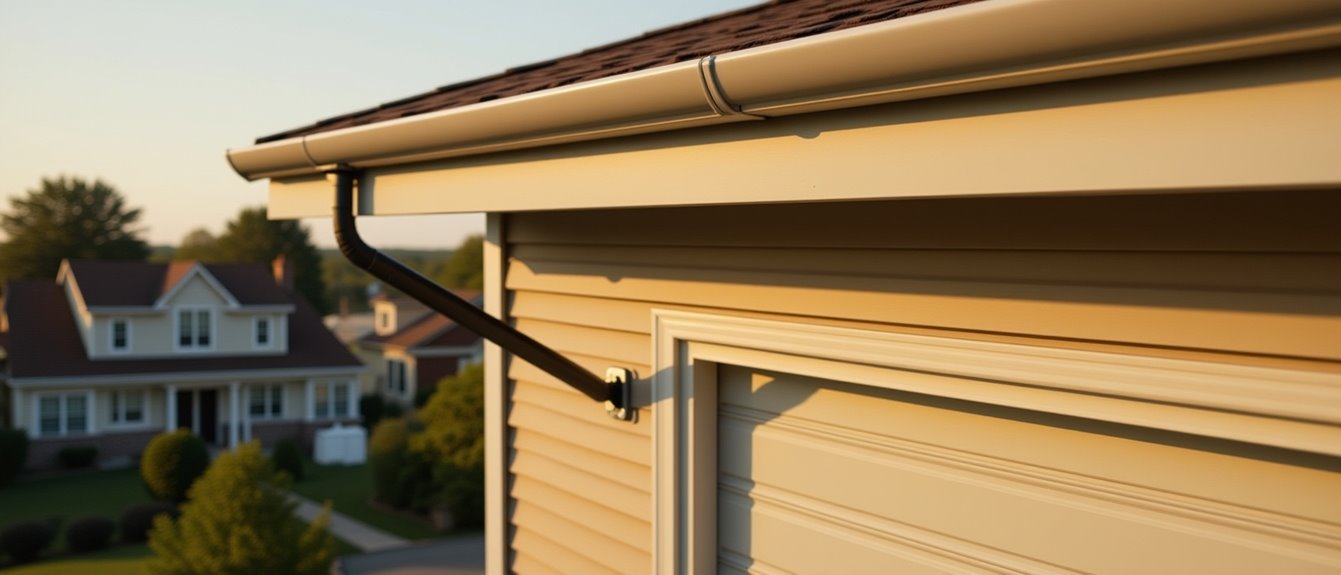
Think of vinyl and steel as the pragmatic, budget‑focused choices for gutters: vinyl runs $2, $6 per foot and gives you an easy, low‑maintenance install that’s vulnerable to cracking and brittleness in extreme cold.
Steel (galvanized or stainless) costs $8, $20 per foot, stands up better to heavy rain and impact but adds weight, rust‑risk, and maintenance requirements that can push you toward professional installation.
You’ll weigh cost-effective upfront pricing against long-term durability and maintenance.
Vinyl gutters offer a 10-20 year lifespan, are light and DIY-friendly, but less durable in cold.
Steel gutters can reach ~20 years with upkeep, resist heavy rainfall better, yet need rust prevention and stronger supports.
Consider these trade-offs:
- Upfront cost vs lifespan
- DIY installation vs pros
- Maintenance frequency
- Climate suitability
Frequently Asked Questions
What Length Gutters Does a 2000 Sq Ft House Usually Have?
You’ll typically need about 150 to 200 linear feet of gutters for a 2000 sq ft house. Measure roof slopes and eaves; account for downspouts and roof complexity, and consult a pro to confirm exact length.
How Much Does a Leaffilter Cost for a 1500 Square Foot House?
You’ll typically pay $1,500 to $3,000 for LeafFilter on a 1,500 sq ft house, plus $800, $1,500 if you hire pros; expect roughly $15, $25 per linear foot and up to 25 years of service.
Should I Replace 20 Year Old Gutters?
Yes, if they’re 20 years old, you should replace them. If they’re sagging, leaking, rusting, or overflowing, they’re failing; replace for better capacity, improved water control, and to avoid structural damage and costly repairs.
What Is the Rain Thing Instead of Gutters?
You’re asking about a rain chain: it replaces gutters visually and guides roof runoff via linked cups or chains into a drain or basin; it’s decorative yet functional, but needs proper outlet and freeze‑safe design for your site.