

Summary: Preventing gutter overflow requires cleaning gutters twice yearly and before storms, maintaining a 1/4 to 1/2 inch slope per 10 feet, securing hangers, and extending downspouts 6 to 10 feet from the foundation. Adding gutter guards and scheduling annual professional inspections further reduce clogs and costly water damage.
You should check and clean gutters twice yearly and before storms to spot clogs, sagging, leaks, or joint separations. Clear debris with a hose or plumbing snake, tighten hangers, reseal small leaks, and ensure a 1/4-1/2 inch drop per 10 feet toward downspouts. Use guards to reduce buildup, extend downspouts 6-10 feet, and add splash blocks or drains. Schedule annual professional inspections for sizing and major repairs, and continue for step‑by‑step prevention and fixes.
Highlights
- Clean gutters and downspouts at least twice yearly and before storms to remove leaves and debris that cause clogs.
- Maintain a 1/4-1/2 inch slope per 10 feet toward downspouts to ensure consistent water flow and prevent pooling.
- Inspect and secure hangers, brackets, and seams; tighten or add supports if gutters sag more than 1/4 inch.
- Use gutter guards to reduce buildup, but still perform seasonal inspections and cleanings to prevent hidden clogs.
- Extend downspouts 6-10 feet from the foundation or use temporary extensions during heavy rain to divert water away.
Quick Fixes to Stop Gutters Overflowing in a Storm
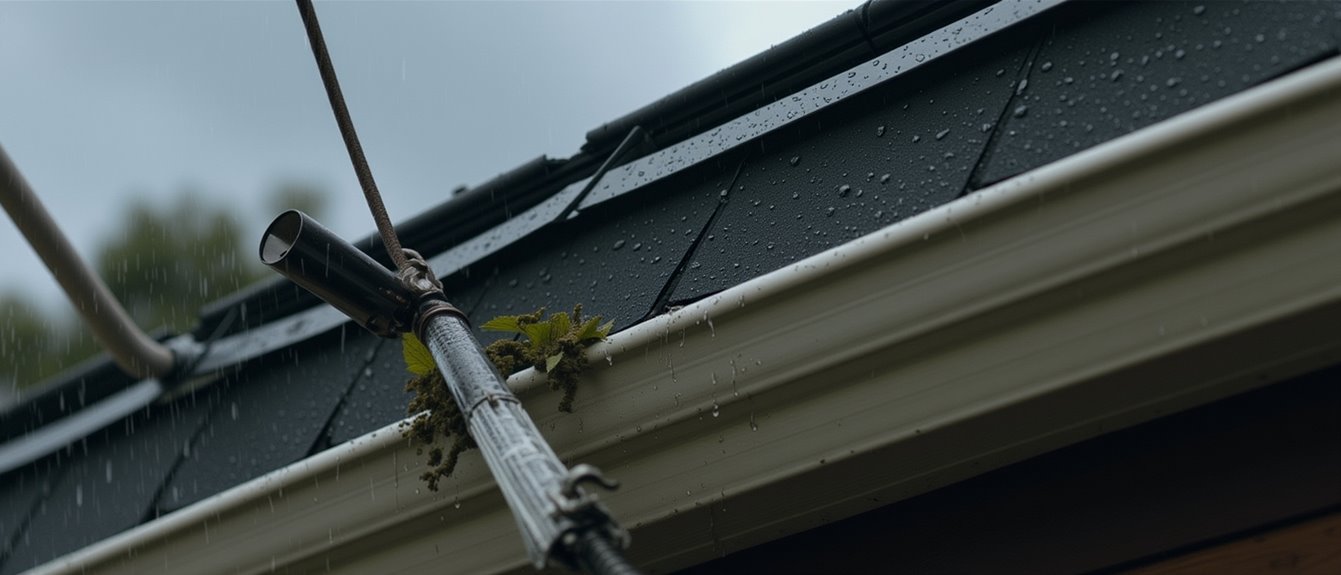
If heavy rain's on the way, inspect your gutters and downspouts for leaves and debris so water can flow freely. Clearing clogs with a plumbing snake or a high-pressure hose and making sure gutters slope 1-2 inches per 10 feet toward downspouts will stop most overflows.
You should prioritize quick fixes: remove visible debris, run water to confirm water flow, and clear stubborn blockages in downspouts immediately. Consider temporary downspout extensions to divert flow away from foundations during storms.
Installing gutter guards can help reduce future buildup, but don’t rely on them alone, regular maintenance still matters. Dependable gutters are essential for preventing overflow, so inspect your gutters before each season and after heavy winds to protect your roofline and address small issues before they become costly.
Clean Gutters to Prevent Overflow (Tools, Safety, Frequency)
Because clogged gutters cause most overflows, clean them at least twice a year, spring and fall, and use the right tools and safety gear to do it efficiently: set a sturdy ladder on level ground, wear heavy-duty gloves and eye protection, remove debris by hand or with a small trowel or gutter scoop, then flush the troughs and downspouts with a hose to confirm flow; keep a plumbing snake handy for stubborn downspout clogs and consider gutter guards to cut down on how often you need to climb up. You'll clean your gutters to prevent clogs, using tools that prioritize safety and efficiency. Following a clear frequency, remove debris fully, and think about installing gutter guards to reduce maintenance. Additionally, a detailed inspection can help identify leaks and damages that might require immediate attention.
| Task | Tool | Outcome |
|---|---|---|
| Debris removal | Gutter scoop | Clear channel |
| Flush test | Hose | Confirm flow |
| Downspout clog | Plumbing snake | Restored drain |
| Prevention | Gutter guards | Less frequent cleaning |
Inspect and Fix Sags, Leaks, and Joint Separations
Inspect your gutters regularly for sags, leaks, and loose joints so small issues don't turn into costly water damage.
When you inspect, look for sagging gutters, a tilt over 1/4 inch can cause pooling. If you find sagging gutters, tighten hangers or add supports to restore the proper slope.
Check seams and joints for leaks; apply gutter sealant to small gaps or replace damaged sections to stop water escape.
Test and correct joint separations by realigning and fastening connectors; use rivets or new brackets to secure connections.
Verify downspouts are aligned to carry water 6-10 feet from the foundation.
Use a level and aim for 1/4 inch drop per 10 feet to ensure optimal drainage and prevent repeat problems. Additionally, regular inspections can help identify potential water damage before it escalates into more significant issues.
Check and Correct Gutter Slope and Alignment
You’ve already fixed sags, leaks, and loose joints; now make sure the gutters actually slope toward the downspouts so water moves away from the house.
Start by measuring gutter slope: aim for 1/4 to 1/2 inch drop per 10 feet to ensure proper drainage. Use a level to check alignment along each run; visible water pooling or overflowing gutters signals an improper tilt.
To correct tilt, adjust hangers or brackets and resecure the gutter at the measured angle so water flows consistently to downspouts.
After heavy rain, monitor gutters for signs you missed, repeat checks help catch gradual shifts.
Regular gutter maintenance that includes routine slope inspections prevents water pooling, reduces overflow risk, and protects your foundation. Additionally, consider installing leaf guards to minimize debris accumulation, further enhancing drainage efficiency.
Pick and Install the Right Gutter Guards
Choosing and installing the right gutter guards can cut your cleaning time dramatically and keep water flowing where it should, start by matching guard type and material to your gutter profile and local weather so they’ll actually perform during heavy rain or snow. Pick mesh screens or solid covers rated to reduce debris accumulation by up to 90%. Ensure installation secures the guard to the gutter lip so water flow continues while leaves and twigs are blocked. Prefer durable materials like stainless steel or aluminum for long life and resistance to heavy rainfall and ice. Inspect guards seasonally as part of routine maintenance to prevent overflowing. The right choice saves time and protects your system. Additionally, consider using custom sizing options to ensure optimal performance in your specific environment.
| Type | Material | Benefit |
|---|---|---|
| Mesh | Stainless steel | Fine debris exclusion |
| Solid | Aluminum | Heavy flow shedding |
| Foam | Polyurethane | Easy fit, frequent checks |
Upsize Gutters and Add/Relocate Downspouts When Needed
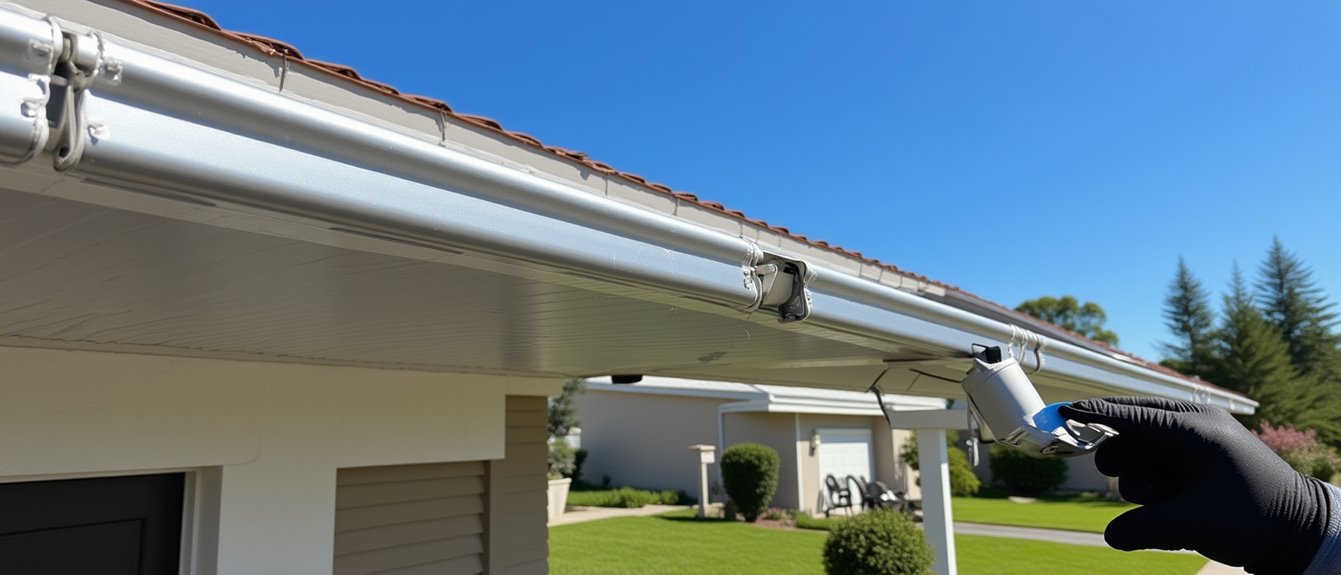
If your gutters overflow during storms, consider upsizing them and adding or relocating downspouts so water is carried well away from your foundation.
First, assess your existing gutter system during heavy rainfall to see if volume exceeds capacity; undersized gutters often cause overflowing and downstream water damage.
Consult a professional installer to size larger channels and appropriately sized downspouts. Aim to route downspouts 6-10 feet from the house and relocate them to spots with better drainage to prevent pooling.
During routine maintenance, clean gutters and check alignment and slope so water flows unimpeded into downspouts.
Proper sizing, positioning, and periodic inspection will reduce overflow, limit foundation risks, and keep your drainage functioning reliably.
Manage Roof Runoff: Splash Blocks, Drains, and Dry Swales
Once your gutters and downspouts are sized and positioned to move roof water away from the foundation, manage where that runoff lands: use splash blocks to direct downspout flow away from the foundation, install buried drains like French drains to carry excess water to safe discharge points, and consider shallow, vegetated dry swales to slow, filter, and infiltrate stormwater.
You’ll reduce gutter overflow and lower the risk of foundation damage when you combine these elements into a cohesive drainage system. Prioritize correct slope, outlet placement, and durable materials. Maintain them to prevent clogging and erosion, and to manage roof runoff year-round.
- Place splash blocks on stable grade to prevent soil washout.
- Tie buried drains to a safe discharge point.
- Plant and mow swales for filtration and infiltration.
Seasonal and Storm‑Ready Maintenance Checklist
Start with a quick twice‑yearly cleaning schedule, spring and fall, and add a pre‑storm inspection whenever heavy rain's forecast so your gutters and downspouts are clear and ready.
Regularly Clean by removing debris like leaves and twigs to prevent Clogged Gutters; use a scoop and a brush to dislodge compacted material.
For Pre-Storm Inspections, check joints, slope, and fasteners; confirm gutters tilt about 1/4 inch per 10 feet toward Downspouts.
Test Water Flow with a hose to ensure unobstructed drainage.
Consider Gutter Guards Installation to cut maintenance and slow debris buildup, but still check beneath guards.
Ensure Downspouts direct water 6-10 feet from the Home’s Foundation to avoid pooling.
Keep records of dates and actions so you catch problems before they cause damage.
When to Call a Pro: Inspections, Repairs, and Replacements
Keeping up with twice‑yearly cleanings and pre‑storm checks will catch many problems, but there are clear signs that call for professional help. You should schedule professional inspections at least once a year to spot clogs, improper slopes, cracks, or other issues in your gutter system before they cause overflowing.
Call for professional assistance immediately if you see sagging gutters or signs of structural damage.
- Persistent overflowing during rain, pro evaluation of downspouts and gutter size.
- Visible cracks, rust, or leaks, prompt repairs to prevent escalation.
- Old or undersized systems, consider replacement to match local rainfall.
A pro will diagnose, recommend repairs or replacement, and prevent water damage efficiently.
Frequently Asked Questions
Can Clogged Gutters Attract Pests or Insects to My Attic?
Like a buffet sign, yes, clogged gutters lure pests and insects into your attic by providing moisture, shelter, and food sources; you’ll prevent infestations by clearing debris, fixing leaks, installing guards, and inspecting regularly.
Can Gutter Overflow Cause Landscape Soil Erosion Around My Foundation?
Yes, if gutters overflow, you'll get concentrated water at the foundation, which will wash away topsoil, undermine plantings, create slope changes, and increase settling risk; regularly divert water and extend downspouts to prevent erosion.
Are Aluminum and Vinyl Gutters Recyclable When Replaced?
Yes, you can recycle aluminum gutters widely; they’re valuable scrap metal. Vinyl’s recyclable less commonly, but some facilities accept it. Check local recycling centers, builders’ yards, or scrap dealers before disposal to avoid landfill.
Do Leaf Blowers Damage Gutter Guards or Compact Debris?
Like a sharp gust, yes, you can damage some gutter guards or compact debris with a powerful leaf blower. You’ll want to use low settings, angled blasts, and test a small section first to avoid bending or packing.
Can Overflowing Gutters Void My Homeowner’s Insurance Coverage?
Yes, if neglected overflowing gutters cause water damage, your insurer may deny claims tied to lack of maintenance. You should document inspections, clean regularly, and keep receipts to prove reasonable upkeep and reduce denial risk.