
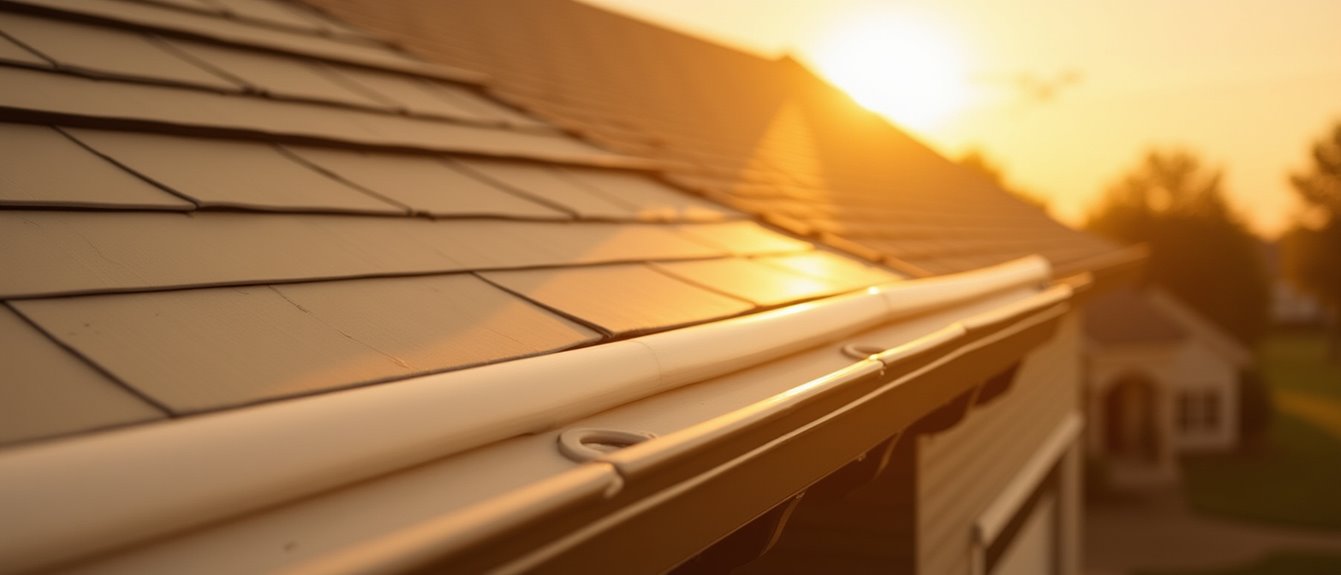
Summary: Fiberglass gutters resist rot, rust, and impact, need little upkeep, and often carry a 50-year warranty. They outlast wood, vinyl, and aluminum while holding more water, making them a practical, low-maintenance choice for most homes.
You’ll get gutters that resist rot, rust, and impact while needing minimal upkeep and no painting. Fiberglass lasts significantly longer than wood, vinyl, or aluminum, carries up to 40% more water, and often comes with a 50-year warranty for added peace of mind. Seamless, UV-stable gelcoat keeps colors and woodgrain finishes looking sharp without sealing. They’re lighter yet strong for historic and modern homes, and below you'll find specs, care tips, and installation notes.
Highlights
- Durable and corrosion-resistant, lasting up to 50% longer than traditional gutter materials.
- Low-maintenance: no painting, sealing, or frequent repairs required.
- High capacity and seamless options reduce leaks and handle up to 40% more rainwater.
- Impact- and temperature-resistant, performing down to -40°F without cracking or warping.
- Aesthetic, woodgrain finishes and custom colors enhance curb appeal with lower lifetime costs.
Why Choose Fiberglass Gutters? (Quick Answer for Buyers)
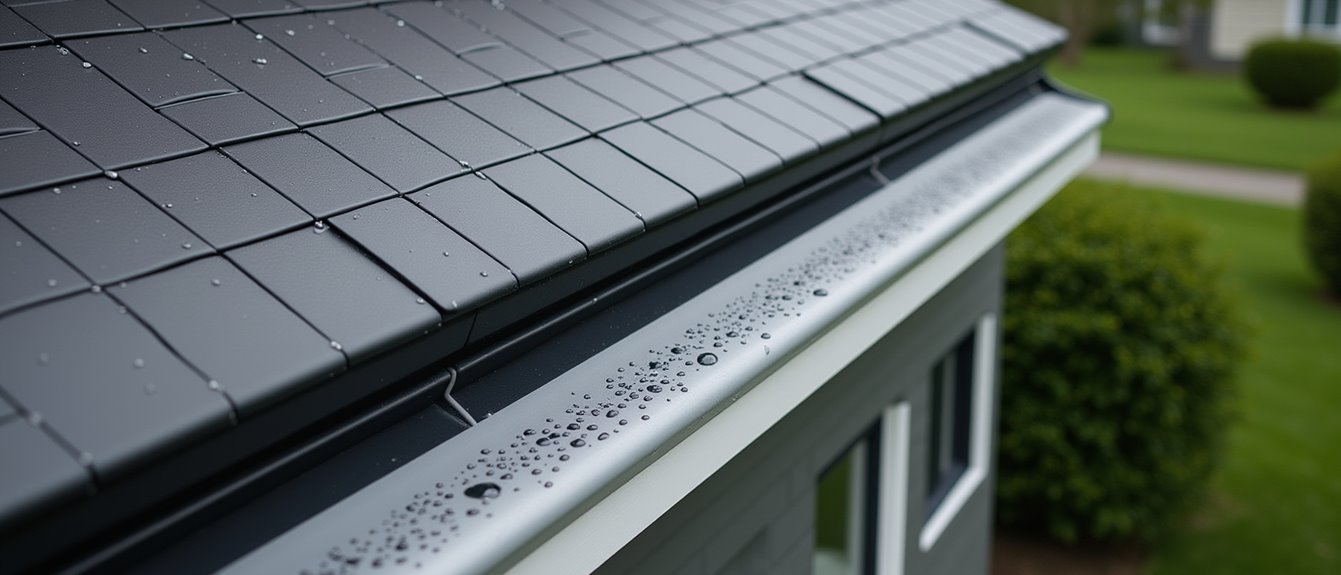
Choose fiberglass gutters if you want a low‑maintenance, long‑lasting solution: they resist rust and corrosion, last up to 50% longer than many traditional materials, and come with a 50‑year warranty for real peace of mind.
You’ll appreciate that fiberglass gutters need only routine cleaning, no painting or sealing, thanks to a realistic woodgrain finish that holds up visually without extra work.
Their leak‑proof design manages water efficiently, holding up to 40% more rainwater than wood gutters and reducing overflow risk during heavy storms.
Because they’re completely resistant to corrosion, you won’t worry about weather‑related deterioration or frequent replacements.
If you want durable performance and predictable long‑term costs, fiberglass gutters deliver practical value and reduced maintenance effort. Additionally, custom-fit seamless gutters provide optimal protection for your property, ensuring efficient water management.
Fiberglass vs. Wood, Aluminum, and Vinyl
If you’re comparing materials, fiberglass stands out for durability and low upkeep. You’ll get a fiberglass gutter that lasts up to 50% longer than traditional wood, cutting replacement frequency and long-term cost.
Unlike wood, fiberglass resists rot, splitting, and cracking, so you won’t need oiling or painting. Compared with aluminum, fiberglass’s seamless options reduce leak points and handle debris buildup better, minimizing damage from clogs.
Versus vinyl, fiberglass delivers a superior strength-to-weight ratio, so it holds up under weather and stress without warping.
Backed by a 50-year warranty, a fiberglass gutter gives you assurance beyond typical wood, aluminum, or vinyl lifespans, making it a practical, low-maintenance choice. Additionally, fiberglass gutters are custom-formed on site, ensuring a perfect fit for optimal drainage.
| Feature | Fiberglass | Traditional Materials |
|---|---|---|
| Lifespan | Up to 50% longer | Shorter lifespan |
| Water capacity | Up to 40% more | Standard capacity |
| Maintenance | No painting or sealing | Requires upkeep |
| Cold tolerance | Down to -40°F | Prone to cracking |
| Warranty | Up to 50 years | Typically shorter |
Fiberglass Gutter Durability: Rot, Corrosion, and Impact Resistance
Durability matters when you’re selecting gutters, and fiberglass delivers: it won’t rot or corrode, tolerates temperatures down to -40°F, and resists impacts that dent or chip aluminum, copper, or wood.
You’ll get a system that stays structurally sound in wet climates and extreme cold because fiberglass is 100% resistant to rot and corrosion and maintains integrity under stress. Its seamless design also cuts leak points common with joined systems.
Consider these practical comparisons:
- Long-term structural integrity, no rot, no corrosion, stable in freeze.
- Impact resistance, far less denting or chipping than aluminum, copper, or wood.
- Reduced leak risk, seamless runs lower joint failures and water damage.
That combination gives you reliable, low-failure performance backed by long warranties.
Low Maintenance and Long‑Term Cost Savings
Because fiberglass gutters don’t need painting, sealing, or complex repairs, you’ll spend far less time and money on upkeep, mostly just routine cleaning, while their UV-resistant gelcoat keeps colors vibrant without repainting. That low-maintenance profile translates directly into long-term cost savings: you’ll replace a fiberglass gutter system far less often, since it can last up to 50% longer than traditional options. The leak-proof design and resistance to rot and corrosion also reduce the risk of expensive water damage repairs. Because fiberglass holds up to 40% more rainwater than wood gutters, you’re less likely to face overflow-related flooding and the associated repair bills. Additionally, experienced technicians ensure that your gutter system functions optimally throughout its lifespan.
Aesthetics & Customization: Woodgrain, Profiles, and Colors
Along with lower upkeep and long-term savings, fiberglass gutters give your home a finished, upscale look that you won’t have to maintain.
You’ll get realistic woodgrain texture that mimics authentic timber without the rot or painting, so the curb appeal stays consistent.
Classic profiles, like the traditional 4"x5", preserve historic proportions while fitting modern builds.
You can also choose custom colors to match trim or let the natural finish read as genuine wood.
- Woodgrain texture: authentic appearance, low maintenance.
- Classic profiles: traditional 4"x5" size for architectural harmony.
- Color options: paint or factory hues to coordinate your design.
Fiberglass gutters combine timeless elegance with practical performance to enhance your home’s aesthetic.
Environmental Advantages and Rainwater‑Harvesting Benefits
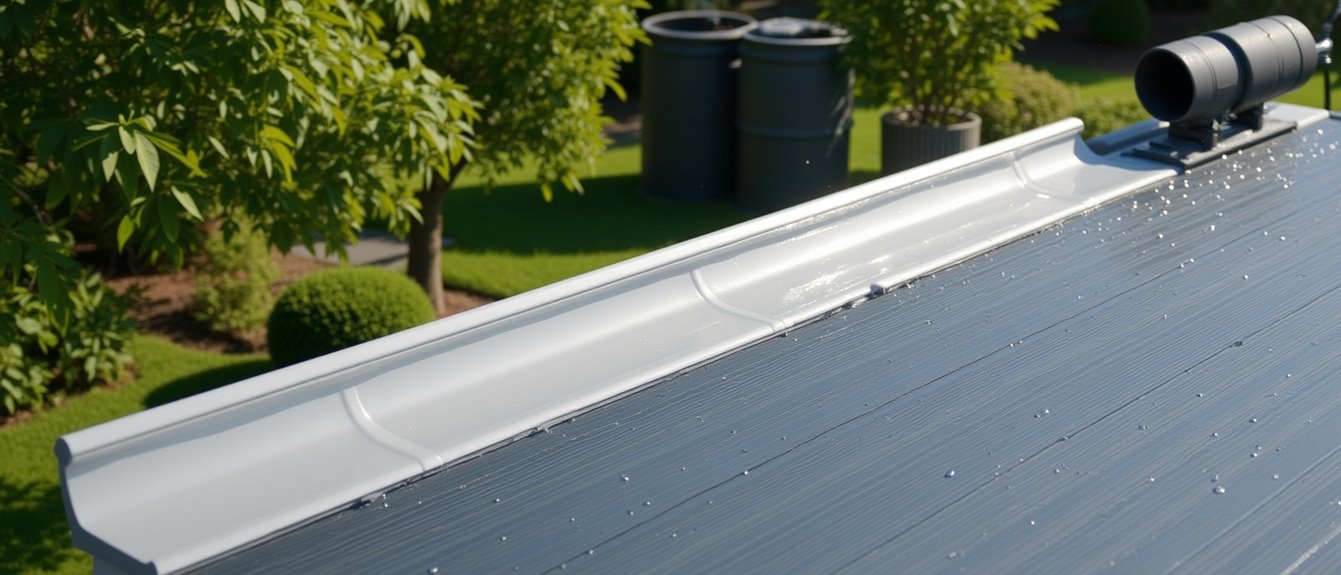
When you choose fiberglass gutters, you cut the embodied energy and transport emissions tied to installation, manufacturing uses about 40% less energy than many metal alternatives, and the lightweight sections lower fuel use during delivery, so your project has a measurably smaller carbon footprint.
You’ll also reduce long‑term waste because fiberglass gutters resist corrosion and damage, meaning fewer replacements and less landfill contribution over time. Their leak‑proof seams keep runoff predictable, minimizing erosion and protecting soil around foundations and landscaping.
Efficient flow performance makes fiberglass gutters an excellent feed for rainwater‑harvesting systems, so you can reliably collect and reuse water for irrigation or gray‑water needs.
Best Applications: Historic Homes, Porches, Pools, and Commercial Use
If you want gutters that blend traditional looks with modern performance, fiberglass is a smart choice for historic homes, porches, pool areas, and commercial projects. You’ll get authentic wood appearance without the upkeep, so historic homes retain character while gaining durability.
Porches benefit from lightweight, strong fiberglass gutters that resist warping under sun and rain. Around pools, corrosion‑proof fiberglass gutters handle constant moisture and chlorinated environments.
Commercial sites use fiberglass gutters to move up to 40% more water, lowering flood and damage risk. Consider custom runs for wraparound porches and large decks to match lines and capacity.
Practical advantages include aesthetics, low maintenance, and superior moisture resistance.
- Historic curb appeal with durability
- Porch and pool moisture resilience
- High-capacity commercial drainage
Specifying and Installing Fiberglass Gutters: Specs, Installers, and Care
Because you’ll want reliable, low‑maintenance performance, specifying and installing fiberglass gutters starts with clear performance criteria and qualified installers.
You’ll use the comprehensive 3‑part specification to define leak‑proof design, thermal performance, and attachment details so bids are comparable.
Choose certified installers, such as FiberGutter technicians, who apply military‑grade durability standards for resistance down to −40°F.
During installation insist on stainless steel screws without brackets to preserve a seamless appearance and structural integrity.
You won’t need painting or sealing; routine cleaning is the main maintenance task. Thorough debris removal ensures that your gutters function optimally and prevent water damage.
With correct specification and installation, fiberglass gutters can last up to 50 years, cutting long‑term upkeep and lifecycle costs.
Review warranty and maintenance guidance with your installer before sign‑off.
Frequently Asked Questions
Why Do New Builds Not Have Gutters?
About 40% of new builds skip gutters to cut costs and simplify design; you’ll often see builders relying on roof slope, regional code leniency, modern roofing, or homeowner deferral, trusting landscaping and drainage instead.
Can Mice Come Through Gutters?
Yes, mice can come through gutters if there are gaps or debris providing access. You should seal openings, keep gutters clean, and consider seamless materials or guards to eliminate footholds and nesting opportunities, reducing rodent entry effectively.
What Length Gutters Does a 2000 Sq Ft House Usually Have?
You’ll typically need about 150 to 200 linear feet of gutters for a 2,000 sq ft house. Account for roof overhangs, join standard 10-20 ft sections, and plan 2-4 downspouts per code.
What Is the Average Price of Having Your Gutters Cleaned?
You’ll typically pay about $100 to $250 to have your gutters cleaned, or roughly $0.50 to $2.00 per linear foot; multi-story homes or debris-heavy jobs can push costs higher, so get a written estimate.