
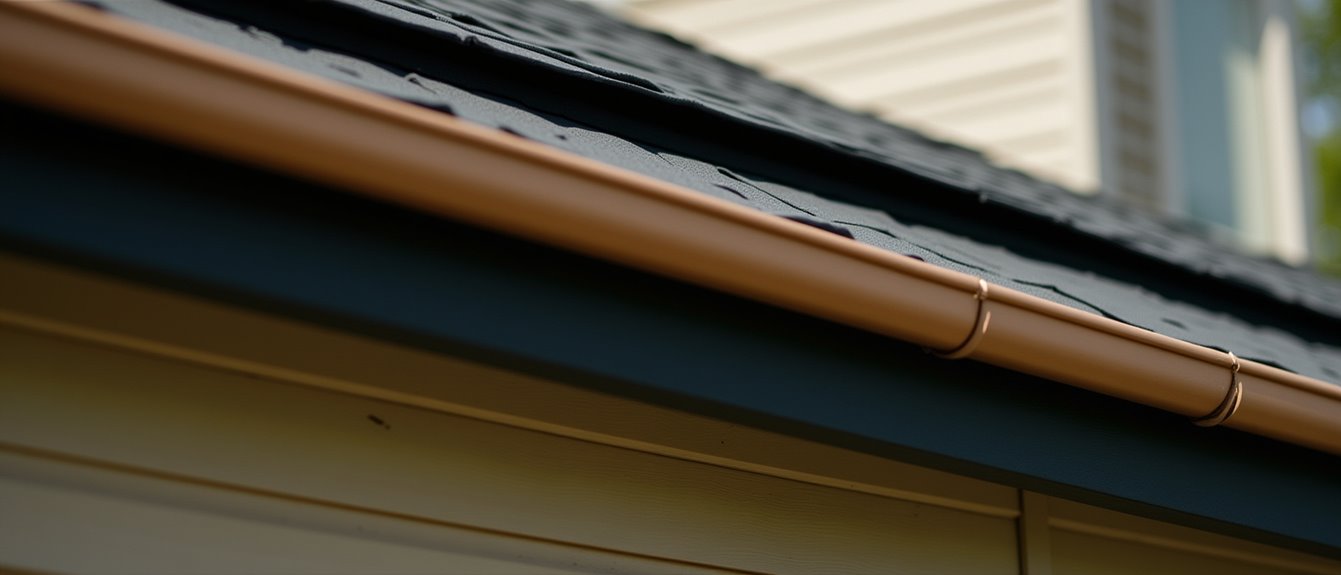
Summary: Choosing gutter colors that match your roof, trim, and siding creates a cohesive exterior, with light homes suited to white or beige, dark homes to black or bronze, and neutrals offering broad, lasting appeal. Test choices with mock-ups or samples and check HOA rules before committing.
Choose gutter colors that tie your roof, trim, and home style together so your exterior looks intentional and clean. For light facades, go white, off-white, or beige for brightness; for dark siding, use black, charcoal, or bronze to hide grime and add depth. Neutral grays and greiges suit modern homes and varied roofs, while greens or blues make bold accents. Consider maintenance, climate, and roof material, keep going to see practical examples and testing tips.
Highlights
- Match gutters to trim or roof for visual cohesion, white or cream for light homes, dark gray or black for modern exteriors.
- Use neutral tones (gray, brown) for long-term appeal and compatibility with varied architectural styles.
- Choose dark gutters (black, charcoal, bronze) to hide dirt and streamline silhouettes on darker siding.
- Consider bold accents (greens, blues) or colored downspouts for personality while keeping the main gutters neutral.
- Test colors with digital mock-ups and physical samples, and consult pros to account for climate and HOA rules.
How to Pick the Right Gutter Color (Quick Guide)
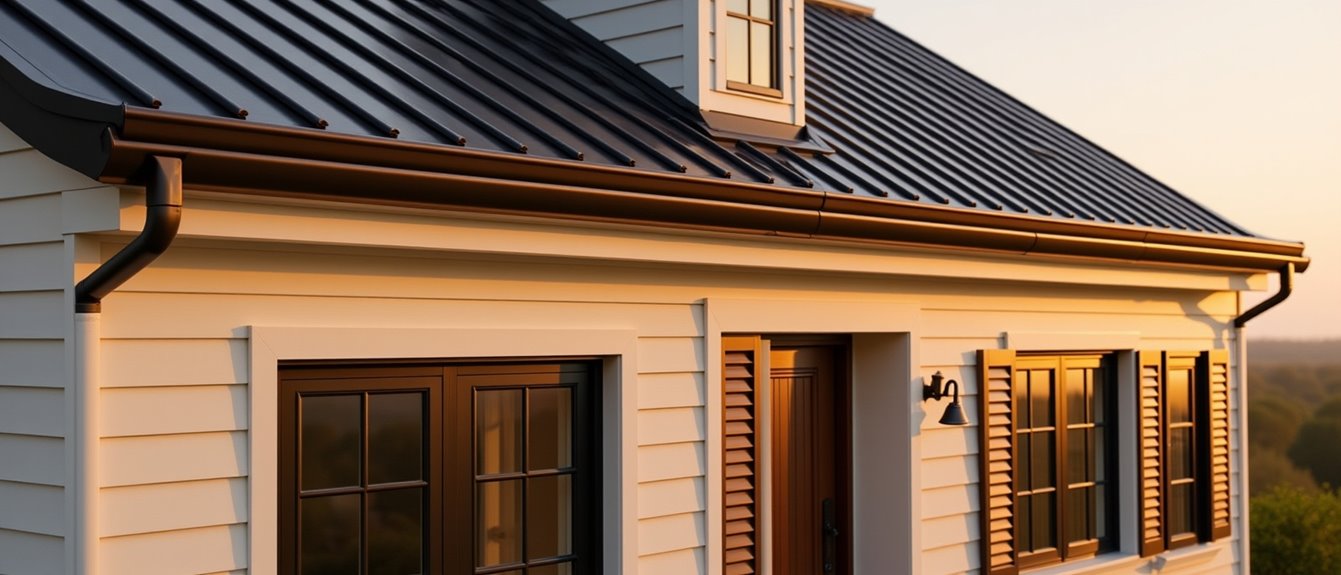
Want gutters that look intentional, not tacked on? You’ll start by studying your exterior color palette so gutter colors either complement or provide a deliberate contrast with siding, roof, and trim for a cohesive look.
For traditional homes, stick with classical colors like white or beige; for modern designs, consider black or dark gray to add crisp accents. Factor in local climate: darker gutters absorb heat, helpful in cold areas but prone to showing dust, and pick materials and finishes that aid dirt hiding.
Versatile neutrals such as gray or brown offer long-term appeal across styles. Finally, check HOA regulations early to avoid revisions. Additionally, consider custom-fit seamless gutters for optimal protection and aesthetics that blend seamlessly with your home’s design.
Make choices visually by viewing samples on the house at different times of day.
Key Factors to Consider When Choosing Gutter Color
You’ve already thought about matching gutters to siding, trim, and roof; now focus on the specific factors that should guide your final color choice.
Consider your home's architectural style, classic shades like white or beige suit traditional homes, while a modern look favors black or dark gray.
Think about overall design balance: use neutral tones for subtle integration or a contrasting gutter to emphasize lines.
Factor in local climate and maintenance; lighter gutter color shows dirt faster, darker hues hide stains and reduce upkeep.
Check neighborhood rules or HOA limits before deciding.
Finally, weigh long-term trends and resale value, pick a color that enhances curb appeal now and won’t date the house in a few years. Additionally, selecting materials like aluminum or copper can influence both color choice and durability in California’s climate.
| Exterior Type | Recommended Colors | Key Benefit |
|---|---|---|
| Light siding | White, beige, off-white | Brightens facade, crisp contrast |
| Dark siding | Black, charcoal, bronze | Hides grime, sharp look |
| Modern homes | Gray, greige, storm gray | Low maintenance, versatile |
| Rustic homes | Copper, faux copper, brown | Ties to natural materials |
| Bold statement | Green, blue accents | Adds personality, coastal feel |
Match Gutter Color to Your Roof Material and Color
When your roof sets the tone for the exterior, match your gutters to its material and color to create a cohesive, intentional look.
You’ll enhance visual cohesion by pairing gutter color with roof material: dark gray gutters complement gray roofs for a seamless, refined appearance that highlights architectural features.
White or cream gutters deliver bold contrast against dark roofs, offering clean lines that draw the eye.
For rustic homes with wood or stone roofs, brown or bronze gutters reinforce earthy tones and tie natural elements together.
If your roof’s hue is unique, choose neutral shades like beige or gray to remain versatile and complement future changes.
Thoughtful matching helps your exterior design feel deliberate and balanced. Additionally, consider gutter repair services to maintain the integrity and appearance of your gutters over time.
Best Gutter Colors for Light Exteriors (White, Beige, Off-White)
If your roof and trim already set a light, airy tone, choosing gutters that blend with pale siding keeps the look cohesive and refined.
For light exteriors, white gutters are a classic choice: they brighten facades, suit many styles, and deliver crisp contrast against blue sky.
Beige gutters bring subtle elegance, warming Mediterranean or coastal palettes without overpowering.
Off-white gutters offer a softer alternative to stark white, creating cozy, layered finishes, think Benjamin Moore Seapearl-like tones.
You’ll achieve visual harmony by matching gutters to coordinating trim colors, which preserves a cohesive look. Additionally, regular gutter cleaning is essential to maintain the aesthetic appeal and functionality of your gutters.
Keep maintenance considerations in mind: lighter colors show dirt and staining sooner, so plan routine cleaning.
Best Gutter Colors for Dark Exteriors (Black, Charcoal, Bronze)
Although dark exteriors make a bold statement on their own, choosing black, charcoal, or bronze gutters can sharpen that look while hiding wear and minimizing upkeep.
You’ll find black gutters give a crisp, modern aesthetics contrast that emphasizes architectural lines and helps conceal dirt in urban or leafy settings.
Charcoal gutters offer a subtler depth, pairing well with lighter trim to create measured contrast without overwhelming the facade.
Bronze gutters add warmth, tying dark paint to natural materials and lending rustic designs a refined edge.
Dark-colored gutters elevate curb appeal by streamlining silhouettes and reducing visible grime, so you’ll spend less time on maintenance while preserving a cohesive exterior design that reads intentional and well-crafted. Additionally, choosing custom sizing ensures that your gutters effectively manage rainwater and complement your home’s design.
Natural and Rustic Gutter Colors: Copper, Faux Copper, and Browns
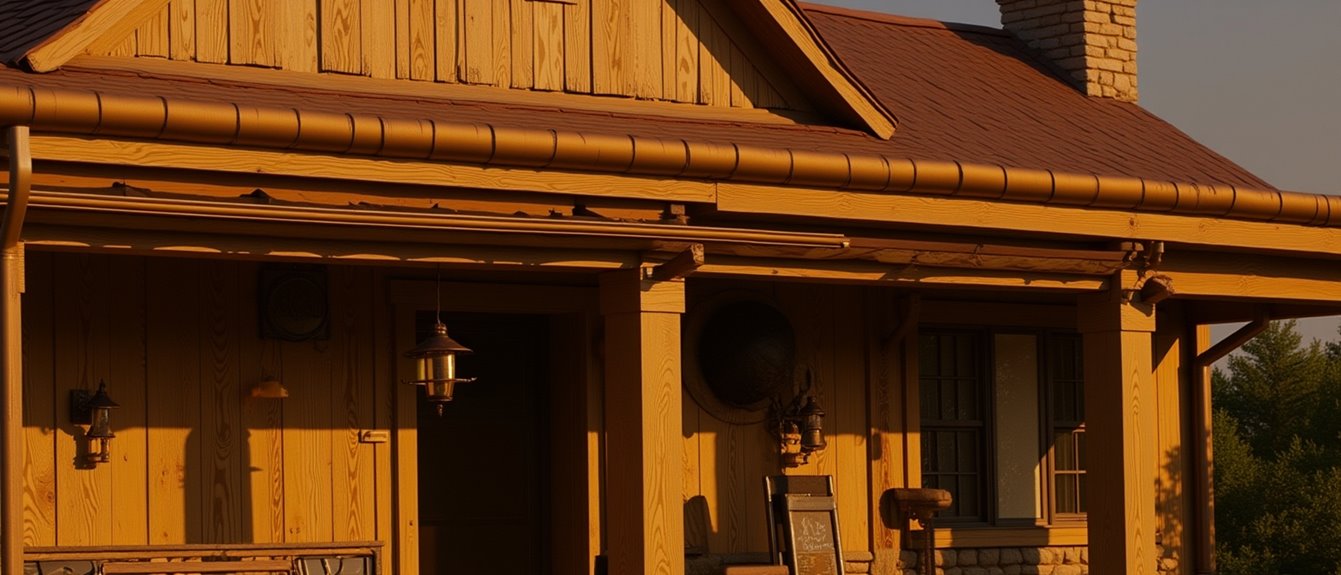
Three warm choices, copper, faux copper, and brown tones, can instantly ground a home's exterior, pairing naturally with wood, stone, and muted siding.
You’ll find copper gutters blend durability and patina, elevating both modern and traditional facades while echoing other natural colors and earthy tones.
If budget matters, faux copper gutters give the same rich look without the price, coordinating especially well with wood accents.
Brown gutters, Musket or Rustic Brown, offer understated warmth that complements cabin and farmhouse styles.
Bronze gutters deliver a deeper, sophisticated alternative that ties darker siding and stonework into a cohesive palette.
These rustic colors and design elements hide dirt and stains, cutting maintenance needs and boosting curb appeal, so your home feels intentionally settled in its landscape.
Best Neutral Modern Gutter Colors: Gray, Greige, Storm Gray
When you want a clean, contemporary finish that stays low‑maintenance, gray, greige, and storm gray gutters deliver, each shade bringing its own subtle personality:
Gray gives a seamless, understated elegance that suits many architectural styles, especially in urban settings, and anchors minimalist color palettes on modern homes.
Greige adds warm, textured contrast that pairs beautifully with stone or shake siding; you can deepen it with Sherwin Williams Urbane Bronze for richer depth.
Storm gray is highly versatile, hiding dirt and weathering while complementing both dark and light exteriors, which eases maintenance needs.
These neutral colors work across traditional and contemporary designs, helping you achieve exterior design balance.
Choosing any of them boosts design cohesion and keeps your home aligned with current trends.
Bold and Unique Gutter Color Ideas: Greens, Blues, and Accents
If you want gutters that read as design features instead of afterthoughts, consider bold greens and blues to add unexpected personality and tie your roofline to the landscape or sky.
Choose leaf green or forest green gutter colors to harmonize with gardens, reinforcing a natural aesthetic for cottages or wooded lots. Marine green offers a deeper tone that blends with foliage for a cohesive look, while cape blue makes a striking coastal statement.
Use unique gutter colors deliberately: paint only fascia or downspouts as accent colors to complement siding and trim without overwhelming.
These greens and blues boost curb appeal, let you express personal style, and help your exterior design feel intentional and tied to its surroundings.
Maintenance, Climate, and Dirt Visibility: Practical Impacts on Color
Because gutter color affects both upkeep and performance, think about how stains, heat, and local weather will show up on whatever hue you pick. You’ll notice light gutters, white or off-white, reveal dust and stains quickly, increasing maintenance.
In contrast, darker colors like black or bronze hide grime, offering low-maintenance options that blend with surroundings and dust-prone urban climates.
Remember heat absorption: dark tones can warm more in sunny regions, so weigh that against your local climate and roof materials.
Regardless of color, choose weather-resistant materials and durable finishes to resist corrosion from heavy rain or snow.
Match color choices to your exterior design while prioritizing practical durability, dirt visibility, and long-term upkeep.
How to Test and Visualize Gutter Colors Before You Commit
Although it might seem easy to pick a gutter color from a swatch, you’ll want to preview options against your actual home and in real light before committing.
Use online visualization tools and design software to mock up gutter colors on photos of your home exterior, toggling shades to evaluate contrast with roof, siding, and trim.
For a tactile check, paint small plywood samples and position them around the yard to observe how lighting conditions shift hue and perceived depth during the day.
Factor in local climate and maintenance: darker gutters hide dirt but change appearance in low light, while lighter ones may need more cleaning.
Consult a pro if you’re unsure, combining digital tools, physical samples, and attention to existing features ensures a cohesive design.
Frequently Asked Questions
Can Gutter Color Affect Home Resale Value?
Yes, the right gutter color can boost curb appeal and perceived care, subtly raising resale value; match or contrast thoughtfully, avoid odd hues, and buyers will notice cohesive, well-maintained exteriors that suggest overall quality and attention.
Are Colored Gutters More Expensive Than Standard White Ones?
Yes, colored gutters usually cost more than plain white ones because custom finishes, matching paint, or factory colors add material and labor expenses; you’ll pay extra for color matching, longer lead times, and sometimes premium coatings.
Do Local Building Codes Restrict Gutter Colors?
Yes, local building codes can restrict gutter colors, especially in historic districts or HOA areas. You should check zoning rules and design guidelines, obtain approvals when needed, and match approved palettes to avoid violations.
Can Painted Gutters Void the Manufacturer’s Warranty?
Yes, but not always. Check the fine print: some manufacturers void warranties if you alter coatings or use harsh paints. You’ll want to confirm approved paints, prep methods, and documentation before painting to protect coverage.
How Do Gutter Colors Perform on Commercial Buildings?
Gutter colors perform well on commercial buildings when you pick durable, UV-resistant finishes; they resist fading, hide dirt, and coordinate with branding. You’ll choose low-maintenance coatings that withstand weather, pollution, and frequent cleaning without degrading.