
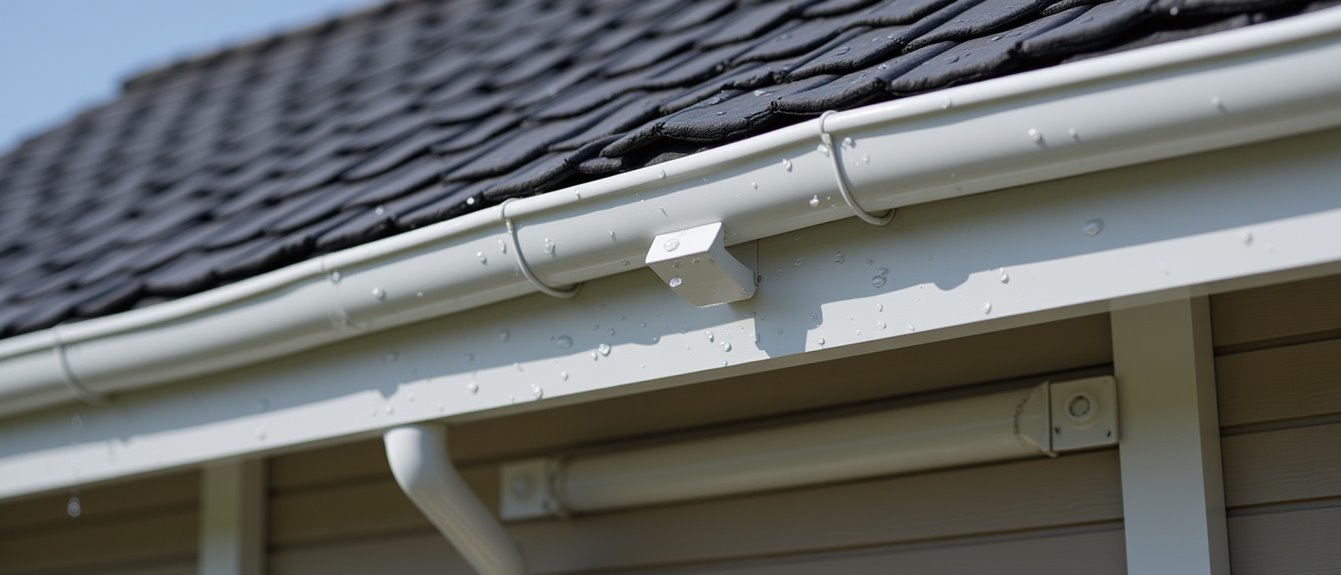
Summary: Fascia gutters replace the fascia board with a seamless, custom-fitted gutter that mounts to the rafter edge, offering higher capacity and a cleaner look than K-style or half-round gutters. Choosing the right material and keeping them maintained ensures 25 to 50+ years of reliable performance.
Fascia gutters replace your home’s fascia board with a seamless, custom‑fitted gutter that hides the roof edge and channels rainwater directly into downspouts. They bolt to the rafter edge for a clean look and higher flow capacity than hanging K‑style or half‑round gutters. Flashing and a consistent pitch keep water from seeping behind the roofline, and materials like aluminum, steel or copper affect lifespan and cost. Keep them clear and maintained, and you’ll get longer service life, learn how they compare and install.
Highlights
- Fascia gutters are custom, seamless gutters that replace the fascia board and form a flush roofline edge for rain collection.
- Installed on the rafter edge, they channel water along a consistent pitch toward integrated downspouts.
- Flashing behind the gutter prevents water infiltration between roof and wall for long-term protection.
- Made from aluminum, steel, copper, or composite, they offer 25-50+ year lifespans depending on material.
- They provide higher capacity and a cleaner look than K-style or half-round gutters but cost more to install.
What Are Fascia Gutters
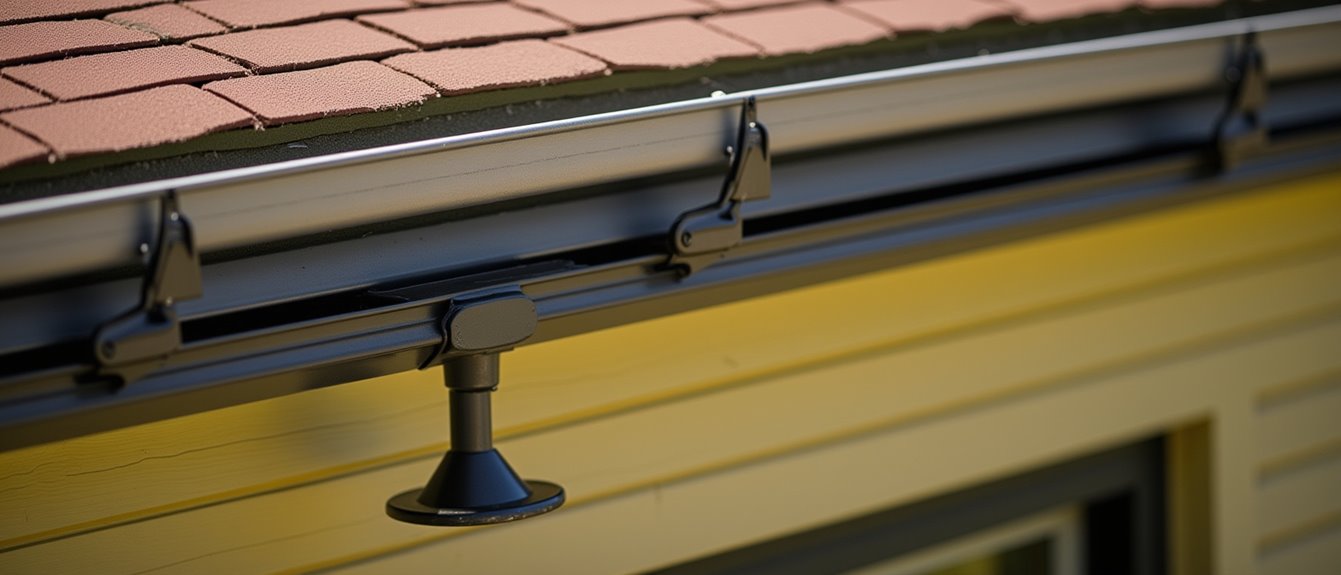
Think of fascia gutters as a streamlined, two-in-one solution that both collects rainwater and replaces traditional fascia boards by mounting directly to your rafter edges.
You’ll see they’re a custom-fabricated gutter system, usually in seamless aluminum or steel, that hides the roof edge while increasing water flow capacity compared with older profiles.
Because they serve as the fascia board and gutter, they simplify roof detailing during renovations or when a home lacks fascia. That integration helps protect the home’s structure by directing water away and reducing the risk of water damage.
Their boxy look can boost curb appeal, and their 25-50+ year lifespan makes them a long-term choice. For best results, plan on professional installation. Additionally, custom-fit seamless gutters from trusted contractors can enhance the overall effectiveness of your drainage system.
Fascia Gutters vs. K‑Style and Half‑Round Gutters
While fascia gutters replace the fascia board and tuck a deeper, boxy trough into the roofline, K‑style and half‑round gutters sit visibly beneath the eaves with exposed hangers and different capacities, so your choice will hinge on aesthetics, water-handling needs, and maintenance preferences.
You’ll find fascia gutters offer a seamless design that blends with the roof structure and handles heavier runoff thanks to greater water capacity. K-style has a flatter profile and usually holds less, while half-round gutters provide a classic look but lower capacity. Additionally, custom sizing options available for downspouts can enhance the overall effectiveness of your gutter system.
Installation for fascia gutters is more complex and often costs more because it’s custom to the roof structure. Though K-style and half-round can be easier to clean, homeowners value fascia gutters for reduced maintenance and fewer leaks.
Fascia Gutters Installation and How They Drain Water
If you liked the cleaner look and higher capacity of fascia gutters, the next question is how they're put in and kept moving.
You install fascia gutters directly onto the rafter edge so they integrate with the fascia boards for a streamlined finish. Technicians custom-fabricate sections on-site, typically aluminum or steel, so the fit matches the roof edge precisely.
During installation you set a consistent pitch toward downspouts to ensure proper drainage and avoid overflow. Flashing is installed behind the gutter to block water infiltration and protect the roof and underlying structure. Additionally, using seamless gutters helps reduce leaks and provides a cleaner appearance.
After installation you’ll perform routine maintenance: inspect seals and flashing, clear debris, and check slopes and downspouts. Proper care keeps water flowing away from the home and prevents damage.
Materials for Fascia Gutters and Expected Lifespans
Because the material you choose determines both performance and long-term cost, it's worth comparing options like aluminum, galvanized steel, copper, and composite before committing.
Fascia gutters are available in several materials, and each has a different expected lifespan and maintenance profile. You'll pick based on budget, appearance, and durability.
Consider these typical choices:
- Aluminum: lightweight, rust-resistant, common for residential gutter runs; expected lifespan about 25-30 years.
- Galvanized steel: strong and impact-resistant; with maintenance it can last 30-40 years.
- Copper and composite: copper is premium with a patina and longevity over 50 years; composite is eco-friendly and rot-resistant but can be pricier and harder to repair.
Additionally, selecting the right materials can enhance protection from water damage, ensuring your home remains safe and secure throughout various weather conditions.
Match materials to your home's needs and budget.
| Material | Lifespan | Traits |
|---|---|---|
| Aluminum | 25-30 years | Lightweight, rust-resistant |
| Galvanized steel | 30-40 years | Strong, impact-resistant |
| Copper | 50+ years | Premium, develops patina |
| Composite | Varies | Eco-friendly, rot-resistant, pricier |
Is a Fascia Gutter Right for Your Home?
Wondering whether a fascia gutter is right for your home? You should weigh distinct advantages against up-front cost.
Fascia gutters combine gutter systems and trim at the edge of your roof for a clean look and higher capacity during heavy rain, which can enhance curb appeal and reduce overflow risk.
Gutter installation is more complex and often requires custom fabrication, so homeowners don’t think of the labor involved until bids arrive.
If you need to replace fascia or want longer-lasting performance, 25 to 50+ years, these systems can pay off, especially in severe-weather regions.
They do require proper maintenance to prevent debris buildup; factor cleaning access and methods into your decision. Regular preventive maintenance is essential for ensuring optimal performance and longevity.
Frequently Asked Questions
What Are Common Problems With Fascia Boards?
You’ll face rot, warping, peeling paint, and sagging that weakens gutters; clogged gutters and moisture cause decay, pests exploit gaps, and neglect leads to costly repairs or full replacement if you don’t inspect and maintain regularly.
What Does a Fascia Gutter Look Like?
About 40% larger than typical gutters, a fascia gutter looks like a sleek, box-shaped channel mounted flush to the rafter edge, hiding the roof edge; it’s often color-matched, available in aluminum, steel, or copper, and custom-fitted.
What Is the Average Cost to Replace Fascia?
You’ll typically pay about $8 to $15 per linear foot to replace fascia, with minor repairs costing $300, $800 and full replacements often running $1,500, $4,000, depending on material, labor, and installation specifics.
What Length Gutters Does a 2000 Sq Ft House Usually Have?
Imagine your roof as a belt: you’d typically need about 150 to 200 linear feet of gutters for a 2,000 sq ft house. You’ll want a pro to verify exact length for your roof’s layout and code.