
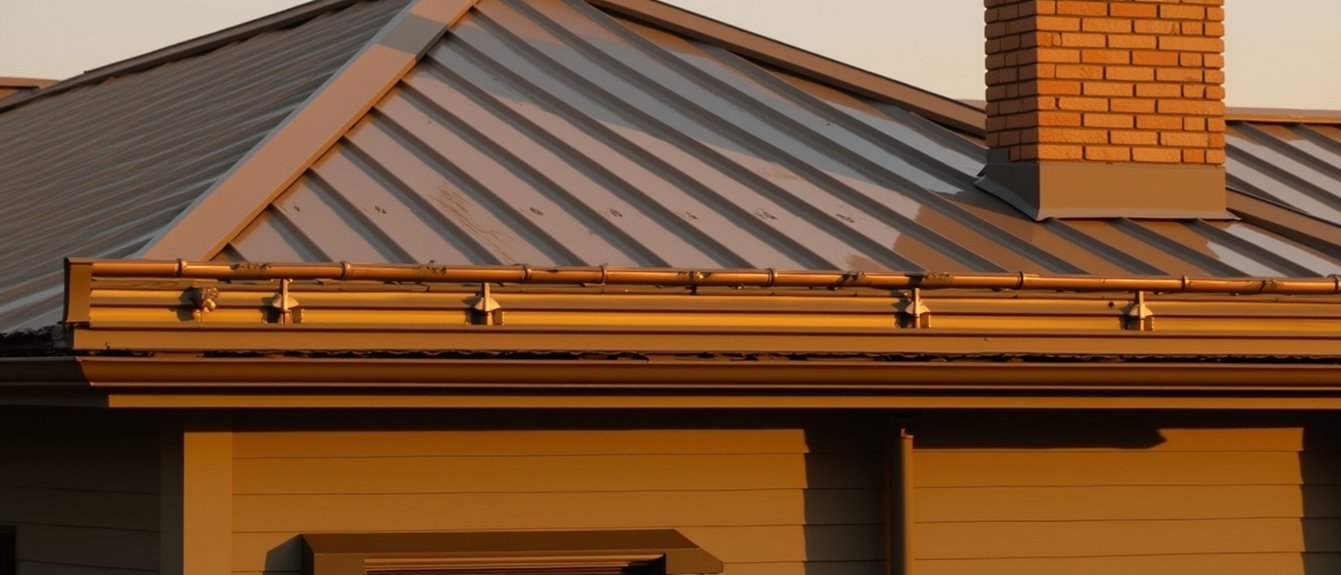
Summary: Choosing gutters for a metal roof means matching material, profile, and capacity to slope and rainfall, whether K-style, half-round, box, steel, aluminum, or copper. Proper sizing, heavy-duty hangers, and regular inspection keep the system leak-free and effective long term.
You’ll match gutter material, profile, capacity, and hangers to your metal roof’s slope and runoff. Choose K‑style for high capacity and a modern look, half‑round for fast drainage and fewer clogs, box/built‑in for clean lines, and seamless 26‑ga steel for strength and fewer leak points. Consider aluminum for light, rust resistance or copper for longevity and aesthetics. Size gutters and space downspouts for peak rainfall, use heavy‑duty hangers, and keep inspecting, continue to learn specifics.
Highlights
- K-style aluminum or steel gutters pair well with metal roofs for high capacity and a modern appearance.
- Half-round gutters offer rapid drainage and reduced clogging, suitable for traditional metal roof profiles.
- Box gutters integrate into rooflines to handle large volumes on expansive metal roofs.
- Seamless 26-gauge steel gutters minimize joints and leaks, ideal for long metal roof runs.
- Copper gutters provide exceptional longevity and evolving aesthetics for premium metal roofing.
How to Choose Gutters for Metal Roofs (Materials, Size, and Hangers)
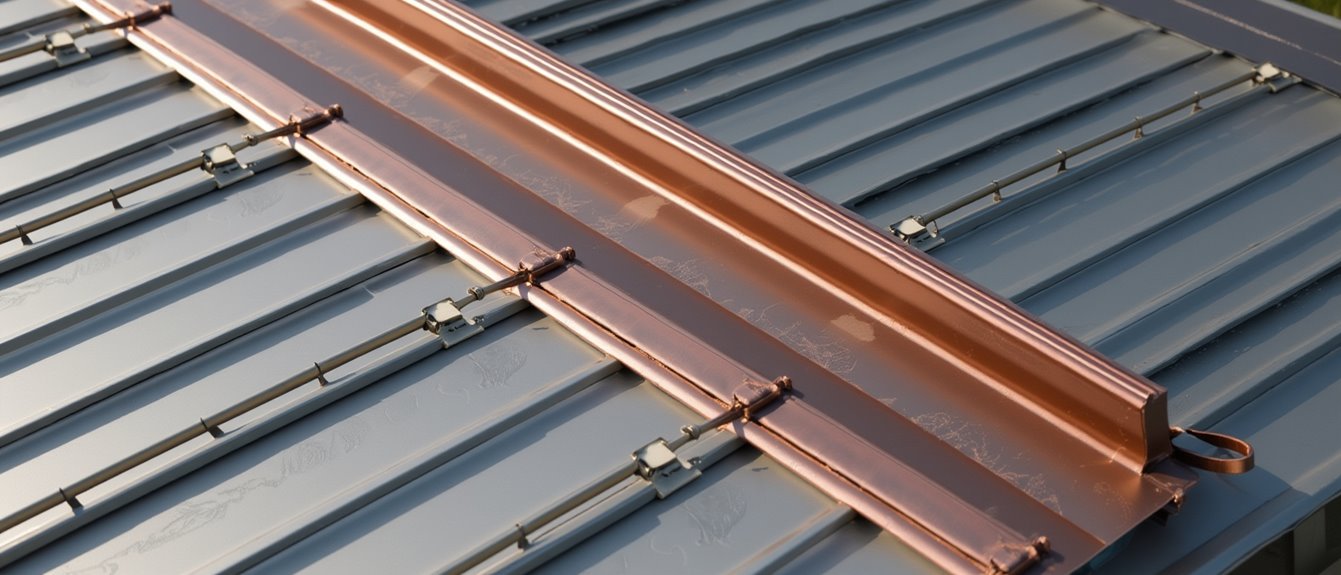
Start by matching gutter material and capacity to your metal roof’s demands: use 26‑gauge steel for its superior strength and corrosion resistance, choose seamless profiles sized by roof square footage and local rainfall to prevent overflow, and install heavy‑duty stainless‑steel hangers to support wet loads and debris.
Then schedule regular inspections and maintenance to catch clogs, leaks, or hanger failures before they damage the roof or foundation. You’ll select metal gutters for durability and corrosion resistance, preferring seamless gutters to reduce leak points and improve aesthetic appeal.
Calculate proper sizing from roof area and peak rainfall to ensure efficient water drainage. Apply robust installation techniques: hangers spaced for design load, positive slope to drains, sealed endcaps. Additionally, consider hiring a licensed and insured contractor to ensure proper installation and adherence to local regulations.
Adhere to maintenance requirements to preserve water management performance.
| Type | Material | Best For |
|---|---|---|
| K-style | Aluminum, steel, copper | High capacity, modern look |
| Half-round | Aluminum or copper | Fast drainage, less clogging |
| Box (built-in) | Steel or aluminum | Large volumes, clean lines |
| Seamless steel | 26-gauge steel | Strength, fewer leak points |
| Aluminum | Aluminum | Lightweight, rust resistance |
| Copper | Copper | Longevity, evolving aesthetics |
K‑Style Gutters: High Capacity With a Modern Look
When you’ve matched gutter material, capacity, and hanger strength to your metal roof’s runoff and load demands, consider K‑style gutters for their combination of flow capacity and refined appearance.
You’ll find K-style gutters provide high capacity and efficient water flow due to a flat back and decorative front that mimics crown molding. For metal roofing systems, they integrate visually and functionally: available in aluminum, steel, or copper, they deliver durability and resistance to rust and corrosion.
You can size and select profiles to handle heavy rainfall without frequent overflow. Their aesthetic appeal suits modern look requirements while allowing customized color to match roof panels. Additionally, seamless gutters custom-formed on site minimize leaks and enhance the overall appearance.
Maintenance is straightforward, and installation aligns with standard hanger systems for secure performance.
Half‑Round Gutters: Classic Profile and Clog Resistance
Although visually classic, half‑round gutters excel technically: their semi‑circular profile and smooth interior promote rapid, laminar drainage that cuts debris buildup and reduces clogging compared with boxier profiles.
You’ll find half-round gutters combine aesthetic appeal with efficient water drainage, fitting diverse architectural styles while minimizing debris accumulation.
Constructed from aluminum or copper, they deliver corrosion resistance that supports longevity in harsh weather conditions.
You should plan for specialized installation using custom brackets and secure mounting to preserve profile integrity and optimize flow rates.
Maintenance demands drop due to reduced clog risk, but proper alignment and attachment are critical for performance. Additionally, regular preventive maintenance can further enhance their effectiveness and lifespan.
Choose half‑round systems when you want a balance of historic looks, reliable drainage, and durable service life.
Box (Built‑In) Gutters: Integrated Drainage for Clean Lines
Because they're built into the roofline, box (built‑in) gutters give a clean, unobtrusive profile while handling large volumes of water, ideal for heavy‑rain or snow‑load regions.
You’ll specify box gutters when you need integrated drainage that maintains the roof’s aesthetic appeal and conceals runoff. Their geometry delivers high water capacity and effective drainage, reducing overflow risk and limiting water damage to foundations and siding.
Fabrication is custom: you’ll have components formed to roof dimensions to avoid visible joints and ensure fit with metal roofing systems.
Constructed from durable materials like steel or aluminum, these gutters offer longevity and minimal maintenance versus exposed systems. Additionally, gutter repair services can help ensure your box gutters remain functional and efficient over time.
Proper design and installation are critical to achieve performance, durability, and water management objectives.
Steel Seamless Gutters for Metal Roofs (Durability and Thermal Fit)
Steel seamless gutters, typically formed from 26‑gauge steel, deliver high strength and a continuous profile that minimizes joints and leak points for metal roofs.
You’ll find steel seamless gutters pair well with metal roofing systems because their thermal expansion characteristics match the roof, reducing stress at connections and lowering the chance of leaks over time.
A corrosion-resistant coating further enhances durability and contributes to longevity, making them a cost-effective choice despite higher initial material strength.
For optimal performance you should inspect seams and coating at least annually, checking for corrosion, fastening integrity and blockages.
Proper maintenance preserves structural integrity and prevents performance degradation, ensuring the system remains reliable, leak-free and long-lived.
Aluminum vs Copper: Durability, Cost, and Aesthetic Trade‑Offs
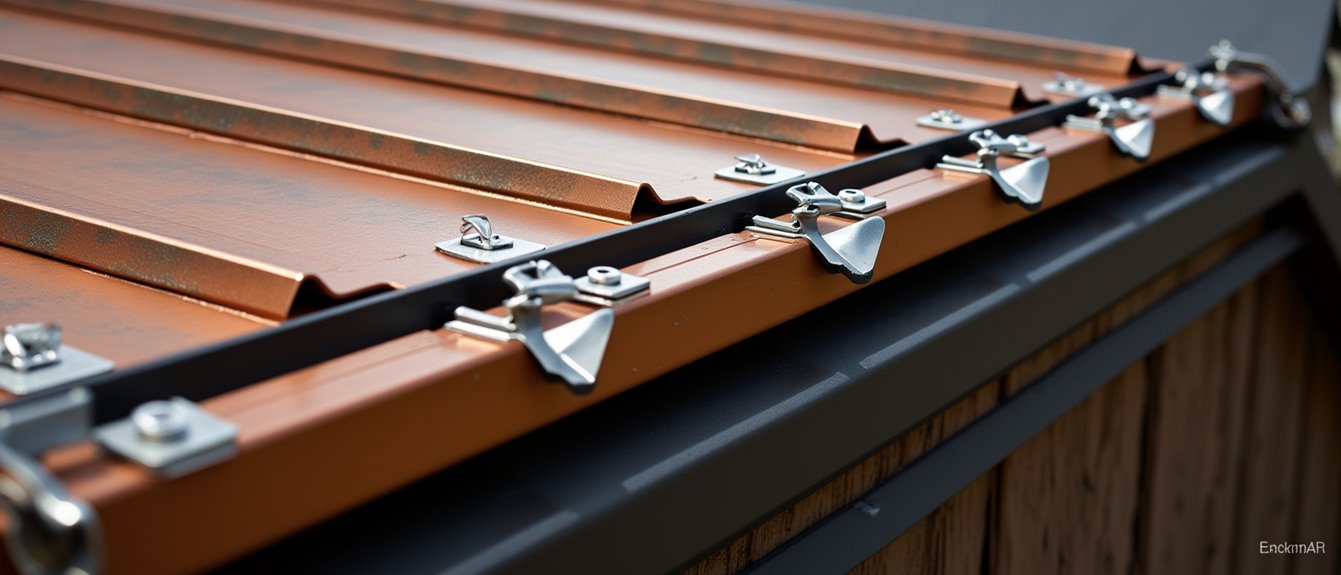
Having considered steel seamless gutters for metal roofs, it's worth comparing two popular alternative materials, aluminum and copper, to help you weigh durability, cost, and appearance.
Aluminum offers excellent durability for metal roofing installations, commonly exceeding 30 years with minimal maintenance; it's lightweight, rust-resistant, and cost-effective ($4.71, $9.61/linear foot).
Copper delivers superior longevity (50+ years) and evolving aesthetics, forming a protective patina that resists corrosion but commands a premium price.
Maintenance differs: aluminum needs routine cleaning but resists galvanic issues, while copper may require special fittings to prevent corrosion when paired with dissimilar metals.
Both suit seamless gutter systems and are recyclable; aluminum is generally more eco-friendly due to simpler recycling and lower corrosion-driven replacement rates.
Choose based on budget, desired aesthetics, and lifecycle priorities.
Sizing, Hangers, Downspouts, and Installation Tips for Optimal Flow
1. You’ll calculate gutter sizing for metal roofing systems using roof square footage and local rainfall intensity to prevent overflow and ensure optimal drainage. Use provisions that translate peak rainfall into required capacity, then select gutters sized accordingly.
Fit heavy-duty stainless steel hangers at specified intervals to support steel gutters and resist ice loading. Position downspouts at low points and space them so they rapidly evacuate runoff, directing effective water away from foundations.
Maintain a slope of approximately 1/4 inch per 10 feet toward downspouts to preserve water flow and avoid standing water.
Follow installation tips: precise bracket spacing, sealed joints, and secure fasteners. For reliability and code compliance, arrange professional installation to ensure alignment, minimize leaks, and achieve optimal drainage. Additionally, consider using custom sizing options to ensure that your downspouts effectively manage the rainwater runoff from your metal roofing system.
Frequently Asked Questions
What Kind of Gutters Are Best for a Metal Roof?
Think of gutters as a roof’s bloodstream: you should choose K-style seamless 26-gauge steel for metal roofs; they handle heavy flow, reduce leaks, resist corrosion, and, when professionally installed, ensure precise drainage and long-term reliability.
What Are the Three Types of Gutters?
They’re K‑style, half‑round, and box gutters. You’ll choose based on capacity, maintenance, and integration: K‑style for high capacity and aesthetics, half‑round for clog resistance and cleaning, box for seamless high‑volume handling.
Are Gutters Needed on a Metal Roof?
Yes, you should install gutters on a metal roof to control runoff, prevent foundation damage, erosion, and basement flooding. Choose corrosion-resistant, compatible materials and seamless profiles, and schedule regular inspections and cleaning to ensure system performance.
How Are Gutters Attached to a Metal Roof?
About 70% of gutter failures stem from improper support, so you attach gutters to metal roofs with stainless steel hangers screwed into roof fascia or subfascia, spaced 24-36 inches, ensuring a 1/4-inch drop per 10 feet.