

Summary: Choosing the right RV gutters means matching material and style, aluminum or vinyl, drip rails or integrated designs, to your RV's needs, then measuring carefully, prepping surfaces, and using proper adhesive for a leak-free installation. Regular maintenance, including clearing weep slots and adding spout extensions, keeps water flowing and protects your RV's finish.
You’ll want gutters that shed heavy rain, stop leaks, and stay put in motion, aluminum for strength or vinyl for flexibility are both solid. Choose proven designs like EZE gutters or simple drip rails, measure window and vent widths carefully, and mark factory spouts so extensions divert runoff. Prep surfaces, use exterior adhesive, and trim or heat-bend gutters around curves. Keep weep slots clear and use silicone or DIY extensions to fix issues, read on for full how-to.
Highlights
- Choose durable materials (aluminum for strength, vinyl for flexibility) based on weight, weather resistance, and budget.
- Prioritize proven designs like EZE gutters or drip rails for reliable water shedding and leak prevention.
- Measure windows, vents, and factory spouts accurately and note obstructions before ordering or cutting gutters.
- Ensure proper surface prep and use exterior-rated adhesive or silicone for secure, watertight installation.
- Plan and install spout extensions or aftermarket diverters to direct runoff away and prevent black streaks.
Which RV Gutters Should You Choose?
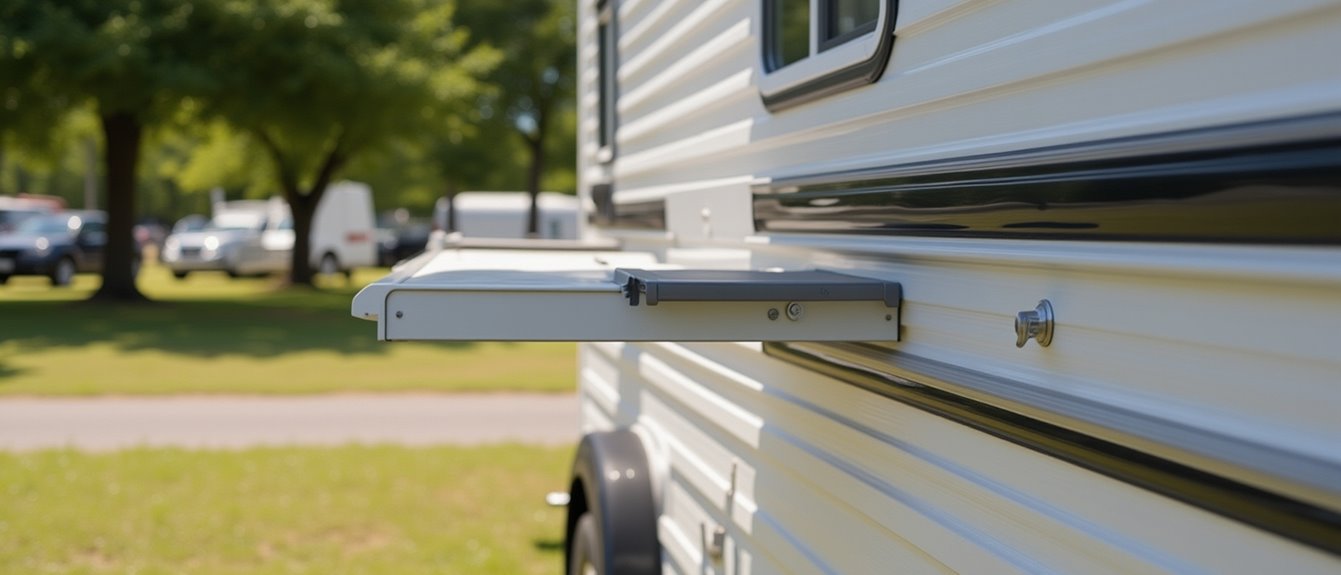
Want the easiest way to stop leaks and keep water off your RV sides? You’ll likely pick EZE RV Gutters.
You can also consider Trim-lok Drip Rail, but there’s less feedback on its long-term behavior, so you’ll be guessing a bit.
Focus on proper installation: clean surfaces, measure and cut accurately, and press adhesive firmly to maximize hold.
Maintain gutters by clearing weep slots and applying Rejex polymer wax so rain gutters keep flowing.
If factory RV gutter spouts fall short, add aftermarket spout extensions like Camco’s to direct runoff and stop black streaks.
That practical approach minimizes leaks and protects your finish.
RV Gutters: Material & Style Guide
Pick the gutter material and style that match how, where, and how often you use your RV: aluminum and vinyl are the common choices because they resist corrosion and stand up to sun and rain, while traditional drip rails reliably channel water away and newer integrated designs blend function with a cleaner look.
You’ll pick vinyl for flexibility and cost-effectiveness. Drip rails work well if you want simple, proven protection; integrated gutters suit you if appearance matters.
Most systems use adhesive backing, clean the surface thoroughly before installation to ensure a solid bond. Choose quality brands engineered for heavy rain to avoid leaks, and consider clip-on spout extensions if factory spouts don’t divert water far enough.
| Option | Material | Best For |
|---|---|---|
| EZE RV Gutters | Aluminum or similar | Reliable water shedding, leak prevention |
| Trim-lok Drip Rail | Drip rail | Simple protection, less long-term feedback |
| Vinyl gutters | Vinyl | Flexibility and cost-effectiveness |
| Integrated gutters | Varies | Cleaner appearance |
| Aluminum gutters | Aluminum | Strength and corrosion resistance |
Measure Your RV: Sizing Gutters and Spout Extensions
Because a snug fit prevents leaks and overflow, start by measuring the width and height of each window and vent you want to protect so your gutters and spout extensions match the openings precisely.
Measure your RV systematically: record each opening, note nearby obstructions or unique trim that could change fit, and mark factory spout lengths, many are too short.
For cutting gutters cleanly around curves, use anvil-type tree pruners to get straight, burr-free edges that seal well.
Plan spout extensions long enough to divert water well away from corners and entry points, especially under heavy rain.
After sizing, note weep slot locations so you can access and clean them regularly to prevent water buildup and maintain performance. Additionally, consider using materials that resist corrosion to enhance durability in various weather conditions.
Installation Tips: Surface Prep, Adhesive, and Curving Around Windows
Start by prepping the surface thoroughly: clean the window perimeter with a solvent-free cleaner or a product like Meguiar’s X20 to remove wax, grime, and any silicone residue so the adhesive bonds properly.
For surface prep, tape your layout, measure twice and cut once, precise gutter lengths and clean edges matter. Use recommended cutters (anvil-type pruners) to avoid crushing the material.
Choose an adhesive rated for exterior RV trim; apply a continuous bead, press firmly, and support until cured.
When curving around window sides, heat lightly if the material allows, bend gradually, and trim small relief notches on tight radii.
Follow manufacturer cure times, and keep weep slots clear during installation. These installation tips keep gutters effective and watertight.
Maintain RV Gutters: Cleaning, Reattaching, and DIY Fixes
Keep your RV gutters clear and secure to prevent leaks and costly repairs down the road. You should regularly clean weep slots to prevent clogs, users report better water management after routine clearing.
After cleaning, prepare surfaces with a high-quality cleaner like Meguiar's X20 to ensure strong adhesive bonding before reattaching or installing gutters. If an EZE gutter detaches, use silicone sealant to create a watertight reattachment.
Inspect and repair gutters after heavy rain; proactive checks catch problems early and avoid structural damage. For simple DIY fixes, repurpose pool noodles or PVC conduit as inexpensive extensions to divert water.
Maintain RV gutters by combining regular inspection, proper surface prep, secure sealing, and smart DIY fixes to keep your rig dry.
Homeowners looking for a trusted gutter company in Newport Beach can rely on local experts for installation, cleaning, and repairs that stand up to the elements year-round.
If you need professional help with gutter installation or repairs, the team at Newport Beach Gutters is ready to assist. Call (949) 213-3332 to get an estimate or ask about gutter solutions that fit your needs.
Frequently Asked Questions
Which Is Better, Half Round or K Style Gutters?
Half round’s better for heavy rain and durability, but K-style’s cheaper and easier to install; you’ll choose half round for performance and longevity, K-style for cost and convenience, depending on your priorities and budget.
Can Mice Come Through Gutters?
Yes, mice can sneak through gutters if gaps or debris create entry points; imagine tiny paws scurrying along leaves. You should seal gaps, install mesh guards, keep gutters clean, inspect connections, and remove nearby food sources.
Are Vinyl or Aluminum Gutters Better?
Aluminum’s usually better if you want durability, paintability, and long-term value, while vinyl’s better if you need lightness, easier installation, and lower upfront cost; weigh corrosion resistance, weight limits, appearance, and maintenance before deciding.
What Is the Rule of Thumb for Gutters?
The rule of thumb is you’ll want gutters extending at least 6 inches past the roof edge, sloped about 1/4 inch per 10 feet, at least 4 inches wide, and cleaned regularly to prevent pooling and leaks.